Do You Tip Lagoon Tour Guides In Bora Bora?
A practical pre-booking answer to tipping on Bora Bora lagoon tours: what is expected, how much to plan for, cash and currency logistics, and how it differs by tour type.
How Much Should You Tip Your Guide?
Tipping is genuinely optional in French Polynesia, and no lagoon tour listing on this island states a required or expected gratuity. In practice, guests who are happy with the day do tip, usually in cash at the end of the tour, handed directly to the guide or the crew. Treat it as a personal thank-you rather than a contractual line item, and plan the cash before you board.
That is the honest short answer, and it matters because Bora Bora sits in a tipping culture very different from the United States. In American restaurants a tip is effectively part of the bill; in French Polynesia service charges and wages are structured differently, and a gratuity reads as a voluntary bonus for service that exceeded expectations. Nobody will chase you for a tip on the dock at Vaitape, and no operator's listing on this site lists one.
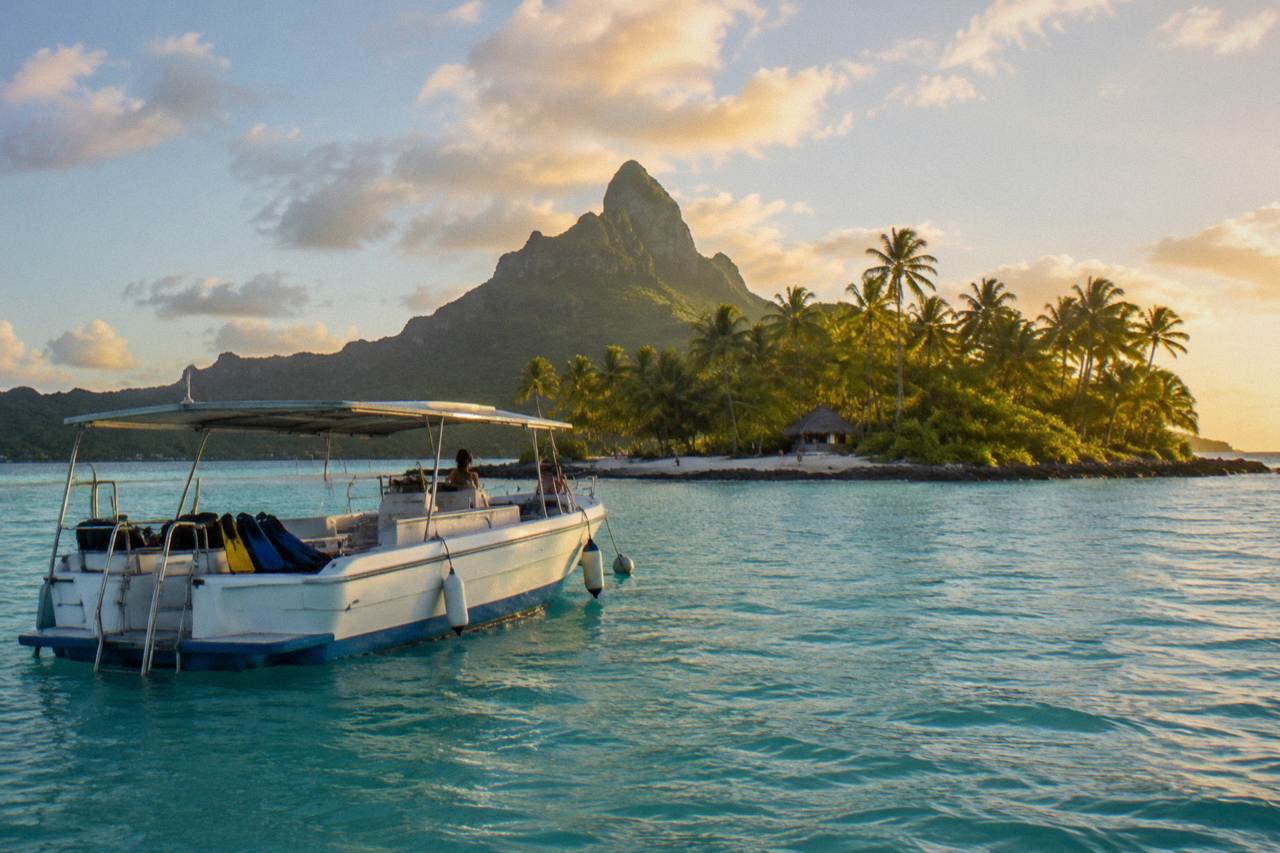
What complicates the picture is that the lagoon tours themselves feel intensely personal. On a shared half day such as the Reef Discovery circle lagoon snorkel, from $134 per person, one guide may be driving the boat, briefing the group on the coral garden, hauling a nervous snorkeler back to the ladder and cutting pineapple between stops, all inside three and a half hours. On the full-day lagoon group tour with lunch, from $173 per person, the crew also runs a motu stop and a meal service on top of the snorkeling. When service is that visible and that physical, most guests want a way to say thanks, and cash is the way that works.
Before choosing what to book, it helps to compare the three formats that dominate the island: the shared full day with lunch, the half-day signature snorkel, and the private boat. Price, duration and crew attention differ enough that the tipping question differs too.
There is one structural point worth knowing early, because it shapes every money question on the island: French Polynesia applies a visitor stay tax, currently 200 XPF per person per night for classified hotels and cruise ships and 50 XPF for guesthouses, collected by the provider, as published by the commune of Bora Bora's official tax page. That tax is not a tip and does not reach the guide. Gratuities are entirely separate, which is why planning them is your decision rather than the operator's.
A note on what this article is not: it is not a schedule of operator-mandated amounts, because none exists on any listing we track. The planning ranges below are exactly that, planning ranges, the kind of figures experienced visitors work from, with the honest instruction to confirm anything uncertain with the operator's own booking page before you sail.
How Much Should You Tip On A Lagoon Tour?
A practical planning range is roughly ten to twenty percent of the tour price for a shared lagoon tour, worked out per person from the ticket you actually paid. For private boats, many guests simply round up or add a flat amount per guest. Nothing here is owed; these are figures visitors commonly land on when the day went well.
The percentage framing works because tour prices on this island cluster tightly. The cheapest listing, the half-day Bora Bora experience with fruits on Motu Fanfan, starts at $105 per person, while the most reviewed product, the full-day lagoon group tour with lunch, starts at $173. Ten to twenty percent of those prices gives a modest per-person sum, which is exactly the zone most guests report landing in for a shared tour with a good guide.
For a table that stays honest, the figures below pair each tour type with its real price and the percentage approach that follows from it. Treat the tip column as advice, not a promise of what anyone expects.
| Tour type | Example listing | Lineup price | Planning tip approach |
|---|---|---|---|
| Shared half day | Reef Discovery Half Day Group Signature Tour | from $134 per person | ten to twenty percent of the ticket, per person |
| Shared full day with lunch | Full Day Lagoon Group Tour in Bora Bora with Lunch | from $173 per person | ten to twenty percent of the ticket, per person |
| Eco cruise with sharks and rays | Bora Bora Eco Snorkel Cruise | from $112 per person | ten to twenty percent of the ticket, per person |
| Private boat, half day | Bora Bora Lagoon Snorkeling Tour by Private Boat | from $650 per group | flat amount per guest, or round up |
| Private full day with water lunch | Reef Discovery Private Full Day Lagoon Tour | from $1,776 per group | flat amount per guest, confirmed with the operator |
Two honest caveats belong next to that table. First, the percentages are planning guidance, not local law; French Polynesia has no tipping regulation, and you should feel free to go above for an exceptional day or below for an ordinary one. Second, the per-group tours price differently: a from $650 per group private boat may carry two people or a family, so a flat per-guest amount usually feels fairer than a percentage of the group price.
The money mechanics are simple: bring cash. Cards are unreliable for gratuities because the tip happens on the boat or the dock, not at a desk. US dollars are accepted widely on the island, and French Pacific francs, XPF, are the local currency; either works for a guide, though small XPF notes save everyone the math. Guides on the island's operator pages, such as the H2O Bora Bora FAQ, field practical questions like this daily, and none of the operator pages we reviewed state a set gratuity.
If you are booking from abroad and want a fuller picture of how a lagoon day is priced before deciding what a fair thank-you looks like, the Bora Bora snorkeling cost breakdown covers every line item from gear to lunch, and it is the natural companion to this page.
What Actually Earns A Tip On The Water?
Guests tip for the things that are hard to price: a guide who reads the group's swimming ability, adjusts the route, briefs clearly on sharks and rays, and keeps a nervous snorkeler calm in open water. On Bora Bora, where the lagoon is the workplace, the difference between a routine tour and a memorable one is almost entirely the crew, and that is what the cash acknowledges.
Consider what a full day actually asks of a guide. On the full-day lagoon group tour with lunch, rated 5.0 from 1,715 reviews, the most reviewed listing on the entire lineup, the crew picks guests up, runs roughly six hours of snorkeling across lagoon sites, stages a motu lunch, and returns everyone to their dock. The listing includes pickup, lunch and snorkel gear, so the out-of-pocket moment never arrives mid-tour; the tip at the end is the only payment decision left to the guest, which is partly why it carries weight.
Safety handling is the other half. Blacktip reef sharks, typically half a meter to a meter and a half, are the common species on lagoon stops, and French Polynesia has protected all shark and ray species in its waters since 2006 under the Environmental Code, which prohibits attracting sharks or altering their behaviour. A guide who briefs the group properly, keeps the stop orderly and follows those rules is doing skilled work, not just driving a boat. Some operators state an eco no-feeding policy on their listings; on those tours the encounter depends entirely on the guide's site knowledge and timing, which guests consistently notice and reward.
It is also fair to tip light or not at all. If a tour ran late, gear was missing, or the briefing was thin, a gratuity is not owed just because the island is beautiful. The same honesty applies in the other direction: on small-group products with tiny review pools, such as the Keishi four-hour shared excursion at 5.0 from 14 reviews, a good day is real even if the sample is small. Judge the day, print the review count in your head, and act accordingly.
For readers who want the full picture on shark behavior before deciding how much skill the guide's job takes, the safety guide to swimming with reef sharks explains what guides actually manage in the water.
The full-day tour is the one product where the tipping question comes up most, simply because the day is longest and the crew-to-guest contact is highest.
Does Tipping Differ On Private Boat Tours?
Yes, in shape if not in principle. On a private boat the price is quoted per group, not per person, so a percentage of the ticket often produces an awkwardly large or small figure, and most guests switch to a flat amount per guest or a rounded thank-you. The private listings here run from $560 to $1,776 per group, which is why the math changes.
Take the three private-format listings in the lineup. The private lagoon snorkel tour by boat from H2O Bora Bora starts at $650 per group for three and a half hours; La Plage Tours' private lagoon experience starts at $605 per group; and Reef Discovery's private full day with a water lunch starts at $1,776 per group. A flat twenty percent of the top figure is a serious sum, and nobody on the island expects it. A per-guest amount, decided before you board, keeps the gesture proportionate. Other pages covering the same trip are gathered on Bora Bora Snorkeling Tours.
Private guests also get something shared tours rarely offer: direct negotiation of the route and the rhythm of the day. When a guide holds the boat steady while a family snorkels an extra twenty minutes at a coral garden, or moves the itinerary to dodge a rain squall, that flexibility is the product. Guides on private runs typically work alone or with one crew member, so there is no ambiguity about who receives the cash, one of the quiet advantages of the format.
For a side-by-side of what each format delivers beyond the tipping question, the private versus group lagoon tour comparison is the detailed version, with prices and inclusions for every listing on both sides.
The half-day format is the most common first booking on the island, and the Reef Discovery signature tour is its most reviewed example, so it makes a good benchmark for what a shared-tour tip looks like in practice.
Cash, Pickup And Cruise Days: The Logistics Of Handing Over A Tip?
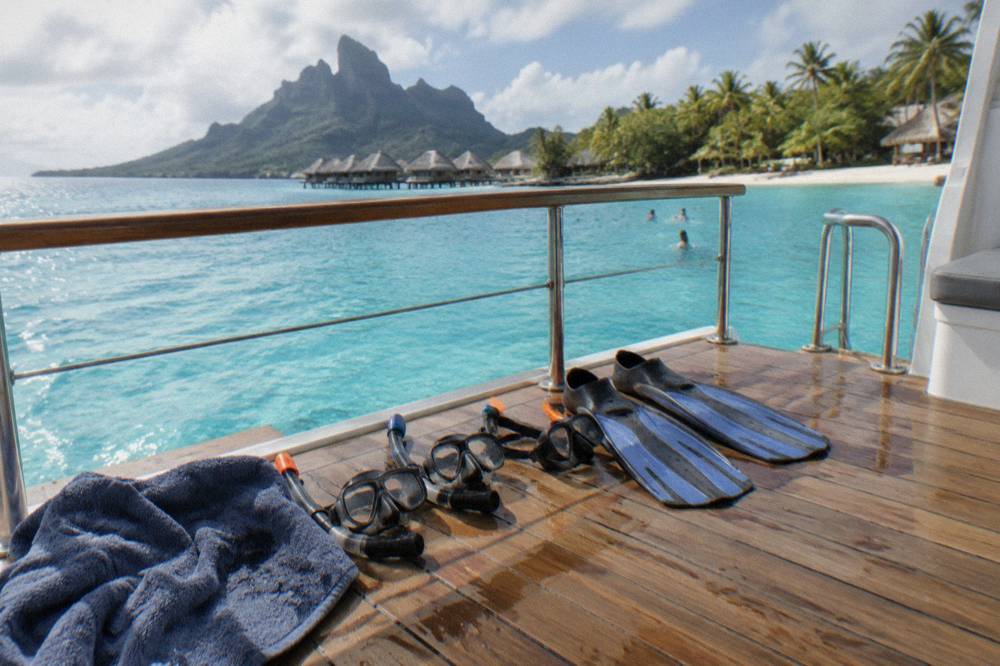
Bring cash in US dollars or XPF, hand it to the guide directly at the end of the tour, and do it at the pickup point, since nearly every listing includes hotel or Vaitape quay pickup. Cruise passengers should allow for the tender ride back; ships anchor in the lagoon and tender to Vaitape, a ride that typically takes 15 to 20 minutes, so the dock goodbye is often hurried.
The pickup detail matters more than it sounds. Because tours collect guests from resort docks and the quay, the same crew member who drove you out is standing next to you at the end, usually while unloading gear. That is the natural moment: a handshake, a thank-you, and the envelope or folded notes. There is no tip jar culture on these boats, and leaving cash on a seat tends to simply get handed back.
For cruise visitors the timeline compresses. Typical call windows run 9 to 12 hours, and everyone funnels through the single public tender pier at the Quai de Vaitape, roughly 50 meters on foot from the village. Book an independent lagoon tour that departs from and returns to the quay, as the shared listings here do, and you will finish with time to spare; the decision between ship excursions and independent operators, including price differences, is covered in the cruise shore excursion guide.
Currency is the last logistics question. The island runs on XPF, and dollars are widely accepted for gratuities because guides can convert or spend them easily. Small denominations help: a guide cannot make change on the water. If you arrive with only a card, you will likely have no way to tip at all, which is the single most common regret guests report on lagoon tours, a point echoed across practical Bora Bora snorkeling planning guides that stress cash for the day.
A short logistics table keeps the whole morning simple:
| Situation | Where the moment happens | Practical approach |
|---|---|---|
| Resort stay with pickup | Your hotel dock at drop-off | Hand cash to the guide directly |
| Main island stay | Vaitape quay or agreed meeting point | Small USD or XPF notes, folded |
| Cruise call | Vaitape tender pier after the tour | Allow tender buffer; tip before you rush off |
| Private boat | Boat or dock at tour end | Flat per-guest amount agreed in your head beforehand |
| Bad weather cut short | Wherever the day ends | Pro-rate your judgment; partial days get partial thanks |
One honest limit: none of the operators state on their listings whether tips are pooled among crew, kept individually, or shared with the driver. If that matters to you, ask at booking; the operator's live listing is the place for that question, and asking costs nothing.
Beyond Cash: Reviews, Rebooking And Other Ways To Thank A Guide?
A five-star review with the guide named, a repeat booking or a referral, and a mention to the operator all matter in a small island economy where word of mouth is the main marketing channel. Cash is the immediate gesture, but the review is often the one with a longer shelf life, and it costs nothing.
On an island with roughly three dozen active lagoon listings, the review pools are the storefront. The full-day lagoon group tour with lunch carries 1,715 reviews; the Rohivai half-day lagoon safari carries 259; smaller operators carry a few dozen or fewer. A named, specific review, the guide who found the eagle ray, the crew who stayed patient with the kids, directly helps the person who earned it in a way a quiet tip does not. Reviewers on the live listings do exactly this, and guides notice.
Rebooking and referral are the second currency. Families who book the half-day Reef Discovery tour, 5.0 from 1,051 reviews, and then return for the full day, or send friends to the same operator, deliver more value over a season than any single gratuity. Operators here run weather-dependent businesses; free cancellation up to 24 hours is listed on most of these tours, and flexible, kind guests get remembered when the schedule tightens.
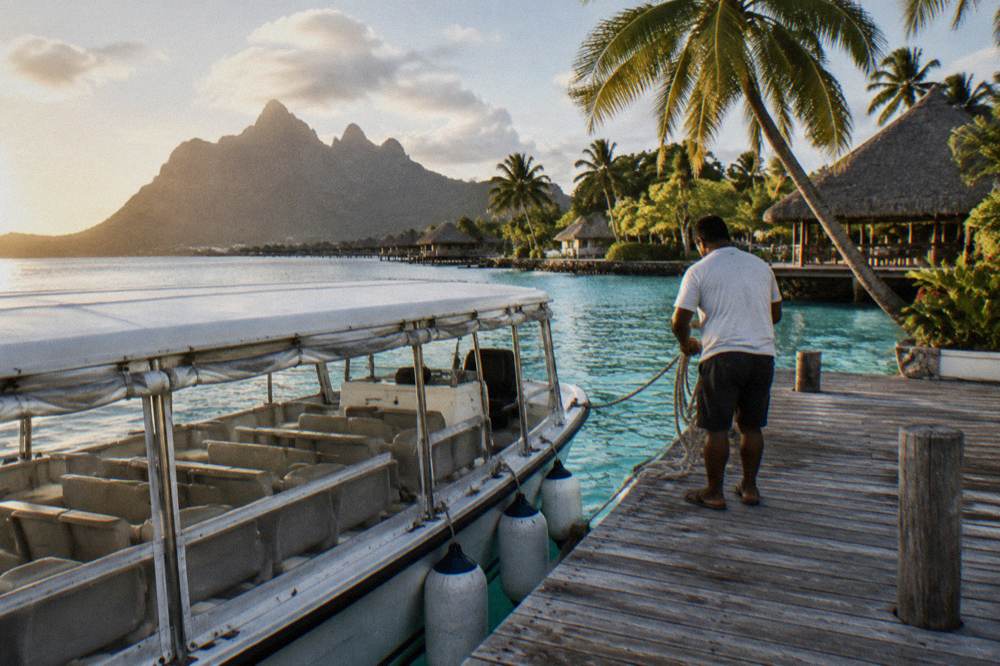
Small physical gestures round out the picture: bottled water for the crew on a hot afternoon, help carrying gear up the dock, or simply being the group that listens to the safety briefing without negotiation. None of this replaces cash, and none of it needs to. The pattern worth copying is simple: plan the cash before the day, decide the amount on the evidence of the day itself, and put the review up the same evening while the names are still fresh.
Whichever of the three formats below ends up matching your plans, the tipping question resolves the same way, with a prepared thank-you and an honest review.
Common Questions About Tipping Lagoon Tour Guides In Bora Bora
What should I know about tipping the guide on a Bora Bora lagoon tour?
Tipping is optional in French Polynesia and no listing states an expected gratuity, but happy guests do tip, in cash, handed to the guide at the end of the tour. Treat it as a voluntary thank-you for good service rather than an automatic charge.
How much should I tip on a shared lagoon tour?
A practical planning range is ten to twenty percent of the tour price, worked out per person from the ticket you actually paid. Adjust up for an exceptional day and down, or to zero, for an ordinary one.
Should I tip in US dollars or French Pacific francs?
Either is accepted and appreciated. US dollars are easy to bring from home; XPF avoids any conversion math for the guide. Small notes are best, since no one can make change on a boat.
Do I tip the same on a private boat tour?
The principle is the same but the math changes, because private tours price per group, from $560 up to $1,776 in this lineup. Most guests use a flat amount per guest or round up rather than a percentage of the group price.
I am arriving on a cruise ship. When do I hand over the tip?
At the tour's end at the Vaitape quay, before you walk to the tender pier. Tender rides back to the ship typically take 15 to 20 minutes, so build a buffer and say the thank-you while the guide is still alongside.
Can I thank a guide without cash?
Yes, and it matters on a small island: a named five-star review on the operator's listing, a rebooking, or a referral all have a long shelf life. Cash is the immediate gesture; the review is often the more durable one.