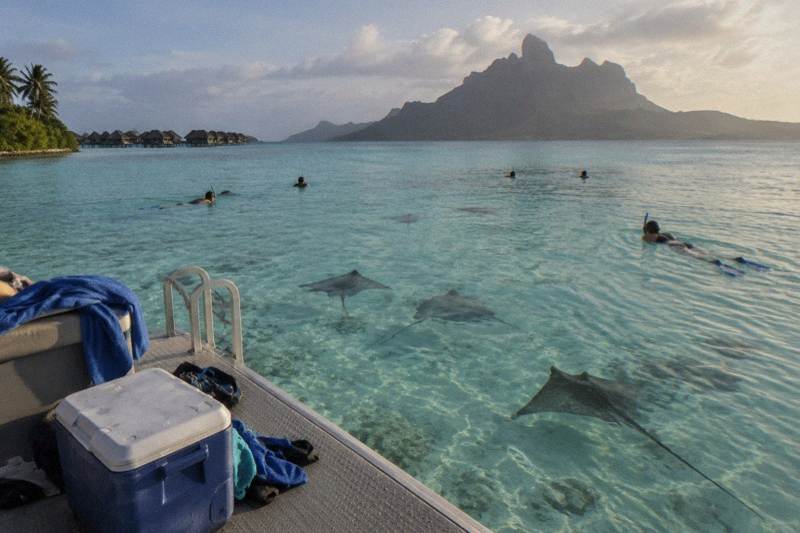
Is Bora Bora Snorkeling Good For Kids?
A family-focused look at Bora Bora lagoon snorkeling: age minimums, flotation and vests, how the shark and ray stops work for children, and which tour format fits families best.
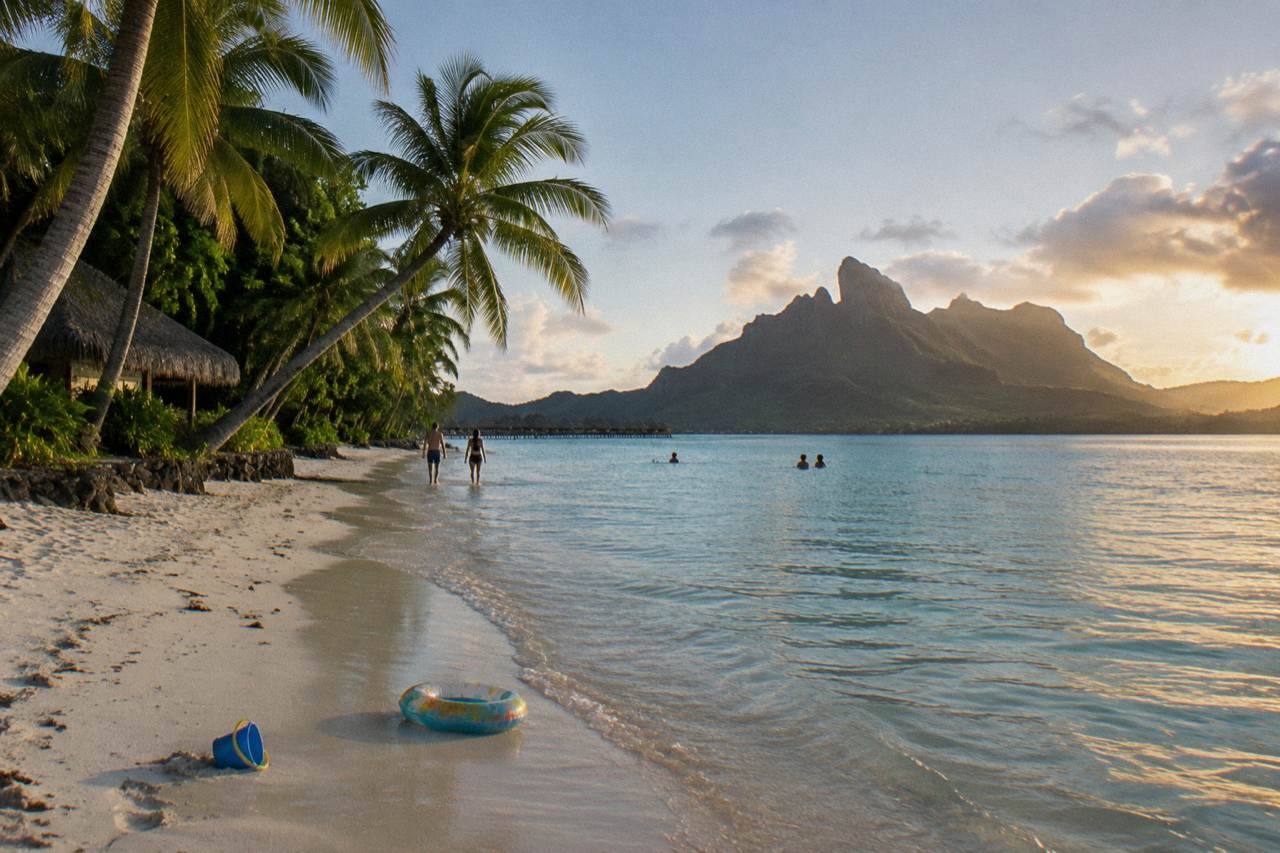
Is The Lagoon Right For Young Snorkelers?
Yes, Bora Bora snorkeling works well for kids, and the reasons are structural: the lagoon is calm and sheltered, the water stays warm year round, and most lagoon tours supply masks, snorkels and flotation vests while guides stay in the water with the group. The main parental decisions are the tour format, the length, and how comfortable each child is with the shark and ray stops.
The lagoon itself does most of the work. Bora Bora sits inside a barrier reef, so the water between the reef and the island is protected from the open ocean swell that makes many snorkeling destinations hard work for children. Operators and guides consistently describe the classic stops, the coral gardens and the shallow sandbars where rays gather, as beginner-friendly water rather than open-sea conditions. A sea-temperature series puts the lagoon between 26.7 and 28.9 degrees C across the year, which means no wetsuit is needed and no cold-shock factor for small swimmers.
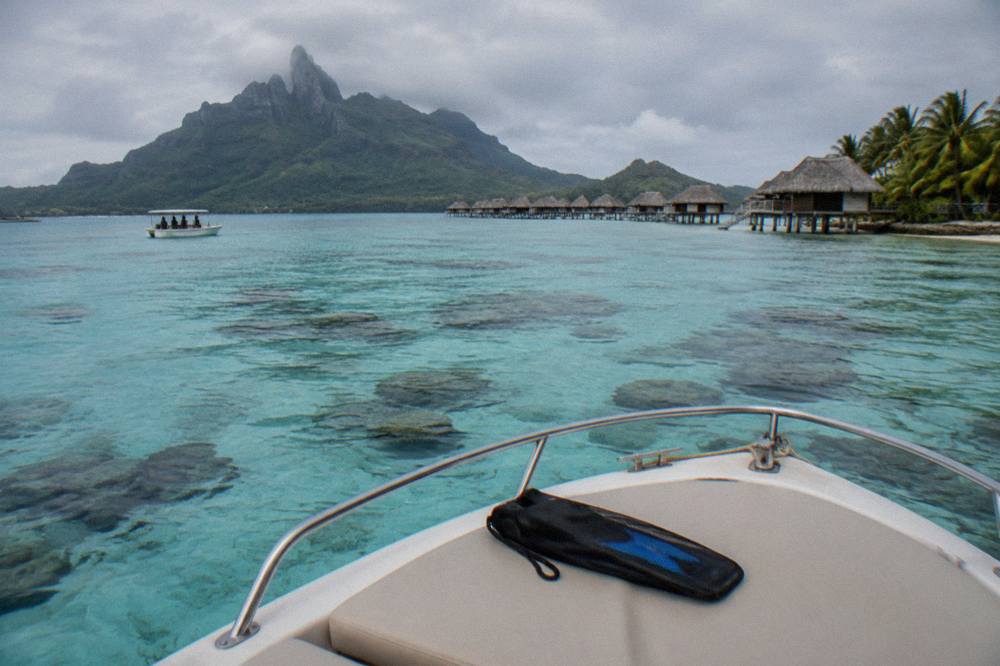
What makes it genuinely kid-friendly, though, is how the tours are built. The classic Bora Bora lagoon day is a sequence of short stops: a coral garden, a ray and shark spot, sometimes a motu beach for lunch. Children are never asked to swim a long distance; they slip off the boat, hold a guide's hand or a flotation line, look at fish for ten or fifteen minutes, and climb back aboard. Multiple operators, including H2O Bora Bora on its own FAQ page, state that they provide life jackets and flotation devices and explicitly welcome non-swimmers, adapting the tour to all swimming levels with guided supervision.
Families comparing options usually land on one of three formats: the full-day lagoon tour with a motu lunch, a shorter half-day circle of the lagoon, or a full-day lagoon safari with lunch run by the Rohivai team. All three pair children with sheltered water and included gear.
What Age Can Children Start Snorkeling In The Lagoon?
There is no single legal minimum age for lagoon snorkeling in French Polynesia; the limit is set by each tour listing, and ages vary by product. Most shared lagoon tours welcome school-age children with an accompanying adult, and several operators state that they carry child-sized masks, snorkels and life jackets. Always check the listing's own age and supervision terms before booking.
The practical answer is that the lagoon suits children from roughly the age they are confident floating in a pool, provided a parent is in the water beside them and the child wears a vest. The safety research for this site found that children are welcome on most lagoon tours with adult supervision required, that many operators supply child-sized gear and life jackets, and that some stops, particularly deeper manta sites, are better suited to confident swimmers. Certain tours list age, weight or medical restrictions on their listings, so the exact terms are per product rather than per island.
For the youngest travelers, the shore option matters. Matira Beach, at the southern tip of the main island, is Bora Bora's only public beach, with free access and shallow water over sand; guides describe it as the one shore-snorkeling spot that works without a boat. A toddler can paddle at the edge there while an older sibling tries a mask for the first time, at no cost and with no schedule. From that starting point, a short boat tour becomes a natural next step rather than a leap.
Families often ask about the sequencing question too: mask in the pool or bathtub first, vest always on the boat, first stop short. The coral garden stops are the ideal first snorkel because the fish are dense and the water is sheltered; the ray and shark stop, which we come to below, is usually second or third on the itinerary once a child has settled in. Reading the full guide to Bora Bora snorkeling spots before you choose helps you see which named sites the listing actually visits.
Which Tour Format Works Best For Families?
For most families the best format is a full-day lagoon tour with a motu lunch, because the midday beach break resets children before the afternoon stops, and the price step up from a half day is modest. Families with children under about six, or with short attention spans, do better on a half-day tour of three to four hours. Private boats suit mixed-age groups.
The full-day argument is simple arithmetic plus child psychology. The featured full-day lagoon group tour with lunch from Lagoon Service runs 6 hours from $173 per person, carries a 5.0 rating from 1,715 reviews, and includes the meal, the snorkel gear and pickup. A comparable half-day, the Reef Discovery half-day group signature tour, runs 3 hours 30 minutes from $134 per person with a 5.0 from 1,051 reviews. The difference per adult buys roughly two and a half more hours on the water and, more importantly for parents, a long unhurried lunch stop on a motu where children can run on sand, eat, and rest before the afternoon snorkel. That break is what stops the day from becoming a marathon.
The half-day argument is equally simple: some children are done at the two-hour mark, and dragging them through a sixth hour on a boat helps nobody. A half day also fits a cruise-port call or a resort day without consuming the whole of it. The Rohivai full-day lagoon safari with motu lunch, at 6 hours from $170 per person and a 4.9 from 825 reviews, sits between the two philosophies: a full circle of the lagoon with a Polynesian picnic, but on a shared boat with a set rhythm.
| Tour | Format | Length | From | Rating | Family notes |
|---|---|---|---|---|---|
| Full-Day Lagoon Group Tour with Lunch (Lagoon Service) | Small group, full day | 6 hours | $173 per person | 5.0 from 1,715 reviews | Meal and gear included, pickup listed |
| Reef Discovery Half Day Group Signature Tour | Shared, half day | 3 hours 30 minutes | $134 per person | 5.0 from 1,051 reviews | Good first-tour length, gear included |
| Full-Day Lagoon Safari with Motu Lunch (Rohivai) | Shared, full day | 6 hours | $170 per person | 4.9 from 825 reviews | Polynesian picnic lunch on a motu |
| Half-Day Lagoon Safari, shared (Rohivai) | Shared, half day | 4 hours | $112 per person | 4.9 from 259 reviews | Pickup listed, free cancellation listed |
| Half-Day Bora Bora Experience, Fruits on Motu Fanfan | Shared, half day | 4 hours | $105 per person | 4.9 from 47 reviews | Cheapest listing, fruit stop on a motu |
The row that surprises many parents is the last one. At from $105 per person, the Half-Day Bora Bora Experience with fruits on Motu Fanfan is the least expensive listing in the lineup and still includes a motu stop, which for a family testing whether the children enjoy boat snorkeling at all is a sensible first investment. Gear is listed as included; the meal is not stated.
Private boats change the equation for families with a wide age spread or a nervous swimmer. A private listing means the guide's attention is not divided among a dozen guests, stops can be shortened or extended, and a tired five-year-old can sit out a stop without derailing anyone else's day. On this lineup the private options start at from $560 per group for the Ocean Tour private lagoon, snorkel and motu lunch experience, with flexible hours of 3 to 6, and from $650 per group for the H2O Bora Bora private boat, 3 hours 30 minutes. For a family of four, that private price can sit close to the cost of four shared full-day tickets, and the private versus group lagoon tour comparison works through the trade-offs in detail.
The eco shark and ray cruise from Moana Adventure Tours deserves a mention here rather than in the safety section, because it is a format decision as much as anything: 2 hours 30 minutes from $112 per person, 4.8 from 604 reviews, and short enough that even a cautious child finishes while still enthusiastic.
Is The Shark And Ray Stop Suitable For Kids?
For most children old enough to snorkel, yes, the ray and blacktip shark stop is the highlight of the day rather than the problem, and it happens in shallow water with the guide standing on the sandbar beside the guests. Blacktip reef sharks, typically 0.5 to 1.5 m, are the species involved, guides brief everyone before entering, and stingray etiquette is simple: shuffle your feet, never grab.
It helps to know what the stop actually looks like. The boat pulls up over a shallow sandbank; the guide gets in first; rays and blacktip reef sharks, which operators describe as accustomed to visiting these spots, circle in clear shallow water while guests stand or float and watch. Children are usually in water they can stand in. The briefing before entry covers the same points every time: stay calm, do not chase or touch, let the guide manage any close interaction, and shuffle rather than step in sandy shallows where rays may be resting underfoot. Everything else covered here is indexed on Bora Bora Snorkeling Tours.
There is real law behind the calm, which parents may find reassuring. French Polynesia has protected all shark and ray species in its waters since 2006, under an environmental code whose wording prohibits any attempt to attract sharks or any action likely to alter their behavior. That legal framework is why lagoon tours present these stops as observation, not as a feeding show, and some eco-focused operators state a no-feeding policy outright and visit natural congregation areas instead. We say "commonly seen" and "operators describe" deliberately here: no honest source will promise a sighting, and no listing in this lineup does.
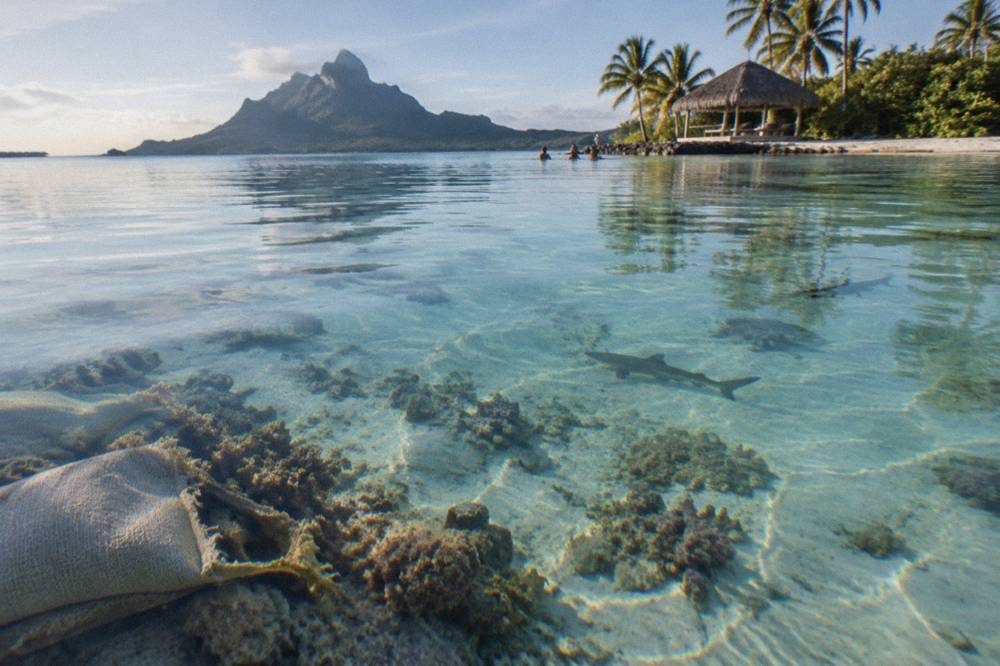
If a child is not ready for the shark stop, the workable approach is a simple one: that child stays on the boat with one parent, or floats at the surface holding the boat's line, while the rest of the family takes their turn. The stop is short. There is no failure in sitting one out, and guides on family-heavy departures see it weekly. The longer swimming with sharks and rays guide covers species, rules and etiquette in full if you want the detail before you brief your own crew.
What Should Families Pack For A Snorkel Day With Kids?
Pack reef-safe mineral sunscreen, rash guards for everyone, a change of clothes, water shoes for sandy and coral areas, motion-sickness consideration, and any own masks the children already trust. Operators supply snorkel gear and flotation vests on nearly every listing, so the family's job is sun protection, warmth after the swim, and snacks for the boat legs between stops.
Sun protection is the one that goes wrong most often. Equatorial sun over reflective lagoon water burns children fast, and a rash guard blocks more UV than any lotion application survives a two-hour swim. On sunscreen, the honest position is this: there is no blanket chemical-sunscreen ban in French Polynesia, so no one should tell you a law forbids your bottle, but guides strongly recommend mineral formulas, non-nano zinc oxide or titanium dioxide, to protect the reefs your children are there to see. The reef-safe sunscreen guide explains the ingredient list to look for.
Water shoes earn their space because the boat ladder, the motu sand and occasional coral rubble are all under bare feet otherwise. A dry bag for phones beats a soaked pocket. And if any adult in the party is prone to seasickness, medicate before boarding: the lagoon is calm but a boat is a boat, and a queasy parent flattens a family day faster than anything the ocean does. The full packing rundown, including what tours already carry, is in what to bring snorkeling in Bora Bora.
| Item | Why it matters for kids | Supplied on tour |
|---|---|---|
| Flotation vest or life jacket | Keeps non-swimmers and tired swimmers confident | Listed on nearly every tour |
| Mask, snorkel, fins | Child-sized fits matter more than brand | Listed as included on most listings |
| Rash guard | Sun and stinger protection that survives the swim | Not stated on listings, bring your own |
| Mineral sunscreen | Strongly recommended for reef protection | Not supplied, bring your own |
| Water shoes | Motu sand, ladders, coral rubble | Rarely stated, bring your own |
| Towel and dry change | After the last stop and for the ride home | Some operators list towels, check the listing |
One packing note specific to children: if your child has a mask they have already used in a pool, bring it. A familiar mask that does not leak is worth more on the day than a new one issued on the boat, and there is no operator in the lineup that would object to a child using their own.
How Much Does A Family Snorkeling Day Cost?
A family should budget using real lineup endpoints: the cheapest listing runs from $105 per person for the half-day Bora Bora Experience with fruits on Motu Fanfan, half days cluster between $112 and $151 per person, and shared full days run from $144 to $224 per person. Private family boats start from $560 per group, which for four people can rival the shared price.
The budget range deserves unpacking because the endpoints behave differently. At the low end, the Half-Day Bora Bora Experience with fruits on Motu Fanfan at from $105 per person is the least expensive way to put a family on the water with gear included, and still delivers a boat and a motu stop. In the middle, half days cluster between $112 and $151 per person across the lineup. At the top of the shared range sit the full days, $144 to $224 per person, and the value question shifts to lunch: the full-day lagoon group tour with lunch at from $173 includes the meal, so the day's food cost moves inside the ticket rather than beside it.
Private pricing reads differently because it is per group, not per person. The Ocean Tour private lagoon, snorkel and motu lunch experience lists from $560 per group for 3 to 6 flexible hours; the H2O private boat lists from $650 per group for 3 hours 30 minutes. For a family of four or five, those numbers land close to four shared full-day tickets while buying a guide whose attention never leaves your children. The wider Bora Bora snorkeling cost guide breaks the full budget, including the island's other costs, and the five-day Bora Bora budget article places the snorkel day inside a whole-trip picture.
Two money details parents should check rather than assume: free cancellation is listed on almost every tour, which matters when a child gets sick the night before, and pickup is listed on every one of the family-format tours above, which matters when you are coordinating small people rather than a pair of adults. Meal inclusions vary even between similar listings, so read each listing's own line rather than trusting the format label.
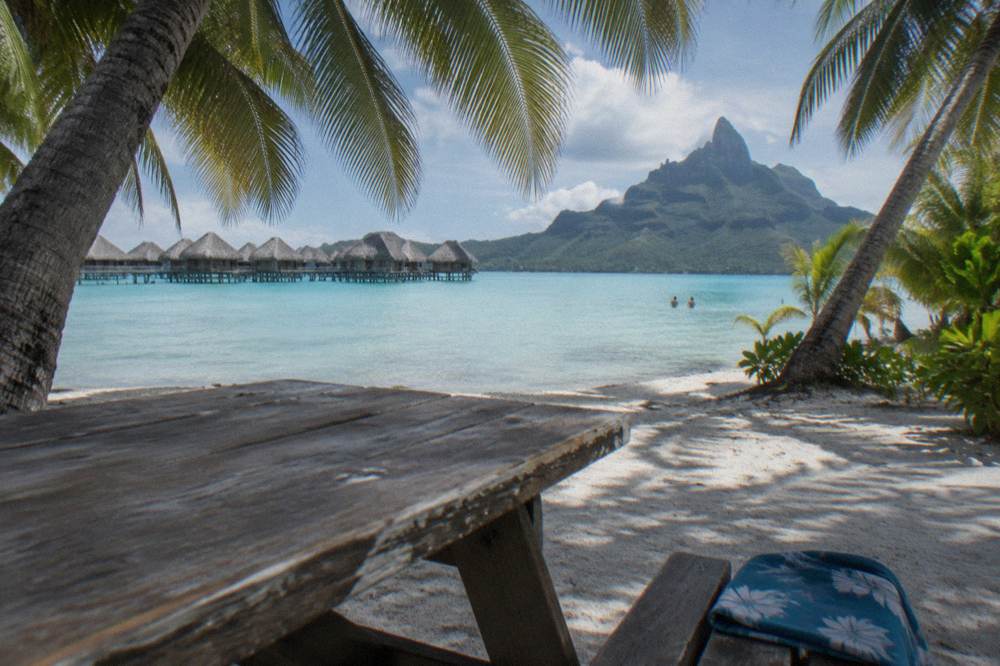
What About Non-Swimmers And Nervous Children?
Non-swimmers can join lagoon tours: operator FAQ pages state that life jackets and flotation are carried and that non-swimmers are welcome, with guides adapting to swimming levels. The approach that works is a vest from the start, a parent in the water beside the child, short first stops, and a tour short enough that confidence outlasts the itinerary.
The reason this works in Bora Bora specifically is the water. The stops on a standard family itinerary are shallow and sheltered, and the floating position with a vest on requires no swimming skill at all: a child in a life jacket can hold the boat's line or a guide's hand, face down in a mask, and watch the reef without a single stroke. That is the entire technical demand of the coral garden stop. The deeper or more exposed sites, such as the Anau manta area on the east side, are where operators themselves flag that confident swimming matters more, and a family tour is not the place to test that.
Nervy children respond to predictability, so give them the schedule in advance: boat ride, first stop where you float and look, second stop where the rays are, lunch on an island, one more look, home. Every element is short. The can non-swimmers snorkel in Bora Bora article covers the vest-and-float method in detail, and the same logic applies to a confident seven-year-old and an anxious adult alike, because the equipment does not know your age.
A last reassurance point, stated carefully: conditions and animals are variable, and no operator or honest guide will promise either. What the listings do promise is structure, gear, briefings and supervision, and those are the things a parent can actually book.
If the full-day format matches your family, checking dates early is worthwhile: July and August are the busiest months of the dry season, and family-friendly departures with meals included are the ones that fill first. Free cancellation is listed, so an early booking holds the day without locking the family in.
Common Questions About Bora Bora Snorkeling With Kids
Can children enjoy snorkeling in Bora Bora?
Yes. The lagoon is calm, sheltered and warm year round, operators supply masks, snorkels and flotation vests, and tours are structured as short guide-supervised stops. The main choices are the tour length and how each child handles the shark and ray stop, which happens in shallow water with a guide present.
What should parents know about bringing little ones on a Bora Bora snorkeling excursion?
Yes, the same answer holds in plain terms: shallow protected water, included gear and vests, brief stops, and guides in the water. Most families do best with either a half-day tour or a full-day tour with a motu lunch break in the middle.
What is the minimum age for lagoon snorkeling tours?
There is no island-wide minimum; each listing sets its own age, supervision and sometimes weight or medical terms. Most shared lagoon tours welcome school-age children with an accompanying adult, and several operators state they carry child-sized gear and life jackets.
Do the tours provide life jackets for children?
Yes, on nearly every listing in this lineup flotation and life jackets are listed, and operator FAQ pages explicitly welcome non-swimmers and adapt to all swimming levels. Child-sized gear is stated by several operators; bring your own mask if your child has one that fits.
Is the shark stop safe for children?
The stops are in shallow water with a guide briefing everyone before entry. Blacktip reef sharks, typically 0.5 to 1.5 m, are the common species, all sharks and rays have been protected in French Polynesia since 2006, and the standard etiquette is to stay calm, not touch, and shuffle feet in sandy shallows. A child who is not ready can stay on the boat for that short stop.
Which tour is best for a family with young children?
For children under about six, a half-day of 3 to 4 hours, such as the Reef Discovery half day from $134 per person, is the safer bet. For older children, a full-day lagoon tour with a motu lunch, from $173 per person with the meal included, gives a midday beach break that resets everyone before the afternoon stops.