Best Snorkeling Spots In Bora Bora, Mapped
Most of Bora Bora's best snorkeling sits out on the lagoon, at named spots a boat reaches in minutes, while Matira Beach is the one place you can swim in from shore. Here is what each spot shows, where it sits on the map, and how the island's lagoon tours connect them.
Short answer
The core Bora Bora snorkeling spots are the southern coral gardens, the Lagoonarium, the Anau manta ray cleaning station, the Tapu shark and ray site, and Matira Beach, the only shore entry. Half-day shared tours from $105 per person circle several of them, and the full-day lagoon tour with lunch, from $173 per person, ties them together with a motu stop.
The Bora Bora lagoon is not one snorkeling site but a ring of them, each with its own character, scattered between the barrier reef and the slopes of Mount Otemanu at 727 m. A handful of names come up on every operator's route card: the coral gardens near the southern motus, the Lagoonarium, the Anau cleaning station on the east side, the Tapu shark and ray site, and Matira Beach at the island's southern tip. Knowing where each one sits, and what it actually shows, is the difference between booking the right boat and spending a half day at stops that do not match what you came for.
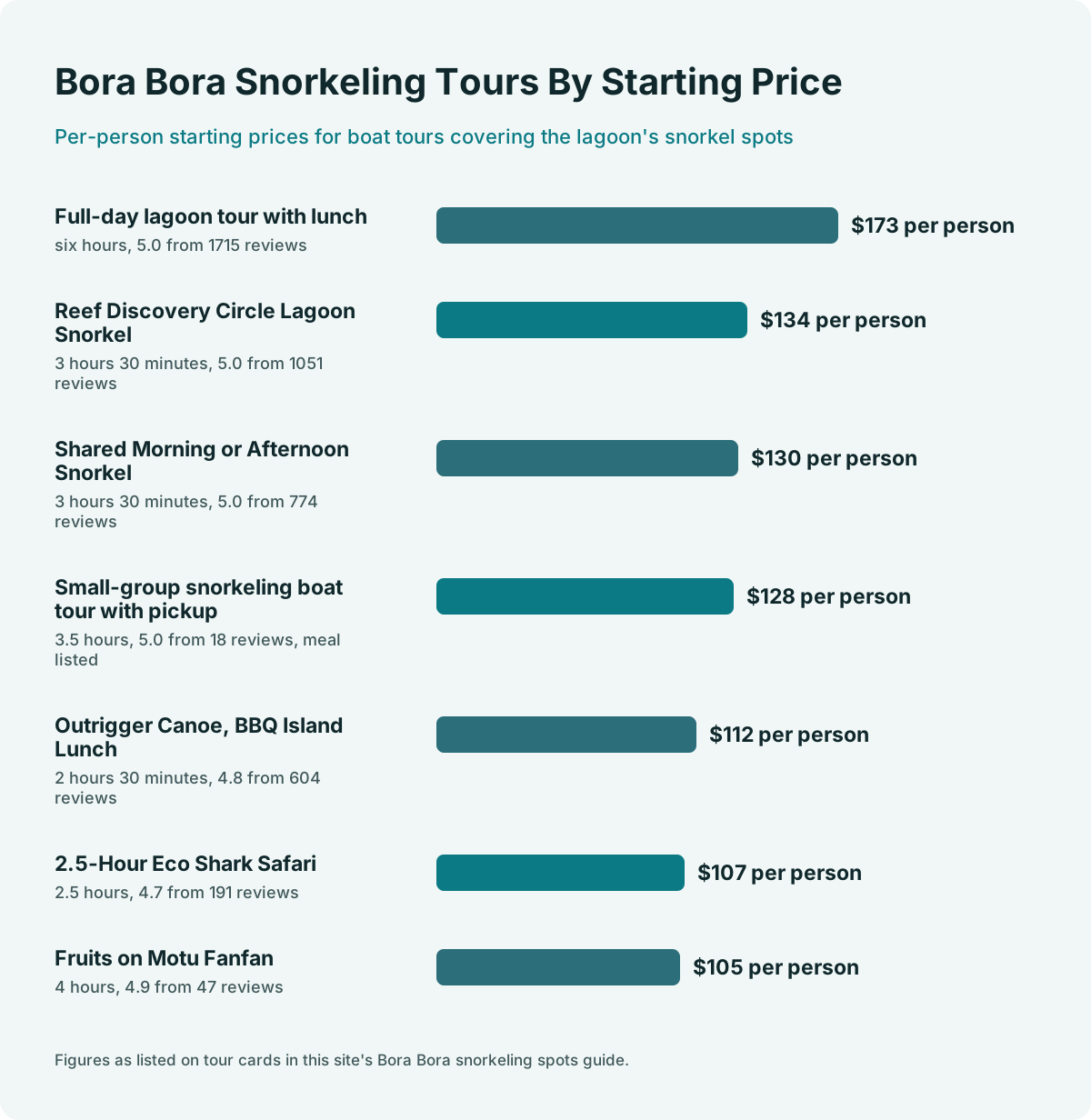
This guide maps them in the order a boat would circle the lagoon, then matches each spot to the tours that reach it. The practical headline is simple: everything except Matira is boat territory, and Bora Bora Snorkeling Tours exists mostly because that is true. The Reef Discovery half day, from $134 per person, the eco shark and ray cruise from $112 per person, and the full-day lagoon tour with lunch from $173 per person cover the great majority of these stops between them.
Where Is The Best Snorkeling In The Bora Bora Lagoon?
The best snorkeling in Bora Bora concentrates in five areas: the southern coral gardens for reef fish, the Lagoonarium for guided marine life encounters, Anau on the east side for manta rays, the Tapu site for blacktip reef sharks and stingrays, and Matira Beach as the only free shore entry. Boat tours reach all but Matira, and the stops they string together in three to seven hours define the island's snorkeling offer.
The lagoon's geography explains the spread. The main island sits inside a barrier reef, with motus, the small islets, lining the eastern edge, and the airport out on Motu Mute to the north. Operators launch from resort docks and the Vaitape quay, then work a circuit: coral gardens near the southern motus, a shark and ray stop in the shallow sand flats, and, on east-side routings, the Anau cleaning station. Guides describe mornings as the calmer window at the exposed stops, and the dry season from May to October as the time operators most often call the water clearer.
What "best" means depends on you. Reef fish in sheltered, shallow water point to the coral gardens and the spot operators simply call the Aquarium, a high-density fish site near Motu Pitiuu Uta. Big animals point to Anau for mantas and to the shark and ray flats for blacktips and stingrays. A single reef stop with everything condensed into one swim points to the Lagoonarium, a natural lagoon aquarium on a motu with guided snorkeling among sharks, rays and turtles. Each has a different boat routing, which is why the tour you pick matters more than the island you pick.
| Spot | Where it sits | Access | What it is known for |
|---|---|---|---|
| Coral gardens (Southern Coral Gardens) | Near Motu Piti Uu Uta, south lagoon | Boat only | Hard and soft coral, reef fish, blacktip reef sharks commonly reported |
| The Aquarium | Motu Pitiuu Uta area | Boat, lagoon tour stop | Exceptionally high density of reef fish in sheltered water |
| Lagoonarium | On a motu in the lagoon | Boat, dedicated half-day entry | Guided snorkeling with sharks, rays, turtles in a natural lagoon enclosure |
| Anau | East side of the lagoon | Boat only, no shore access | Manta ray cleaning station, turtles, eagle rays |
| Tapu shark and ray site | Shallow sand flats inside the reef | Boat, standard lagoon tour stop | Blacktip reef sharks and stingrays in waist-deep water |
| Matira Beach | Southern tip of the main island | Shore, free public beach | Shallow sandy-entry snorkeling, stingrays and reef fish near the point |
What Does Each Lagoon Snorkel Stop Show Around Bora Bora?
Each stop shows something different: the coral gardens hold the reef fish and coral formations, the Aquarium is the fish-density stop, Anau is the manta stop, Tapu is the shark and ray stop, and the Lagoonarium condenses sharks, rays and turtles into one guided swim. Operators rotate stops by conditions, so a tour listing several sites will usually swim three of them on any given departure.
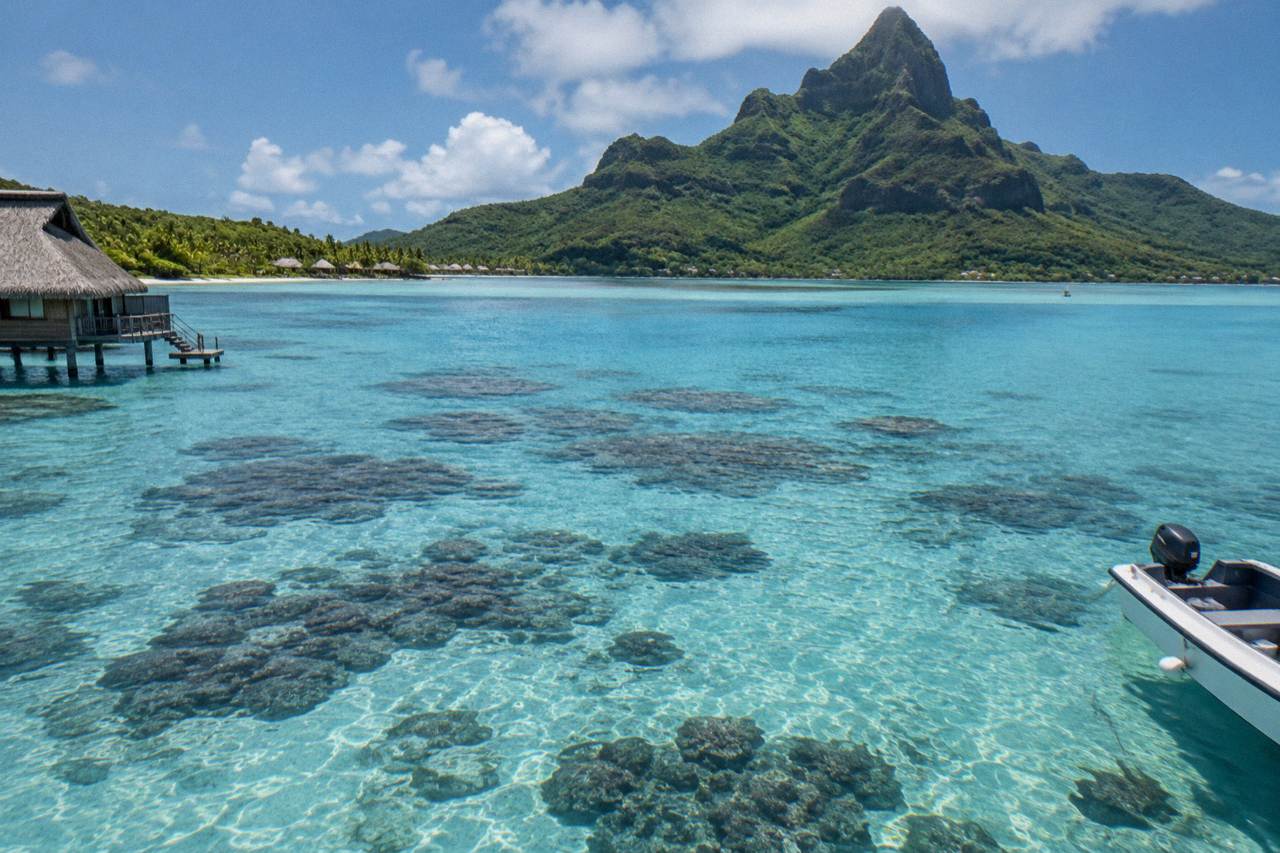
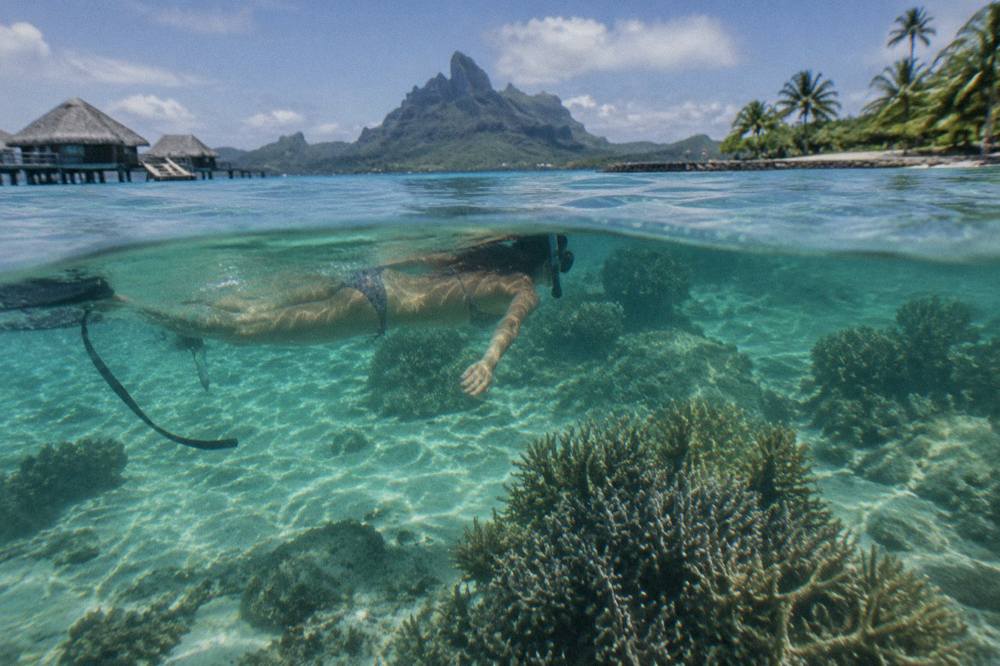
The coral gardens are the backbone of nearly every route. Guides describe sheltered, shallow water over coral heads where butterflyfish, Moorish idols, parrotfish and sergeant majors school in numbers, with blacktip reef sharks and stingrays commonly reported at the southern gardens near Motu Piti Uu Uta. Because the site sits inside the reef, it works for beginners, and the listing for the Reef Discovery half day group signature tour, 5.0 from 1051 reviews, from $134 per person for three and a half hours, is built exactly around this style of stop, a circle-lagoon routing with gear and pickup included.
Anau is the specialist stop. The site on the east side of the lagoon is a manta ray cleaning station, where reef mantas come to be cleaned by wrasses, and the local operator Tohora's own snorkeling map of the Anau site notes that visibility there varies and can be particle-loaded, since two coral reefs are separated by sand. Current 2026 guides state Anau is accessible only by boat tour, with no public shore access, because of private residential frontage, currents and reef protection. Etiquette is strict and worth knowing before you go: stay at the surface, stay calm and horizontal, and never dive down, touch, chase or block the animals' path, rules grounded in French Polynesia's environmental code, which has protected all shark and ray species in its waters since 2006.
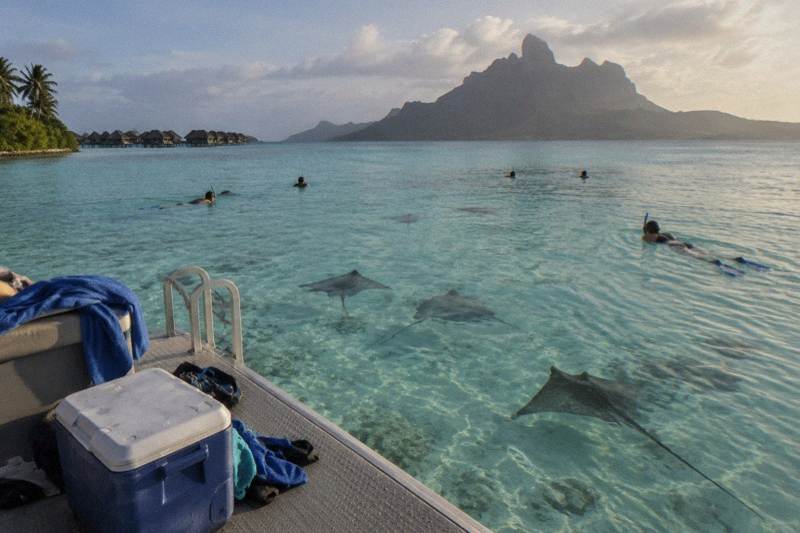
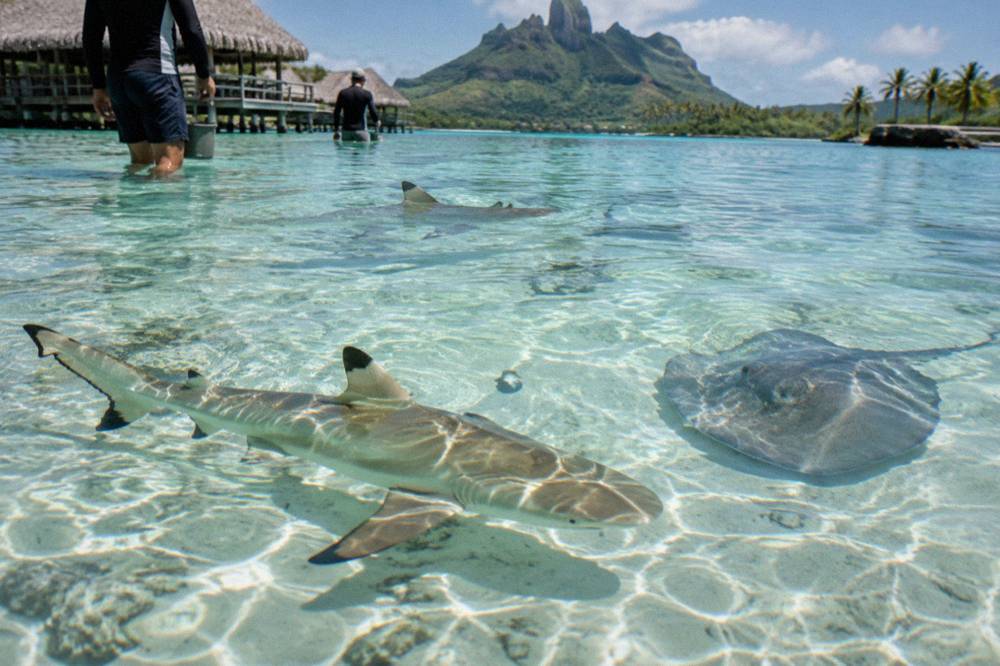
Tapu, the classic shark and ray flat, is where the famous waist-deep photos come from. Blacktip reef sharks, typically 0.5 to 1.5 m, and southern stingrays gather in shallow sand, and guides brief guests on how to behave around them. Stingrays use their barbed tail only in defense, so the standing advice is to shuffle your feet in sandy shallows and let guides handle any close interaction rather than grabbing or touching. Practices vary at these stops; the eco cruise, for one, states a no-feeding policy and visits natural congregation areas instead. Report what each listing states, and choose accordingly: the Bora Bora eco snorkel cruise including snorkeling with sharks and stingrays, 4.8 from 604 reviews, from $112 per person for two and a half hours, is the small-group eco option on this site.
The Lagoonarium is the odd one out, a natural lagoon aquarium on a motu rather than an open reef stop, with guided snorkeling among blacktip reef sharks, lemon sharks, manta rays, sea turtles and pink whip stingrays. It suits swimmers who want guaranteed proximity to marine life in a controlled setting rather than open-water searching. Our Lagoonarium guide covers it in depth, including how its half-day entry differs from a circle-lagoon boat tour.
If your priority is stitching several of these stops into one booking, these are the half-day tours that do it:
| Tour (card name) | Duration | From | Rating | Format |
|---|---|---|---|---|
| Reef Discovery Circle Lagoon Snorkel | 3 hours 30 minutes | $134 per person | 5.0 from 1051 reviews | Shared, gear and pickup listed |
| Traditional Outrigger Canoe Snorkel | 2 hours 30 minutes | $112 per person | 4.8 from 604 reviews | Small group, eco shark and ray cruise |
| Shared Morning or Afternoon Snorkel | 3 hours 30 minutes | $130 per person | 5.0 from 774 reviews | Shared, gear and pickup listed |
| 2.5-Hour Eco Shark Safari | 2.5 hours | $107 per person | 4.7 from 191 reviews | Shared, eco no-feeding routing |
| Fruits on Motu Fanfan | 4 hours | $105 per person | 4.9 from 47 reviews | Shared, cheapest lineup half day |
Between those three formats, shared half day, eco small group and full day with lunch, you cover the coral gardens, the shark and ray flats and most east-side routings. The full-day lagoon group tour with lunch, 5.0 from 1715 reviews, the most reviewed listing on this site's lineup, from $173 per person for six hours, simply adds time: more stops, a motu lunch, and the chance to reach sites a short half day skips.
Can You Snorkel At Matira Beach Without A Tour?
Yes. Matira Beach at the island's southern tip is Bora Bora's only public beach, free to access with no gates or resort requirement, and it offers shallow shore snorkeling over sand with stingrays and reef fish reported near the point. It is the only one of the island's named snorkeling spots you can reach without a boat, and current guides rank it the sole recommended shore entry.
Matira sits about 7 km, roughly a 12-minute drive, from Vaitape along the 32 km ring road. The beach is public and free, with shallow lagoon water suited to swimming and snorkeling if you bring your own gear. Sightings reported by guides include stingrays, butterflyfish, Moorish idols, parrotfish, sergeant majors and damselfish, with the honest caveat that the coral condition is not pristine: this is a convenient, free swim, not a substitute for the boat stops. Our dedicated Matira Beach snorkeling guide walks the entry points, and our budget and free things page lists the other no-cost shoreline options.
One thing changed recently and it matters to Matira swimmers. In December 2025 a decree established the Popora rahui, a 574-hectare Class 1A no-take marine protected area on the southern reef off Matira, French Polynesia's first full-protection lagoon zone, reported by Radio1 Polynésie and picked up across 2026 travel coverage. It closes a band of the southern reef to fishing, anchoring, boating and nautical activity. Matira Beach itself remains open and free; tours do not enter the protected zone; and no tour has ever been routed into it. The practical effect on a Matira swim is nil, but swimmers heading past the point toward the outer reef should know the boundary exists and respect it.
If you snorkel Matira and want the boat stops too, the natural pairing is a half day on the water. The Reef Discovery half day, from $134 per person with free cancellation listed, picks up at hotels and the quay, so you can swim Matira in the morning and be on a boat the same afternoon.
Which Beach Is Best For Snorkeling?
Matira Beach is the best, and effectively the only, beach for snorkeling on Bora Bora's main island: it is the island's sole public beach with free access and shallow shore snorkeling over sand. Every other quality snorkeling site in Bora Bora sits out in the lagoon and needs a boat, which is why beach choice matters far less here than tour choice.
That answer surprises visitors who imagine a string of swimmable coves. The main island's shoreline is largely private resort frontage, and the shallow, sandy public stretch at Matira is the exception. Its snorkeling is genuinely pleasant, stingrays and reef fish near the point, waist-deep entry, no fees, but guides note the coral is not in pristine condition. For a fuller treatment of the comparison, our blog post which beach is best for snorkeling in Bora Bora takes the question beach by beach.
The honest planning frame is this: pick Matira for a free, flexible, no-schedule swim, and pick a lagoon tour for coral, sharks, rays and mantas. A half day like the small-group snorkeling boat tour with pickup, 5.0 from 18 reviews, from $128 per person for 3.5 hours with a meal listed, costs little more than a morning's beach parking and rental gear elsewhere in the world, and reaches three or four boat-only sites.
How Do You Reach Anau And The Manta Ray Cleaning Station?
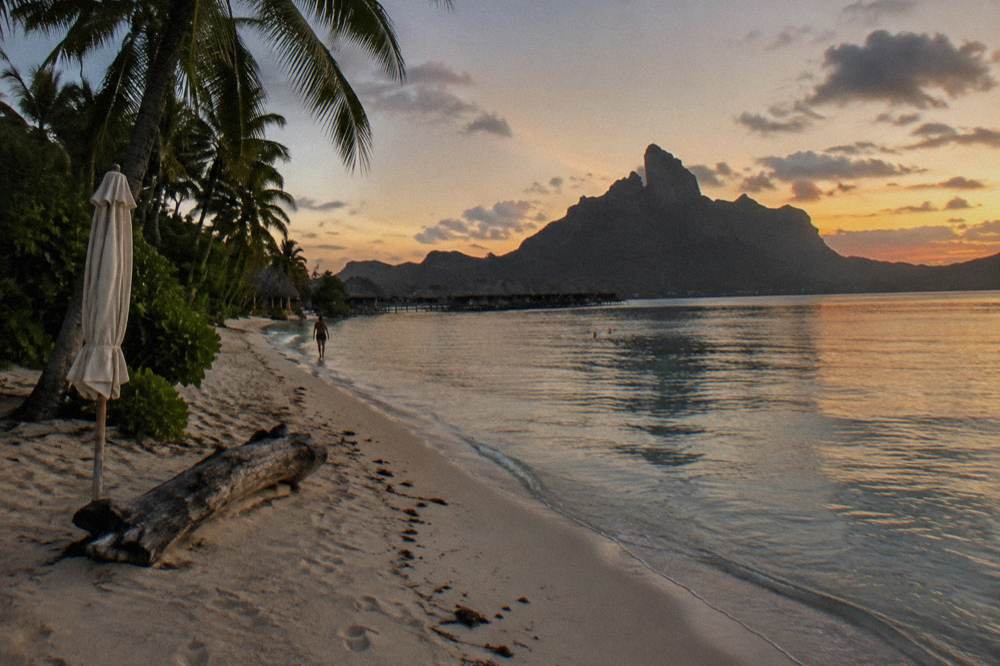
Anau is reached only by boat tour: the cleaning station on the lagoon's east side has no public shore access, and 2026 guides are explicit that entering from land is neither recommended nor permitted, owing to private residential frontage, currents and reef protection. East-side lagoon tours and private boats are the two realistic ways to swim it.
The station works because reef manta rays come to fixed coral patches to be cleaned by wrasses, a behavior that concentrates them predictably enough that operators can plan swims around it, though no sighting is ever promised and none should be expected as certain. Alongside mantas, the site reports turtles, eagle rays, blacktip sharks and tropical fish. Tohora's Anau map page notes the site is deeper and more exposed than the shallow gardens, and that visibility varies and can be particle-loaded, so conditions, not distance, decide whether a guide swims it on a given day.
Booking-wise, look for tours that name the east side or manta stops in their route description, or go private. The Bora Bora lagoon snorkeling tour by private boat, 5.0 from 126 reviews, from $650 per group for three and a half hours with H2O Bora Bora, lets you weight the routing toward Anau, and the operator's own FAQ confirms private trips adapt to swimming levels and provide flotation. For everything on the manta question specifically, our manta rays guide covers seasonality and etiquette.
Where Do The Shark And Ray Snorkel Stops Happen In Bora Bora?
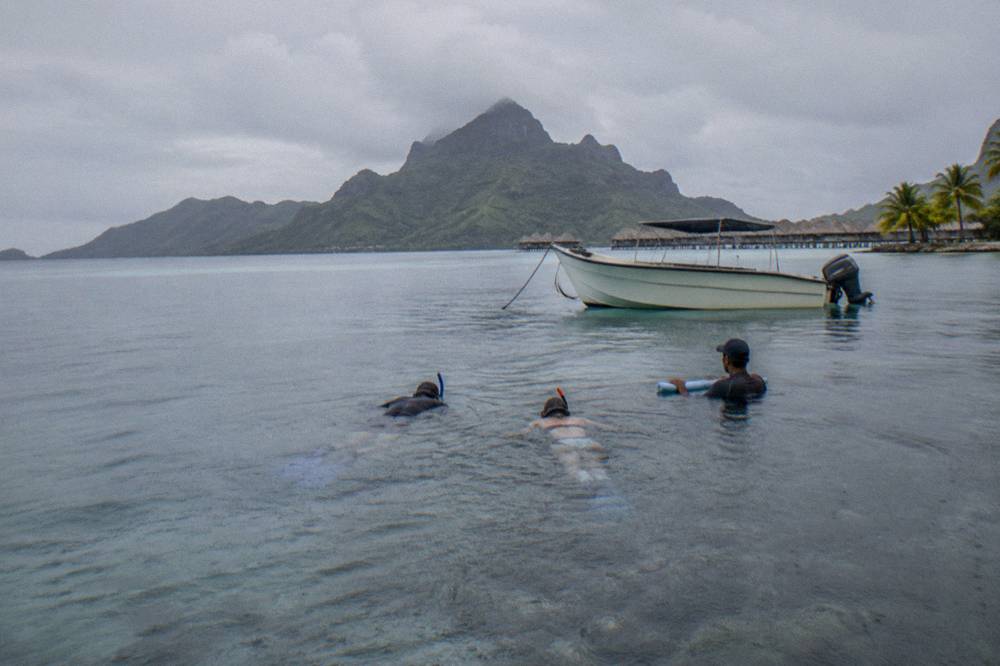
The shark and ray stops happen on shallow sand flats inside the barrier reef, reached on standard lagoon tours: blacktip reef sharks, typically 0.5 to 1.5 m, and southern stingrays gather in water shallow enough to stand in, with guides briefing guests before entering. French Polynesia has protected all shark and ray species since 2006, and its environmental code prohibits attracting sharks or altering their behavior.
That legal backdrop is worth understanding because it shapes what tours can say. The sanctuary, the world's largest of its kind, means the swimming you do at these flats is observation, not a feeding show, and the code's wording is blunt: any attempt to attract sharks, or action likely to modify their behavior, is strictly prohibited. In practice French Polynesian environmental rules prohibit attracting or feeding sharks and rays, so tours visit natural congregation areas where the animals gather on their own; read the listing for each operator's approach and pick the style you are comfortable with. The 2.5-hour eco shark safari, 4.7 from 191 reviews, from $107 per person, is the lineup's dedicated eco option.
Safety framing matters too, and honesty beats reassurance. Blacktip reef sharks are the common species at these stops and are described by operators and guides as non-aggressive toward snorkelers, but no honest source calls any shark risk-free, and none should. Guides brief guests, flotation is available, and the rules apply to everyone in the water. Stingrays defend themselves only when stepped on or grabbed, so the shuffle-your-feet advice in sandy shallows is standard. Our swimming with sharks and rays guide goes deeper, and the safety questions are handled in is it safe to swim with reef sharks.
Which Tours Reach The Best Snorkeling Spots In Bora Bora?
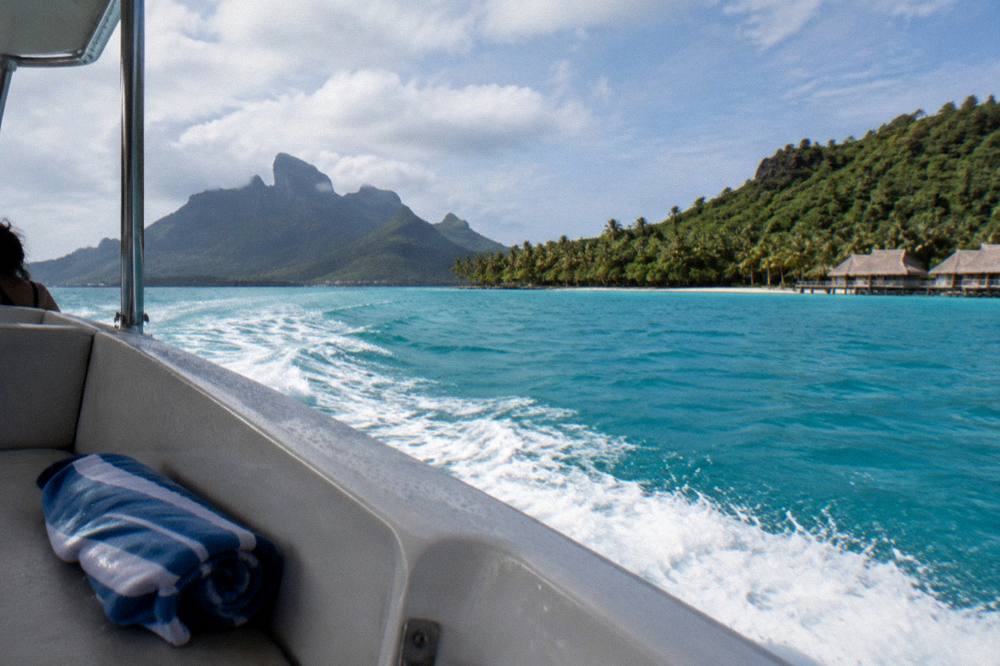
Half-day shared tours from $105 to $151 per person reach the coral gardens, the Aquarium and the shark and ray flats; full-day tours from $144 to $224 per person add east-side routing and a motu lunch; and private boats from $560 per group let you weight the day toward Anau or a quiet garden. Duration, not price, is the main driver of how many named spots you actually swim.
The half-day band is where most visitors land, and the lineup is deep enough to match any schedule. The Reef Discovery half day group signature tour, from $134 per person, is the standout on review volume, 5.0 from 1051 reviews, a shared circle-lagoon routing with pickup and gear listed. The H2O Bora Bora shared morning or afternoon snorkel, from $130 per person, 5.0 from 774 reviews, offers the same window in a shorter 3.5-hour frame. The eco cruise from $112 per person runs 2.5 hours, the shortest structured option that still touches sharks, rays and a garden stop. Our coral gardens guide explains what to expect at the reef stops these tours share.
Full days change the math. Six to seven hours on the water means the boat is not turning back after two stops, and lunch happens on a motu rather than back at the hotel. The full-day lagoon group tour with lunch, from $173 per person, 5.0 from 1715 reviews, is the category's anchor, small group with meal and gear listed. The Vavau Adventures full-day snorkelling tour, from $158 per person, 4.9 from 170 reviews, runs seven hours, while the Motu Fanfan full-day experience stretches to seven hours from $144 per person. How long a lagoon tour takes, and which format fits a short stay, is broken down in how long does a Bora Bora lagoon tour take.
| Format | Lineup price band | Typical duration | Spots reached |
|---|---|---|---|
| Shared half day | From $105 to $151 per person | 2.5 to 5 hours | Coral gardens, shark and ray flats, Aquarium |
| Small-group half day | From $128 to $134 per person | 3.5 to 4 hours | Same stops, fewer guests on board |
| Full day with lunch | From $144 to $224 per person | 6 to 7 hours | All of the above plus motu lunch and longer east-side routing |
| Private boat | From $560 to $1,776 per group | 3 to 6 hours | Operator-set routing, Anau and quieter gardens weighted on request |
For readers weighing shared against private, our private versus group lagoon tour guide runs the full comparison, and the lagoon tour overview covers what a standard day looks like stop by stop.
When Is The Water Best At The Bora Bora Snorkeling Spots?
The dry season, May to October, is when operators and guides most often describe the calmest conditions and clearest water at Bora Bora's snorkeling spots, matching the Meteo-France record: rainfall falls from 245 mm in January to 61.9 mm in July, and rain days drop from 17.2 to 8.8. A sea-temperature series puts the lagoon at 26.7 to 28.9 C year-round, so warmth is never the constraint, weather is.
That monthly gradient is the single most useful planning fact on this page. The wet season, November to April, does not close the lagoon; it means a higher chance of squalls and murkier surface conditions on any given morning, and tours still run, with free cancellation and rebooking on weather on most listings. July and August are the busiest, most expensive months, and the shoulder months of May, June, September and October deliver similar sea conditions with thinner crowds. The full seasonal breakdown, including the July-to-November whale season and what it does and does not mean for snorkel boats, sits in our best time to snorkel guide.
| Month | Rainfall (mm) | Rain days (1 mm or more) | Sea temperature (C, secondary series) |
|---|---|---|---|
| January | 245 | 17.2 | 28.4 |
| March | 168.1 | 14.5 | 28.9 |
| July | 61.9 | 9.4 | 26.9 |
| October | 108.7 | 10.6 | 27.3 |
Whatever the month, the same practical rules apply at every spot on this map. There is no blanket chemical sunscreen ban in French Polynesia as of 2026, but mineral non-nano zinc oxide or titanium dioxide formulas are strongly recommended by guides to protect the reef, a topic our reef-safe sunscreen post covers fully. Never touch coral, never chase or block a manta, let guides run the ray interactions, and follow the briefing at the shark flats.
A full day is the format that best uses a dry-season morning: it reaches the gardens early while the water is calm, adds the shark and ray flats, and still has time for the east side and a motu lunch before the afternoon breeze fills in.
Common Questions About Snorkeling Spots In Bora Bora
Which beach is best for snorkeling?
Matira Beach, at the southern tip of Bora Bora's main island, is the best and effectively the only beach for snorkeling: it is the island's sole public beach, free to access, with shallow shore snorkeling and stingrays and reef fish reported near the point. Every other named snorkeling spot sits out in the lagoon and needs a boat tour.
Can you snorkel from the shore in Bora Bora?
Yes, but only at Matira Beach. It is the only recommended shore-entry snorkeling spot on current guide maps, with free public access over sand. The coral gardens, the Aquarium, the Lagoonarium, Anau and the shark and ray flats are all boat-access only.
Can you snorkel with manta rays in Bora Bora?
Yes, at the Anau cleaning station on the lagoon's east side, reached by boat tour only. Sightings are never guaranteed, since mantas are wild animals following their own schedule, but the site is the island's known manta location and operators route east-side swims there when conditions allow.
What is the Popora rahui and does it close any snorkeling spots?
The Popora rahui is a 574-hectare no-take marine protected area decreed in December 2025 on the southern reef off Matira, closed to fishing, boating and nautical activity. It does not close Matira Beach, and tours do not enter it: they route around the protected band, which was not part of standard tour routings.
How much does a tour to the snorkeling spots cost?
On this site's lineup, shared half-day lagoon tours run from $105 to $151 per person, full-day tours with motu lunch from $144 to $224 per person, and private boats from $560 to $1,776 per group. The cheapest half day is the Fruits on Motu Fanfan excursion at from $105 per person.
Do you need to be a strong swimmer to snorkel the Bora Bora lagoon?
No. Multiple operators provide life jackets and flotation and explicitly welcome non-swimmers, adapting stops to swimming levels with guided supervision, and the main stops are shallow and sheltered. Confident swimming helps only at deeper, more exposed sites such as Anau.