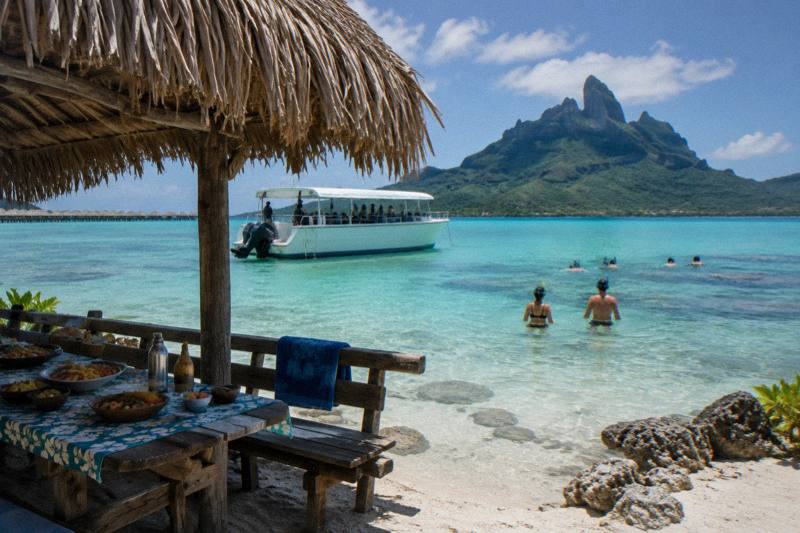
Is It Safe To Go To Bora Bora Right Now?
A research-backed answer to whether Bora Bora is safe to visit and snorkel right now: sea and wildlife rules, health, family logistics, and which tours run safely year-round.
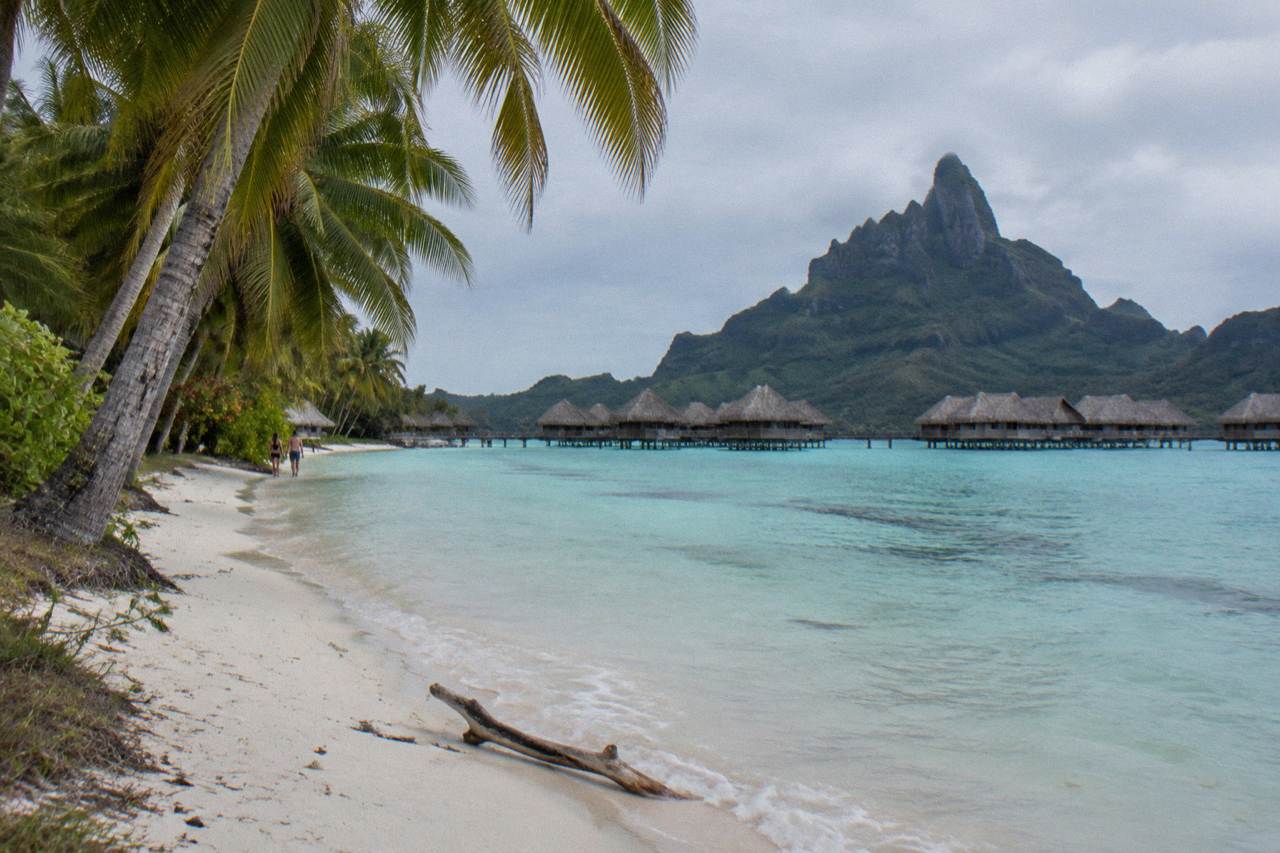
Yes, in the practical sense that matters to travelers, Bora Bora is safe to visit right now. French Polynesia admits US, EU, Canadian, Australian, New Zealand and Japanese citizens visa-free for tourism stays up to 90 days, the island runs on a single quiet ring road, and its biggest genuine considerations are the sea, the sun and the wildlife rules around it. French Polynesia recorded a record roughly 281,227 tourists in 2025, a 6.6 percent rise on 2024, and the territory's stated strategy is managed, high-value travel rather than unlimited expansion.
That is the headline. The detail worth knowing is that most safety questions on this island are not about crime or unrest, they are about water. Sharks, rays, currents, sea state and sun exposure are where preparation actually changes your trip. The sections below take each one in turn, using current research and the live tour listings rather than reassurance.
For readers whose end goal is the lagoon, the good news is that the main tour products are built around cautious practice. The full-day lagoon tour with lunch from Lagoon Service, the Reef Discovery half day and the small-group cruise with snorkelling all list pickup, snorkel gear and free cancellation, and operators on the island explicitly welcome non-swimmers with flotation and guided supervision.
How Safe Is Bora Bora For Visitors?
Yes, Bora Bora is safe to visit right now in the official travel-advisory sense, because nothing currently on file flags the island as a destination that travelers should avoid. If you already have a trip planned, no formal warning stands in your way, and the everyday caution you would use anywhere covers the rest. The territory welcomes visa-free tourism for up to 90 days for a long list of nationalities including the United States, and arrivals run through a domestic flight network rather than any hazardous crossing. The island itself is about 30.55 square kilometers with a 32 km ring road, roughly a 45 minute drive end to end. French Polynesia's 2025 record of about 281,227 visitors arrived without any reported disruption to that picture.
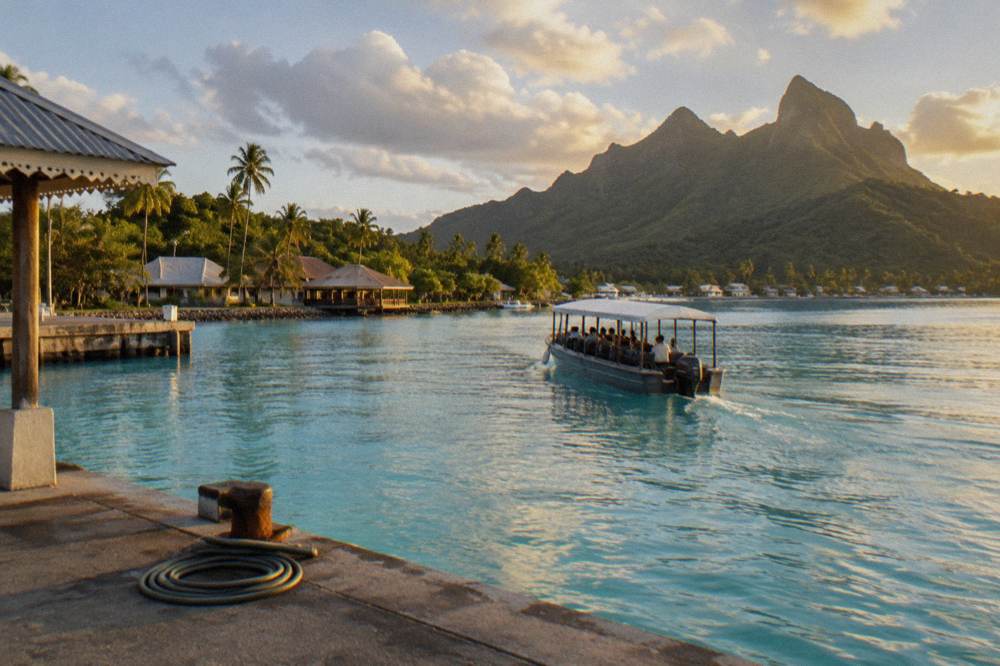
The journey is the least dramatic part. There is no regular passenger ferry between Papeete and Bora Bora; the connection is by air, with direct flights from Faa'a in Tahiti to Motu Mute operated multiple times daily by Air Tahiti and Air Moana, typically around 50 minutes. Cruise ships anchor in the lagoon and tender passengers to the public quay at Vaitape, a ride that typically takes 15 to 20 minutes.
What "safe right now" means here is mostly stable. The island's environmental rules have tightened in one visible way: a 574 hectare no-take zone south of Matira was established by decree in December 2025, and tours do not enter it. That is a conservation measure, not a danger signal, and it does not affect the standard snorkel circuit of coral gardens, ray and shark stops.
Readers deciding between ship excursions and independent tours can weigh the practical differences in the cruise versus independent lagoon tour comparison; both run on the same lagoon with the same operators.
What Are The Main Safety Considerations In Bora Bora?
The main safety considerations in Bora Bora come down to four things: sun exposure, sea state, contact with marine life, and simple water confidence. Together, these account for nearly all real incidents and near-misses, so keeping them in mind and preparing for each one before you head out covers the vast majority of what you realistically need to worry about. None of them are exotic. French Polynesia's climate puts the lagoon at 26 to 29 degrees Celsius year-round, so cold water is never the issue, but the tropical sun is, and a full morning on an open boat burns skin that sunscreen applied once at the dock will not protect. Sea state matters most in the wet season from November to April, when rain squalls and reduced clarity are more common.
The wildlife rules are strict and worth knowing before you swim. French Polynesia has protected all shark and ray species in its waters since 2006 under its Environmental Code, which prohibits any attempt to attract sharks or alter their behavior. Some operators run eco no-feeding policies and visit natural congregation areas instead; report only what a listing itself states about feeding, because the practice is regulated.
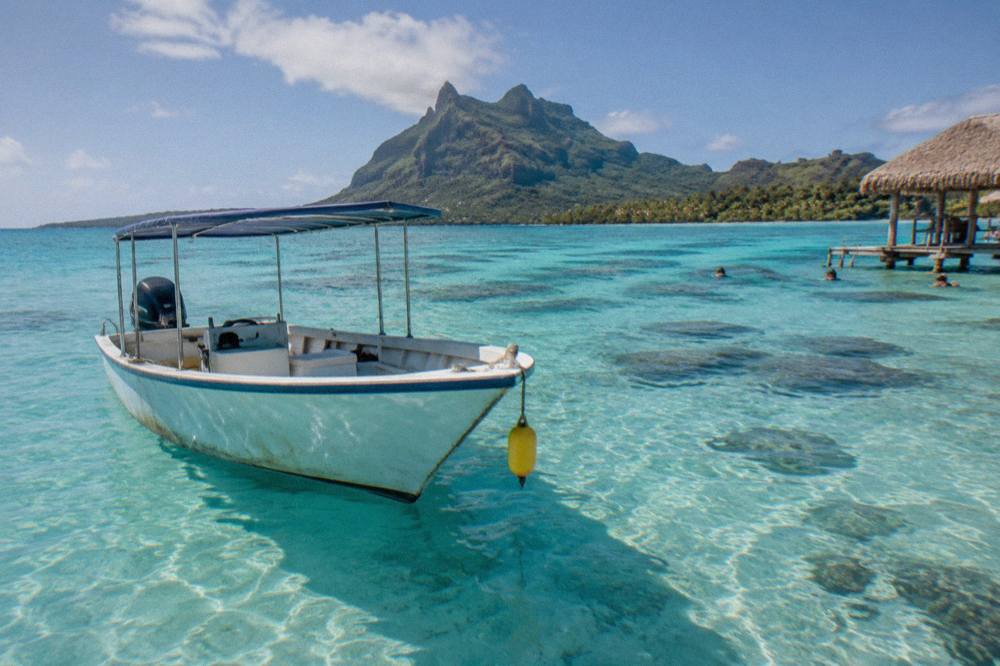
The table below summarizes the practical risk picture as the current sources describe it.
| Consideration | What the sources say | Practical response |
|---|---|---|
| Sun exposure | Tropical latitude, full-day tours run 6 to 8 hours | Mineral sunscreen, reapplication, rash cover |
| Sea state | Dry season May to October is calmer; wet season brings squalls | Book mornings, check the forecast |
| Marine life contact | Rays use their barbed tails only defensively; do not touch or chase | Shuffle feet in sandy shallows, follow the guide |
| Water confidence | Operators list life jackets and welcome non-swimmers | Say so at booking; supervision is guided |
| Coral and reef damage | Touching coral harms it and can cut skin | Fins off in shallow gardens, buoyancy easy in salt water |
Guides brief guests at every stop, and the rules apply to everyone. A reasonable reading of the research is that Bora Bora rewards travelers who treat it like any water destination: prepared, sun-screened, and listening to the person driving the boat.
If the question behind the question is whether to book ahead, the Bora Bora Snorkeling Tours lineup runs the same circuit year-round, and every listing in the comparison above carries free cancellation as stated on its live page.
Is It Safe To Swim And Snorkel In The Bora Bora Lagoon?
Yes, it is safe to swim and snorkel in the Bora Bora lagoon, which is the island's most forgiving water. The lagoon is shallow, stays warm at 26 to 29 degrees Celsius year-round, and is sheltered from the open ocean by the reef. Operators describe clearer water and calmer conditions in the dry season from May to October, with mornings generally calmer than afternoons. The deeper and more exposed stops, such as the manta area near Anau, suit confident swimmers better than the shallow coral gardens, which are widely described as beginner level.
Shore access is limited but real. Matira Beach is the island's only public beach, free to access, with shallow water over sand suitable for swimming and shore snorkeling if you bring your own gear. Everything else worth seeing, the coral gardens, the ray and shark congregation areas, the manta station, sits behind a boat ride, which is why the tour products dominate the island's activity.
The deeper question of swimming safety in general is covered in full in is it safe to swim in Bora Bora; the short version is that the lagoon's sheltered character, warm water and guided supervision make it one of the easier tropical swimming environments.
On tour, the listings themselves answer most safety anxieties. The Vavau full-day lagoon snorkelling tour, from $158 per person and 4.9 from 170 reviews, runs about 7 hours with guide, mask and snorkel included. The Rohivai half-day lagoon safari, from $112 per person and 4.9 from 259 reviews, includes pickup from around nineteen locations, snorkel equipment, drinks, towel and fresh fruit as the listing states. Gear and guidance are standard, not extras.
| Tour | Rating and reviews | Price | Duration | Safety-relevant inclusions |
|---|---|---|---|---|
| Full Day Lagoon Group Tour with Lunch (Lagoon Service) | 5.0 from 1,715 reviews | from $173 per person | 6 hours | Pickup, meal, snorkel gear, free cancellation |
| Reef Discovery Half Day Group Signature Tour | 5.0 from 1,051 reviews | from $134 per person | 3 hours 30 minutes | Pickup, snorkel gear, free cancellation |
| Half-Day Small-Group Cruise with Snorkelling (Lagoon Service) | 5.0 from 203 reviews | from $134 per person | 4 hours | Pickup, snorkel gear, free cancellation |
| Vavau Full-Day Lagoon Snorkelling Tour | 4.9 from 170 reviews | from $158 per person | 7 hours | Pickup, guide, mask and snorkel, free cancellation |
| Rohivai Half-Day Lagoon Safari | 4.9 from 259 reviews | from $112 per person | 4 hours | Pickup from 19 locations, gear, drinks, towel |
Are The Sharks And Rays In Bora Bora Dangerous?
Not in the way the word usually implies: sharks and rays in Bora Bora are best described as regulated, guided and predictable rather than dangerous, and no source on file supports calling them harmless either. That is the honest framing of the situation, one that sits between fear and false comfort, and it reflects how these animals are actually encountered around the island. Blacktip reef sharks, typically 0.5 to 1.5 meters long, are the common species on the lagoon circuit, per operators and guides. Lemon sharks appear occasionally in deeper lagoon areas. Rays, primarily southern stingrays, use their barbed tails only defensively, when stepped on or grabbed, which is why the standard advice is to shuffle your feet in sandy shallows and let guides handle close interactions.
The legal backdrop matters more than most visitors realize. French Polynesia has protected every shark and ray species in its waters since 2006, in what current sources describe as a marine sanctuary of global scale, and the Environmental Code prohibits attracting sharks or doing anything likely to alter their behavior. Some tours state an explicit eco no-feeding policy and instead visit natural congregation areas where sharks and rays gather on their own. The listing tells you which.
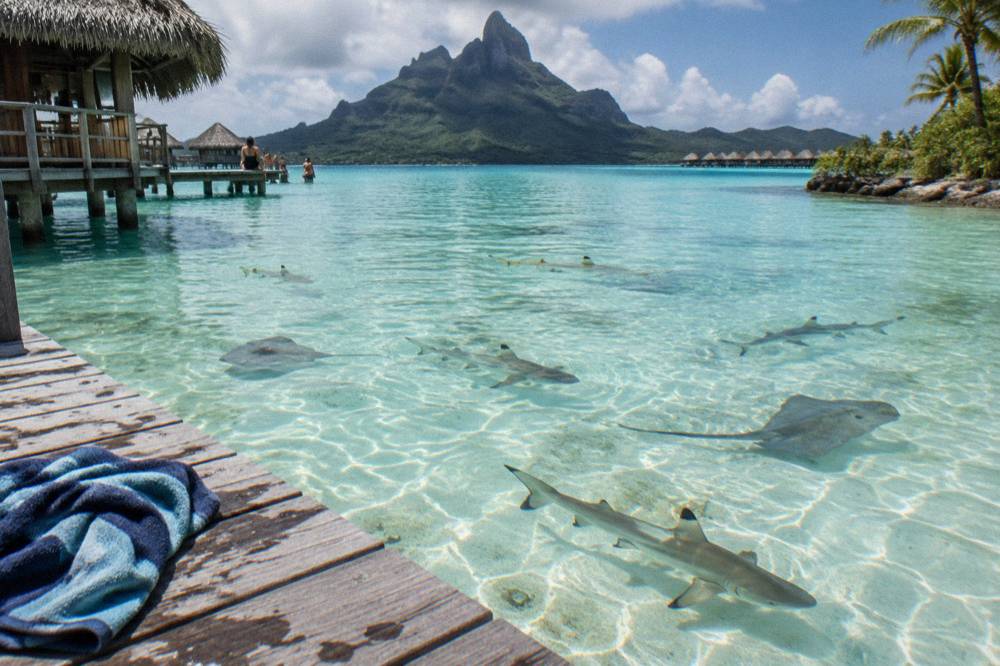
Two products make the contrast concrete. The Moana eco shark and snorkeling safari, 2.5 hours from $107 per person, 4.7 from 191 reviews, is built around sharks and rays in a short shared format. The eco snorkel cruise by outrigger canoe, from $112 per person and 4.8 from 604 reviews, covers sharks, stingrays and reef stops over 2.5 hours. Neither listing promises a sighting, because conditions and animals vary; both describe what the stops are for.
Mantas deserve their own sentence of etiquette. At sites like the Anau cleaning station, the rules are to stay at the surface, remain calm and horizontal, and never dive down, touch, chase or block the animals, which are protected under the Environmental Code, as current snorkeling research for Bora Bora sets out. The fuller picture of species and risk is in are there dangerous sharks in Bora Bora.
What About Weather, Cyclones And Sea Conditions?
The dry season from May to October brings lower rainfall and calmer lagoon conditions; the wet season from November to April brings more showers, higher humidity and the possibility of rain squalls, but the lagoon stays swimmable at 26 to 29 degrees Celsius year-round. The airport climate station's monthly rainfall figures make the pattern plain: from a January high of 245 mm down to 61.9 mm in July, with rain days falling from 17.2 to 8.8 over the same span. Nothing in the current sources describes Bora Bora as a dangerous-weather destination; the planning variable is comfort and water clarity.
| Month | Rainfall (mm) | Rain days (1 mm or more) |
|---|---|---|
| January | 245.0 | 17.2 |
| March | 168.1 | 14.5 |
| May | 112.0 | 11.4 |
| July | 61.9 | 9.4 |
| September | 64.6 | 9.3 |
| November | 138.5 | 12.3 |
| December | 250.7 | 16.8 |
Peak season in July and August is the busiest and most expensive window, and shoulder months like May, June, September and October offer similar weather with fewer crowds and lower rates. Cruise activity concentrates in the drier months for calmer lagoon conditions, which tells you something about when the operators themselves prefer the water.
Tours cancel for weather when they must, and the listings state free cancellation and rebooking terms plainly; a weather cancellation on the major listings allows rebooking or a full refund. The seasonal detail, including what the secondary sea-temperature series shows, is laid out in the best time to snorkel in Bora Bora.
Is Bora Bora Safe For Families And Non-Swimmers?
Yes, Bora Bora is safe for families and non-swimmers, with one honest condition attached. Children are welcome on most lagoon tours with adult supervision, operators supply child-sized gear and life jackets, and non-swimmers are explicitly catered for, though some deeper stops simply suit confident swimmers better. Several Bora Bora operators, including H2O Bora Bora and O-Sea Bora Bora, state in their own frequently asked questions that they provide flotation and welcome non-swimmers, adapting to all swimming levels with guided supervision. Certain tours also list age, weight or medical restrictions, so the listing is the place to check before booking.
The format choice does a lot of the work. A shared half day such as the Reef Discovery Circle Lagoon snorkel, 3.5 hours from $134 per person, keeps the day short and the stops shallow. A small-group cruise like the 4-hour Lagoon Service run, from $134 per person with 5.0 from 203 reviews, trades crowd for intimacy. Private boats, from $650 per group with H2O Bora Bora for 3.5 hours, give a family full control of pace and stops, which is the usual answer for anxious younger swimmers.
The family-specific detail, including which formats suit which ages and what to pack for children, is expanded in Bora Bora snorkeling with kids and what to bring snorkeling in Bora Bora. The short version: reef-safe mineral sunscreen, rash guards, and a clear word with the crew at boarding about swimming levels.
Do I Need Vaccines Or Health Precautions For French Polynesia?
No special vaccinations are required for entry to French Polynesia, and no entry rule on file asks travelers for anything beyond the ordinary; the practical health picture is standard tropical fare, so your real precautions come down to sun protection, steady hydration, and sensible water safety rather than guarding against disease. The verified sources for this article cover entry rules, tax, weather and marine regulation, and none of them lists a vaccine mandate or a health advisory against travel. US citizens and many other nationalities enter visa-free for up to 90 days, with passport validity typically expected three to six months beyond the stay.
The one administrative line worth knowing is the visitor tax, the taxe de séjour, currently 200 XPF per person per night for classified hotels and cruise ships and 50 XPF for other accommodation such as guesthouses and rentals, collected by the provider; rates are changing in 2027, so check the commune's own page. That is a cost line, not a safety line, but it is the kind of "right now" detail that changes, and the commune of Bora Bora's tax page is the primary source.
Sun protection is the health item that genuinely ruins trips. There is no blanket chemical sunscreen ban in French Polynesia as of 2026, but mineral non-nano zinc oxide or titanium dioxide formulas are strongly recommended to protect the reefs, and current reef-sunscreen guidance suggests avoiding oxybenzone and octinoxate. More on that sits in reeef-safe sunscreen in French Polynesia, including what the listings themselves say.
For minor medical needs, the island is a functioning community with a resident population, not a bare rock; the honest planning note is simply that you are remote, so bring prescriptions and standard kit rather than assuming a pharmacy run.
What Should Cruise Passengers Know About Safety Ashore?
Ships anchor in the lagoon and tender everyone to the same public quay at Vaitape, a ride of typically 15 to 20 minutes, with the tender wharf about 50 meters on foot from the village; the safety-relevant facts are the clock and the single point of return. Typical call windows run 9 to 12 hours ashore, and all passengers return through the same facility regardless of line. There is no deepwater dock, which is why smaller and luxury lines predominate.
For shore snorkeling, independent tours typically beat ship-sponsored equivalents on price, with one current comparison showing a ship excursion at roughly $129 against an independent equivalent near $113, and departures run from resort docks and the Vaitape quay alike. The half-day formats fit a port call most comfortably: the shared morning or afternoon snorkel from H2O Bora Bora, 3.5 hours from $130 per person with 5.0 from 774 reviews, is timed for exactly this use case.
The practical safety advice is arithmetic, not adrenaline. A 6 or 7 hour full-day tour plus tender time can consume an entire call window with no margin; a 2.5 to 4 hour half day leaves room for Matira Beach or the Vaitape waterfront walk afterward. Book the tour whose duration fits the ship's clock, and confirm the pickup point is the quay, which the major listings list among their pickup locations.
A Few Rules That Keep The Lagoon Safe
Three rules do most of the work: sharks and rays have been protected throughout French Polynesia since 2006 and attracting or disturbing them is prohibited; whale watching is regulated to approved providers keeping 100 meters; and the new 574 hectare no-take zone south of Matira is closed to boats and nautical activity. None of these restrict ordinary snorkeling. They shape how tours operate, and knowing them makes you a better guest.
The whale rules deserve a line because they are strict. The season runs July to November, approved providers keep 100 meters from whales where private boaters must keep 300, speed is limited to 3 knots within 300 meters, the course must be parallel, and encircling is banned. No product on this site's lineup is a whale-watching tour, so no snorkel booking should be read as one; if whales matter to you, check an operator's approval status directly.
The Popora rahui, established by decree in December 2025, is the newest fact on the water: about 574 hectares of southern reef, closed to fishing, anchoring, boating and nautical activity, with limited exemptions for scientific and traditional use. Tours do not enter it, and Matira Beach shore snorkeling continues outside its boundary. It changes nothing about visitor safety and everything about the reef's long-term prospects, which is the quiet point of the whole safety question: Bora Bora is safest for the traveler who follows the same rules that keep it worth visiting.
Common Questions About Bora Bora Safety
What should I know about the risks of visiting Bora Bora these days?
Yes in every practical sense on file: visa-free entry for up to 90 days for many nationalities, a record 2025 visitor year, no travel advisory against the destination in current sources, and a risk picture dominated by sun, sea state and marine-life etiquette rather than crime.
Are the sharks in Bora Bora dangerous to snorkelers?
Blacktip reef sharks, typically 0.5 to 1.5 meters, are the common species, and guides brief guests at every stop. All sharks and rays have been protected since 2006, attracting them is prohibited, and tours visit congregation areas under supervision. No source supports calling any wild animal harmless, so the honest answer is guided and regulated, not risky or guaranteed.
Can non-swimmers join a Bora Bora lagoon tour?
Yes. Several operators, including H2O Bora Bora and O-Sea Bora Bora, state in their own FAQ pages that they provide life jackets and flotation and explicitly welcome non-swimmers, adapting to all swimming levels with guided supervision.
When is the sea calmest in Bora Bora?
The dry season from May to October brings the lowest rainfall and calmest conditions, with mornings generally calmer than afternoons. July rainfall at the island's climate station averages 61.9 mm against 245 mm in January, and the lagoon stays at 26 to 29 degrees Celsius year-round.
Is reef-safe sunscreen required in Bora Bora?
There is no blanket chemical sunscreen ban in French Polynesia as of 2026. Mineral non-nano zinc oxide or titanium dioxide formulas are strongly recommended to protect the reefs, so bring one and reapply, but it is guidance rather than law on current sources.