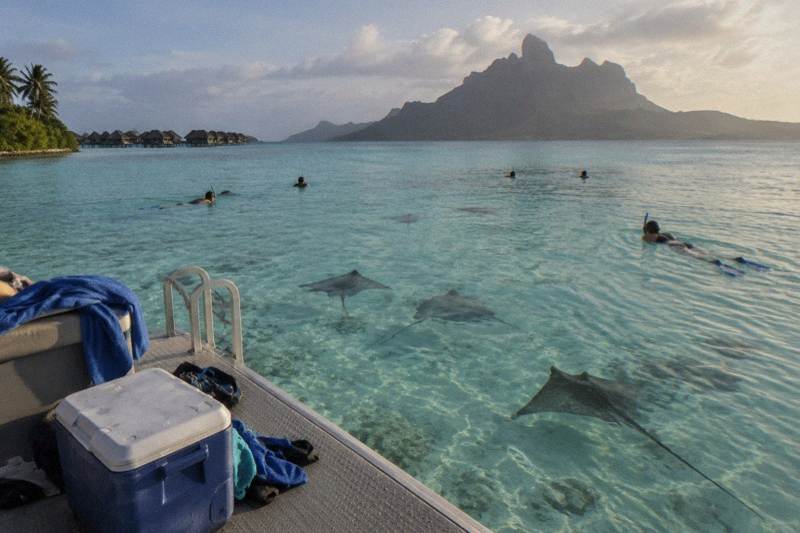
Is It Safe To Swim In Bora Bora?
A factual look at swimming safety in the Bora Bora lagoon: currents, boat traffic, sharks and rays, sun exposure, and how guided snorkel tours manage the risks.
Is Bora Bora's Lagoon Safe For Swimmers?
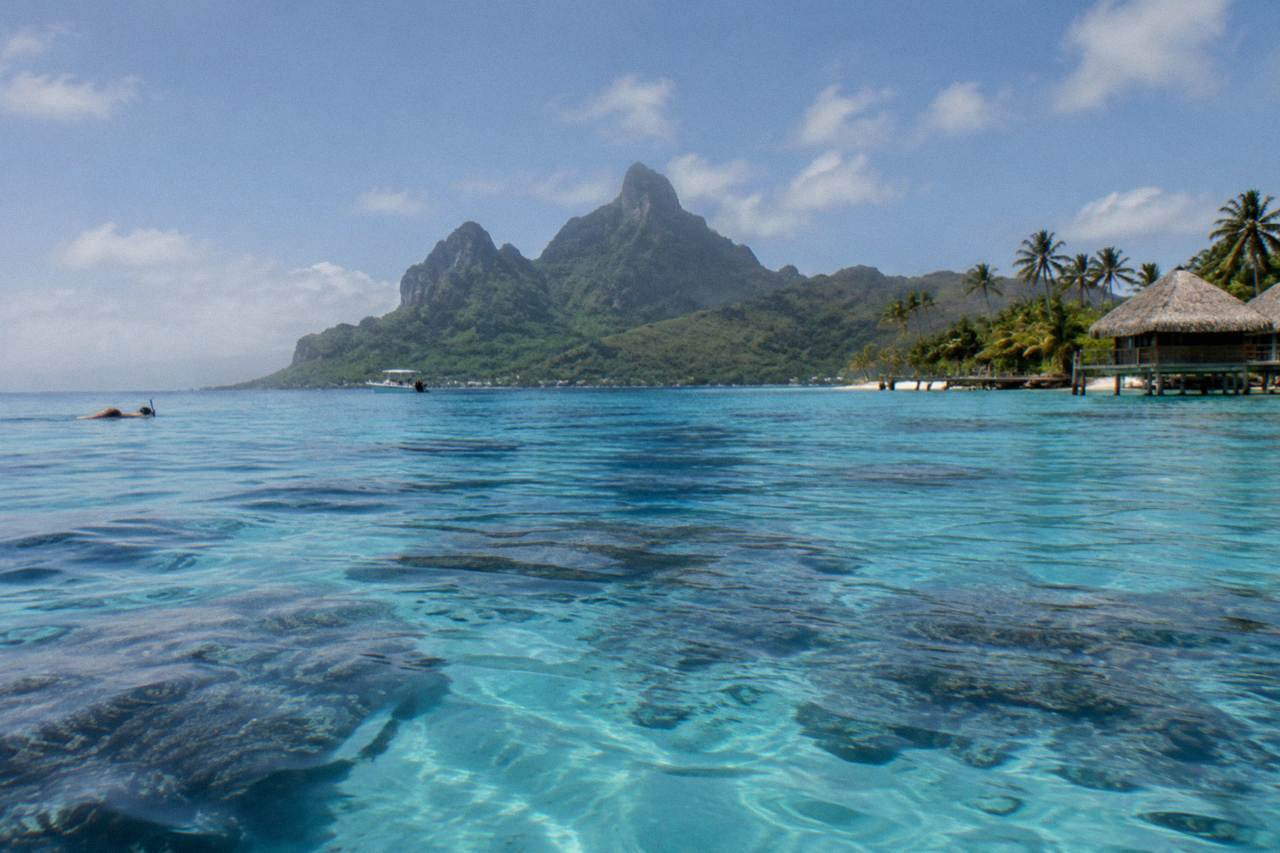
Yes, swimming in Bora Bora is widely regarded as safe, and the lagoon is the reason why. The island sits inside a ring of coral that blocks ocean swell, so most swimming happens in calm, sheltered water rather than open sea. The realistic risks are ordinary ones: sun exposure, coral contact, boat traffic outside marked areas, and your own swimming ability, none exotic, all manageable with basic preparation.
That answer deserves unpacking, because "safe" means different things to different people, and the lagoon is not a swimming pool. It is a living body of water with tides, currents near the reef passes, boats, sharks, rays and coral. The distinction that matters is between the sheltered inner lagoon, where virtually all tourist swimming happens, and the outer reef and passes, where conditions change and where strong currents can run. Guided tours, from the Reef Discovery half day to the full-day lagoon tour with lunch, operate in the sheltered zone by design, and the operators who work there every day build their routes around conditions.
French Polynesia has also protected every shark and ray species in its waters since 2006 under its Environmental Code, which makes the marine life itself part of a managed system rather than an unknown quantity. That legal framework, combined with the lagoon's geography, is why guides and travel resources consistently describe Bora Bora as one of the more forgiving places in the Pacific to swim. The sections below walk through each risk factor in turn, with the shark and ray question treated honestly rather than dismissively, because "safe" and "zero risk" are not the same sentence and should never be confused.
If you are weighing a guided trip against swimming on your own, these are the listings this site compares most often for safety-conscious first-timers: a half-day group snorkel with gear and pickup included, an eco cruise that visits sharks and stingrays without feeding them, and the most reviewed full-day lagoon tour in the lineup. Each lists hotel pickup and free cancellation, which removes most of the planning friction. If your stay already puts you above the lagoon, our guide to snorkeling right off an overwater bungalow deck explains what the shallow resort water actually holds and when a guided tour still makes sense.
What Are The Currents And Water Conditions Really Like?
Inside the lagoon, currents are generally weak and the water is calm, because the encircling reef absorbs the ocean's energy before it reaches the swimming areas. The places where currents matter are the reef passes, the gaps in the coral that connect lagoon to ocean, where tidal flow can be strong and where swimming is not part of any normal tourist activity. Conditions also vary with the season.
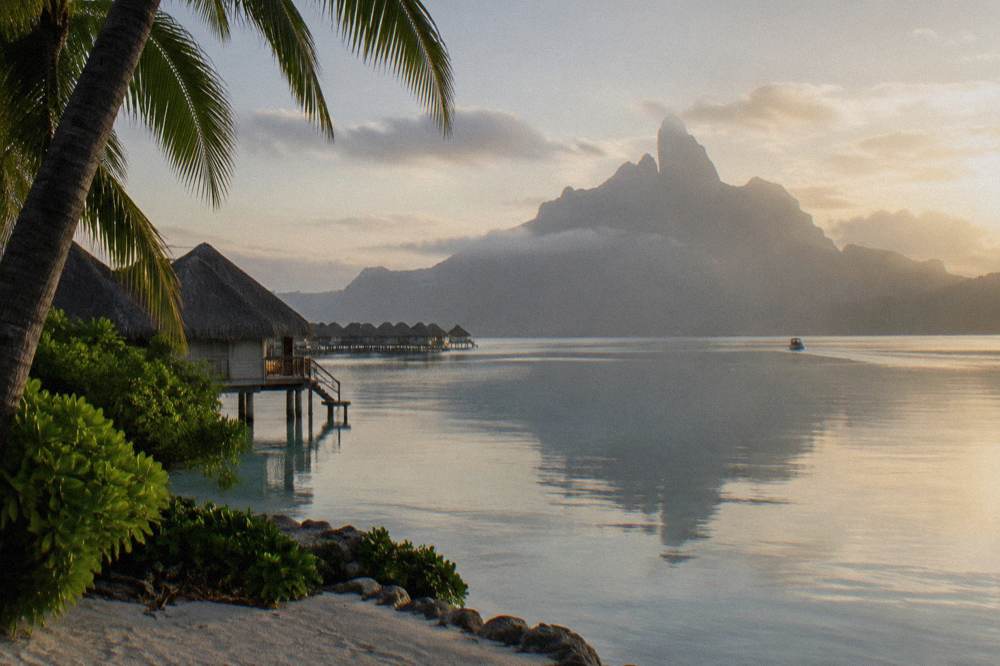
The lagoon's geography does most of the safety work here. Bora Bora is the remnant of a volcanic island collapsed inside its own barrier reef, and the coral ring sits between open ocean and the shallow water where resorts, beaches and tour routes sit. Ocean swell breaks on the outside of that ring. What reaches the inner lagoon is a fraction of the energy, which is why the water at Matira Beach and at the tour stops is typically flat or gently rippled rather than surf.
The season still shapes the experience. The dry season runs May to October, and operators and guides describe calmer, clearer water in those months; the wet season from November to April brings the possibility of rain squalls and temporarily reduced clarity. A sea-temperature series puts the lagoon between 26 and 29 degrees Celsius across the year, so cold water is not a factor the way it is in temperate destinations. Mornings are generally calmer than afternoons, which is one reason many tours schedule their first snorkel stops early.
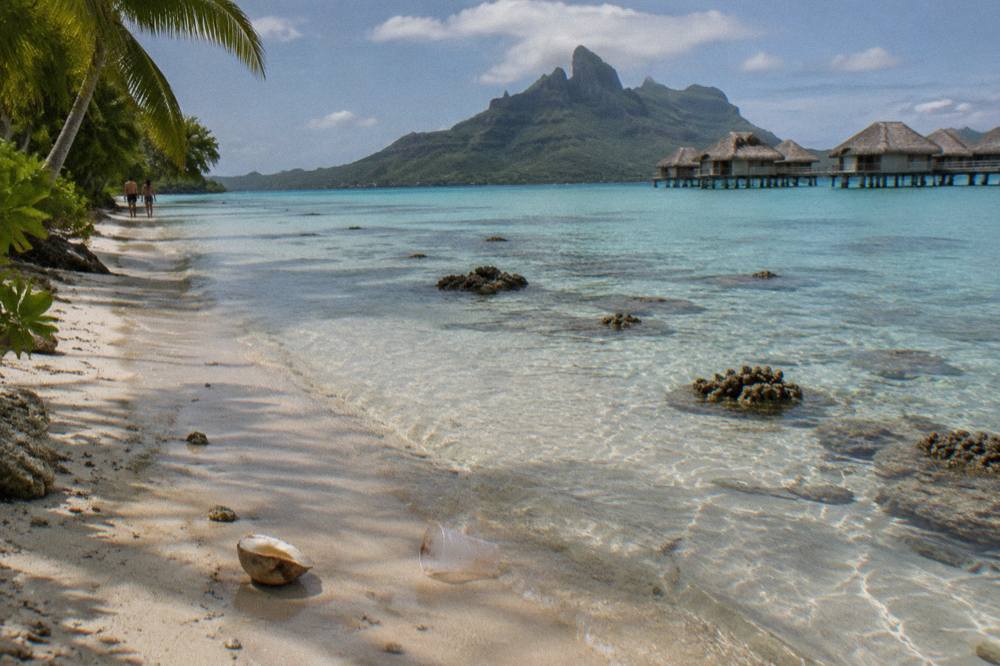
For independent swimmers, two practical rules cover most of the current question. Swim in the sheltered inner lagoon, at a supervised beach or from a resort dock, rather than near a reef pass or on the ocean side. And treat wind changes with respect: a freshening afternoon breeze that ruffles the surface makes swimming harder work, and it is a signal to head in rather than push on. The guided tours handle this judgment themselves, and their captains move or reorder stops when a site is not at its best that day, a flexibility that is one of the quiet advantages of booking a listing like the Moana Adventure Tours eco cruise rather than swimming from shore alone.
Guided lagoon tours remain the simplest way to remove conditions judgment entirely. The Reef Discovery half day group tour runs a set circle-lagoon route with a crew that reads the water daily, and its listing includes pickup, snorkel gear and free cancellation, so a weather call can be rescheduled rather than argued over.
Is It Safe To Swim With The Sharks And Rays?
Yes, swimming in the lagoon's shark and ray areas is considered safe under supervision, with blacktip reef sharks the species you are likely to meet and stingrays the other regulars. French Polynesia has protected all sharks and rays since 2006, attracting sharks is prohibited by the Environmental Code, and no snorkel tour in this lineup promises a sighting, because wildlife does not work to schedules.
The shark question deserves a straight answer rather than reassurance by vibes. Blacktip reef sharks, typically half a meter to a meter and a half long, are the common species on Bora Bora's lagoon tours, and guides describe them as uninterested in swimmers. Lemon sharks appear occasionally in deeper lagoon areas. The honest framing is not "sharks are harmless," which no responsible source claims, but that these are wild animals whose normal behaviour around snorkelers is indifference, that guides brief guests before every stop, and that rules of conduct exist and apply. The same Environmental Code that established the sanctuary in 2006 prohibits any attempt to attract sharks or alter their behaviour, which is the legal backbone of how these tours operate.
Stingrays carry a different, simpler set of rules. They use their barbed tail defensively if stepped on or grabbed, so the standard advice is to shuffle your feet in sandy shallows and to let guides manage any close interaction rather than reaching out yourself. Manta ray etiquette at sites like the Anau cleaning station is its own discipline: stay at the surface, stay calm and horizontal, and never dive down, touch, chase or block the animals' path. Some eco-focused tours explicitly avoid feeding sharks or rays altogether and instead visit natural congregation areas; the Moana Adventure Tours eco snorkel cruise, 4.8 from 604 reviews and from $112 per person for two and a half hours, is built around exactly that approach. If seeing sharks and rays calmly and correctly is the goal, our guide to swimming with sharks and rays in Bora Bora goes deeper on species and conduct.
What supervision adds is briefing and context. A crew that runs the same stops daily knows where the animals gather, sets the boat so swimmers enter water of an appropriate difficulty, and tells everyone beforehand what to expect and what not to do. The newer eco listings also matter for conservation reasons: visiting natural congregation areas rather than feeding sites keeps the lagoon's behaviour patterns intact, which is better for the animals and, over time, better for the swimming experience.
What About Boat Traffic And Snorkeling Near Boats?
Boat traffic is a real safety factor in the Bora Bora lagoon, and it is managed rather than eliminated. Tours, resort shuttles and private craft all use the same body of water, so swimmers should stay in designated swim areas, near their own anchored boat, or in spots the crew points out, and never assume a moving vessel has seen them. Snorkelers are effectively invisible with just a head above water.
This is the risk factor people underestimate most, because it is the unglamorous one. Sharks make headlines; propellers make injuries. The lagoon is a working waterway, with ferries, excursion boats and the resort network all crossing it, and the areas where swimming happens are exactly the areas boats want to reach. The organized system works well: tour captains anchor at known snorkel stops away from traffic lanes, watch their own guests in the water, and keep the engine off while swimmers are near the boat.
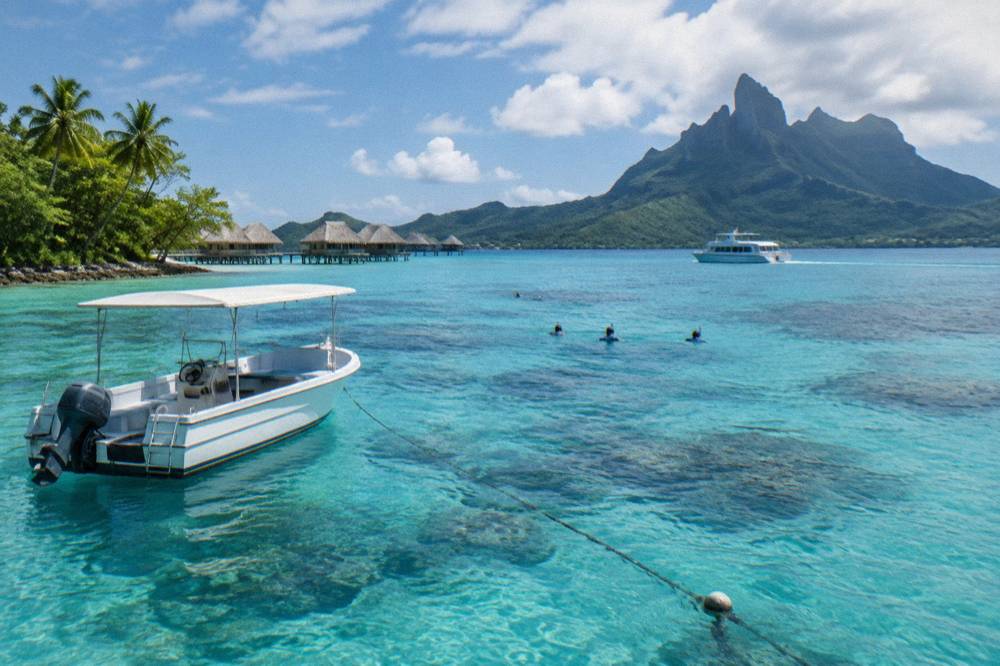
Independent swimmers should apply the same logic without the crew. Swim at Matira Beach or a resort's marked swim zone, not across open channels. Use a float or a bright swim cap if you swim any distance from shore, because visibility on the water is the whole game. If you are on a tour, the rule is simpler still: enter and exit where and when the crew says, stay with the group, and do not freedive under or near the hull. The most reviewed full-day option, the Lagoon Service lagoon tour with lunch, 5.0 from 1,715 reviews and from $173 per person, runs six hours of stops with a crew supervising every one, and that supervision record is a large part of why supervised lagoon swimming has the reputation it does. For readers deciding between a ship excursion and an independent listing for a cruise call, the cruise shore excursion comparison covers the tender and timing logistics in detail.
One traffic note specific to cruise days: ships anchor in the lagoon and tender passengers to the Vaitape quay, with the tender wharf about 50 meters on foot from the village and a tender ride typically 15 to 20 minutes. On busy call days the water around Vaitape and the main channels is the busiest in the lagoon, which is one more argument for swimming from a tour stop or a beach rather than anywhere near the tender routes.
Can Weak Swimmers And Non-Swimmers Join Lagoon Tours?
Yes, and this is stated by the operators themselves rather than inferred. Multiple Bora Bora lagoon operators, including H2O Bora Bora, say in their own published FAQs that they welcome non-swimmers, provide life jackets and flotation, and adapt tours to swimming level. Children are welcome on most lagoon tours with adult supervision, and many operators supply child-sized gear, though some deeper stops suit confident swimmers.
This deserves emphasis because it inverts many people's assumption about a "swimming with sharks" destination. The lagoon's shallowness and calm make it unusually workable for anxious or weak swimmers, and the industry has organized around that reality. Flotation is standard, guided supervision is constant, and stops are chosen to match the group. The listing details bear this out across the lineup: pickup is listed on every tour this site tracks, snorkel gear is listed on nearly all of them, and the half-day shared snorkel from H2O Bora Bora, 5.0 from 774 reviews and from $130 per person, runs three and a half hours with gear included.
There are honest caveats. Some stops, manta sites and deeper coral areas are better suited to confident swimmers, and certain tours list age or medical restrictions, so the listing's own fine print is the authority rather than a general assumption. If your group mixes abilities, a private boat changes the calculus, since the crew sets the route to the weakest swimmer rather than the group average; the H2O private lagoon snorkel runs from $650 per group for three and a half hours. Our longer treatment of the question, can non-swimmers snorkel in Bora Bora, works through the flotation and supervision details.
What About Sun, Coral, And Small Hazards?
The most likely injury from a day in the Bora Bora lagoon is sunburn, followed by minor coral scrapes, and both are almost entirely preventable. Reef-safe mineral sunscreen is strongly recommended by guides, though French Polynesia has no blanket chemical-sunscreen ban, and coral contact is avoided by not standing on or touching the reef, wearing a rash guard, and shuffling in sandy shallows where rays may rest.
Sun is the hazard that actually sends people home uncomfortable. Lagoon swimming in the tropics means hours of reflected sunlight off flat water, often during the midday window when tours are on the reef. Guides strongly recommend mineral formulas, non-nano zinc oxide or titanium dioxide, over chemical filters like oxybenzone and octinoxate, and there is no blanket chemical-sunscreen ban in French Polynesia as of 2026, so this is a recommendation rather than a law. A rash guard does double duty, cutting sun exposure and putting a layer between you and any accidental coral brush.
Coral itself is best understood as a hazard you control by where you put your body. Coral cuts are minor but can infect if ignored, so the practice is simple: float, do not stand on the reef, and rinse and cover any scrape properly afterward. Jellyfish in the lagoon are not a widely reported problem, and the routine marine hazards that dominate tropical-water discussions elsewhere barely feature in Bora Bora reporting. For a full packing treatment, the what to bring snorkeling guide lists the sun and skin items worth having.
| Hazard | Realistic level | Main prevention |
|---|---|---|
| Sunburn | High likelihood without protection | Mineral sunscreen, rash guard, shade breaks |
| Coral scrape | Common but minor | Float over reef, never stand on coral |
| Stingray barb | Rare, defensive only | Shuffle feet in sand, let guides handle rays |
| Shark incident | Extremely rare in the lagoon | Follow crew briefing, never provoke or touch |
| Boat strike | Rare but serious | Stay in marked areas or with your anchored tour boat |
| Strong current | Mainly at reef passes | Swim the inner lagoon, respect wind changes |
The table above is the honest hierarchy: the top two rows will affect more readers than the rest combined. Prevention costs almost nothing, which is what makes the overall safety picture so favourable.
When Are Conditions Safest For Swimming?
The dry season, May to October, is when Bora Bora's lagoon is calmest and clearest, and within any day, mornings beat afternoons for flat water. July and August are the busiest months; May, June, September and October deliver similar conditions with fewer people on the water and gentler prices. The wet season is still swimmable, just with a real chance of squalls.
The climate record backs the folk wisdom. The Meteo-France station at Bora Bora's airport records roughly nine to eleven days of measurable rain per month in the June-to-October window, against fourteen to seventeen days per month from December through March, and monthly rainfall falling from about 245 mm in January to between 61.9 and 64.6 mm across the July-to-September stretch. Humpback whales pass through French Polynesian waters from July to November, though no snorkel tour in this lineup is a whale-watching product and none should be booked as one.
| Season | Months | Conditions | Rain days per month (approx.) | Best for |
|---|---|---|---|---|
| Dry season | May to October | Calmest, clearest, busiest in July and August | 9 to 11 | First visits, weak swimmers, photography |
| Shoulder | May, June, September, October | Dry-season conditions, thinner crowds | 9 to 11 | Value and space, same water quality |
| Wet season | November to April | Warmer water, squall risk, softer light | 12 to 17 | Lower rates, lush island, flexible plans |
Tours run year-round, and the practical difference in the wet season is flexibility rather than shutdown. Free cancellation is listed on nearly every tour, weather moves are handled by rescheduling or refund, and the sheltered nature of the lagoon means a passing squall often clears within the hour. The full-day listings, like the Vavau Adventures seven-hour lagoon snorkel at 4.9 from 170 reviews from $158 per person, spend enough time on the water that a morning shower rarely defines the day. Our best time to snorkel in Bora Bora guide carries the month-by-month detail.
For most travellers the season decision is really a crowd and price decision, because the water is warm enough to swim every month of the year. If calm surface conditions matter more than anything, book the first tours of the morning in the dry season shoulder months and you will have the lagoon at its most cooperative.
Common Questions About Swimming In Bora Bora
Are Bora Bora's waters safe for swimming?
Yes. The lagoon is sheltered by the barrier reef, currents in the swimming areas are generally weak, sharks and rays are protected species accustomed to snorkelers, and millions of visitors swim there without incident. The risks that actually affect people are sunburn and minor coral scrapes, both preventable.
Do I need to worry about sharks while swimming?
Blacktip reef sharks, typically half a meter to a meter and a half long, are the common species and show indifference to swimmers. French Polynesia has protected all sharks and rays since 2006, attracting sharks is prohibited, and tour crews brief guests before every stop. Never touch, chase or provoke any shark.
Is the lagoon safe for children and weak swimmers?
Generally yes. Operators state they welcome non-swimmers, supply life jackets and flotation, and adapt to swimming level, and many provide child-sized gear with adult supervision. Some deeper stops suit confident swimmers, so check each listing's stated restrictions before booking.
Where is it safest to swim independently?
Matira Beach, the public beach on the southern tip of the main island, with free access and shallow water, or a resort's marked swim zone. Avoid reef passes, where tidal currents run, and stay clear of channels and tender routes used by boats.
Is reef-safe sunscreen required in Bora Bora?
There is no blanket chemical-sunscreen ban in French Polynesia, but mineral formulas using non-nano zinc oxide or titanium dioxide are strongly recommended by guides to protect the reef. A rash guard adds protection and reduces coral contact.
Does swimming with stingrays carry risk?
Stingrays use their barbed tail defensively, mainly if stepped on or grabbed. Shuffle your feet in sandy shallows, keep your distance, and let guides manage any close interaction. On supervised tours this is a briefing point, not an incident source.
The short version of everything above: Bora Bora Snorkeling Tours exists because the lagoon is one of the safest places in the Pacific to get in the water with marine life, and the factors that keep it that way, shelter, protection laws, supervision and plain sun sense, are all things a visitor can understand and act on in an afternoon. For independent sources, the current lagoon snorkeling research and the reef-friendly sunscreen guidance both reflect the same picture this site's data does.