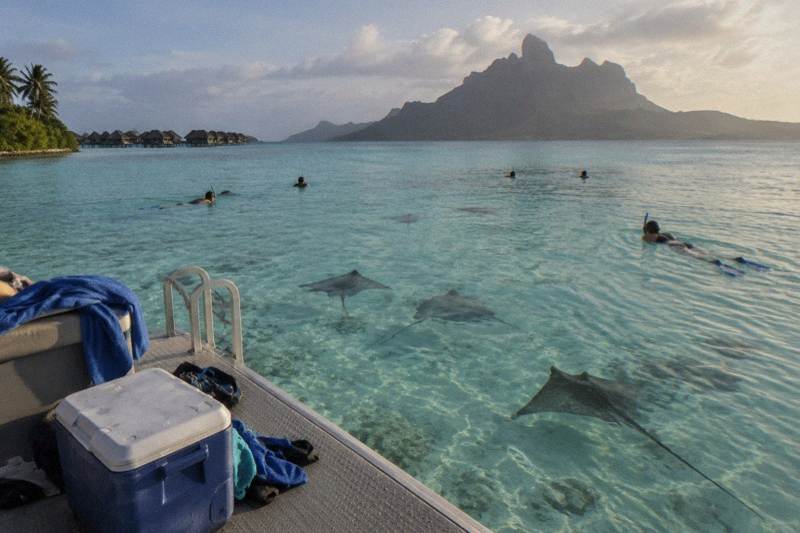
Can You Snorkel From An Overwater Bungalow In Bora Bora?
Yes, you can snorkel right off an overwater bungalow deck in Bora Bora, but the lagoon below is sandy and shallow. Here is what a resort lagoon offers and when a guided tour still makes sense.
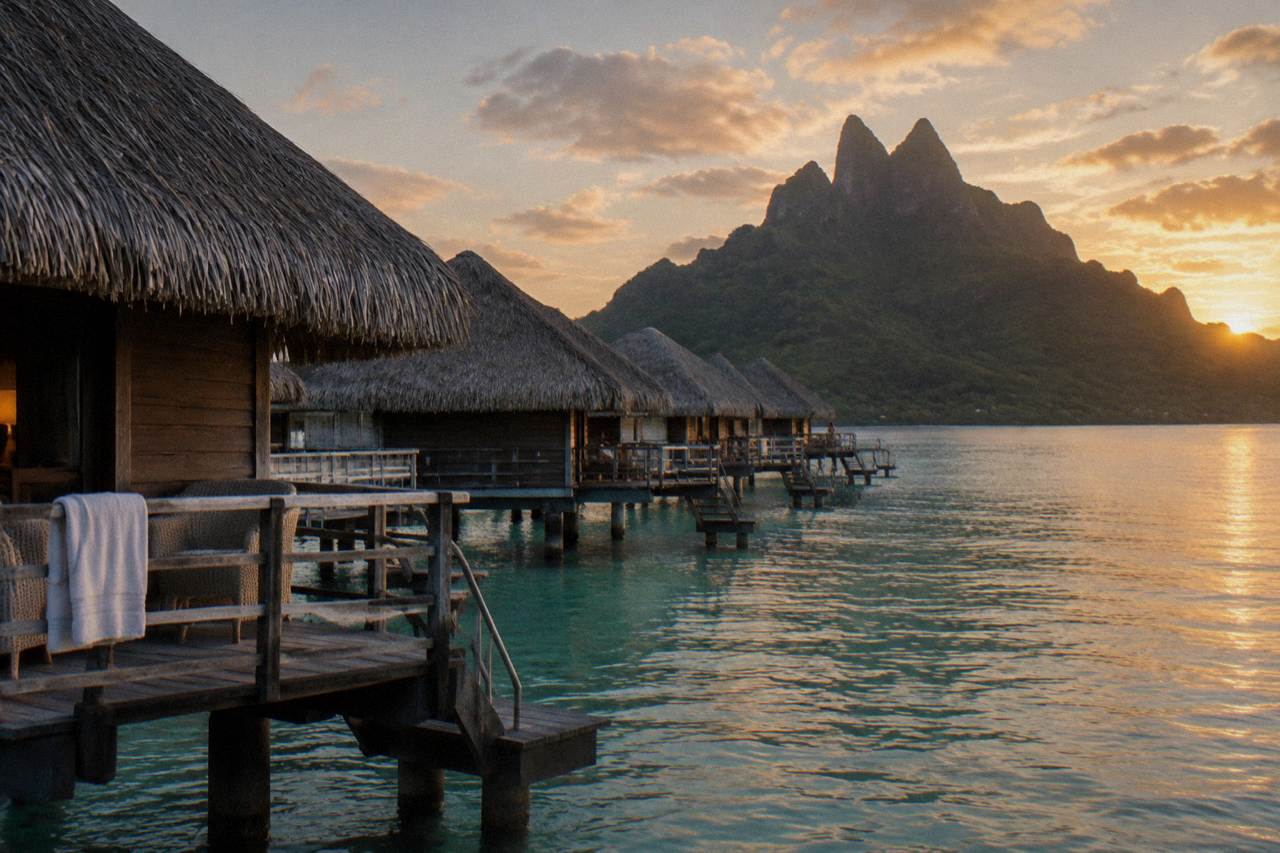
Yes, you can, and most resorts expect it. An overwater bungalow sits directly over the lagoon with a ladder or stairs off the deck, and the water is calm, warm and shallow enough for a relaxed float. But the lagoon floor under a resort jetty is mostly sand and sea grass, not coral garden, so the fish life is modest compared with the boat-only sites around the island.
That is the trade this article unpacks. The deck is free, private and available at dawn or midnight, which no tour can match. The tour reaches the coral gardens, the ray and shark congregation areas and the manta cleaning station at Anau, which no deck can match. A Bora Bora Snorkeling Tours comparison of the listings and the current site guides suggests the strongest trip uses both: lazy bungalow floats plus one well-chosen boat day.
Neither half of that pairing is a consolation prize, and it helps to be clear about which half delivers which memory. The deck delivers volume: dozens of short, effortless floats across a week, at hours when no boat is running at all. The tour delivers the postcard: the dense fish clouds over a coral garden, the first blacktip reef shark passing below you at a congregation stop, the long view of the island from mid-lagoon. Travelers who skip the boat often go home feeling they saw the water but not the lagoon, and travelers who skip the deck simply leave free experiences on the table.
What The Water Below Your Deck Actually Offers
The water under an overwater bungalow is typically calm, waist to chest deep over sand, with small reef fish, the occasional ray or juvenile blacktip shark passing through, and no current to fight. It is genuinely pleasant snorkeling. It is not the coral garden experience the brochures show, because resorts built their jetties over sandy flats, and the fish density follows the coral, not the room rate.
Resorts choose overwater construction sites for calm, shallow water that protects the pilings, and that same sandy flat is what you snorkel over. Guests report butterflyfish, sergeant majors and small parrotfish around the deck structures, and rays are commonly reported cruising the shallows between bungalows. A current Bora Bora snorkeling guide notes that shore-accessible snorkeling on the island is limited to shallow sandy areas, with the richer coral sites reachable only by boat. That matches the geography: the famous gardens sit on reef patches scattered around the lagoon, not in the sandy hotel zones.
What the deck does offer is unmatched freedom. You can slip in at sunrise before breakfast, snorkel for twenty minutes, climb back up the ladder and rinse off in your own shower. There is no schedule, no group, no fee and no transit time. For travelers whose main goal is to float in absurdly beautiful water, that alone can justify the room. It also removes the small frictions that wear on a vacation: no sunscreen reapplication marathon, no dry bag logistics, no waiting on a pontoon while a headcount finishes. The deck turns snorkeling into something you do the way you might make coffee.
There is also a real safety comfort in it. The water is shallow, sheltered from the open ocean by the reef, and the resort is seconds away. Non-swimmers and nervous snorkelers often make their very first attempts off a bungalow ladder, which is a genuine advantage. The companion question of whether that is enough preparation for a boat tour is covered in how non-swimmers handle snorkel tours.
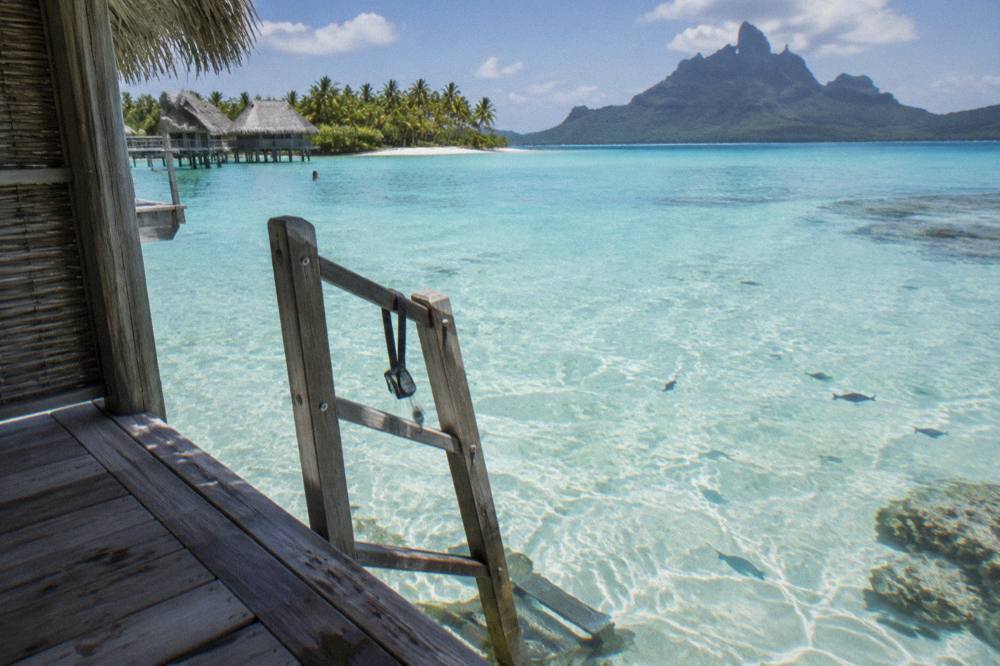
The honest limitation is variety. Snorkeling the same sandy flat for five days yields diminishing returns, because the scene under the deck changes little from morning to morning. The animals that make Bora Bora famous, the manta rays at their cleaning station, the dense coral gardens, the shark and ray congregation areas, live at sites you cannot walk or swim to from any resort. A useful test on day two or three: if you have memorized the individual fish territories under your ladder, the lagoon is telling you it has more to show, and it is all a boat ride away.
Which Lagoon Sites A Bungalow Ladder Cannot Reach
The coral gardens, the ray and shark congregation areas and the Anau manta cleaning station are all boat-access only, and no overwater bungalow sits above them. Anau in particular has no recommended shore access, since the approach runs past private property, currents and reef protection concerns. If those are the encounters you came for, a boat is the only route.
Site by site, the gap is stark. The coral garden patches around the southern and western lagoon hold the fish density that makes the island's reputation, and every one of them is a short boat ride from a resort jetty. The Anau manta ray cleaning station on the east side is reached only with guides who read the conditions and brief guests on etiquette, staying at the surface, calm and horizontal, never blocking the animals' path, as the Tohora Bora Bora site guide describes. Mantas are wild animals and sightings are never promised, but the cleaning station is where operators report them.
The ray and shark stops deserve a note on rules. French Polynesia has protected all shark and ray species in its waters since 2006 under the Environmental Code, which prohibits attracting sharks or altering their behaviour. Operators differ on practice: some listings highlight natural congregation areas where sharks and rays gather, others state an explicit no-feeding eco policy. What a tour reliably adds is a guide who briefs you on how to behave around blacktip reef sharks, which guides typically describe as reaching half a meter to one and a half meter. The wider shark-safety picture is covered in swimming with reef sharks safely.
There is one closure worth knowing about even from a bungalow deck. A 574 hectare no-take zone, the Popora rahui, was established by decree in December 2025 on the southern reef off Matira, closed to fishing, anchoring and all nautical activity. Tours do not enter it, and neither should anyone swimming from shore or boat. It does not affect resort lagoons elsewhere on the island, but it is a reminder that the southern reef is now managed for recovery, and the island's snorkeling economy is adjusting around it rather than into it.
It is also worth naming what a guide adds that hardware cannot. A ladder gives you access to water; a guide gives you interpretation. On a boat you learn which fish you are looking at, why the ray stops are where they are, and how the sanctuary rules shape what operators may and may not do. That layer of understanding tends to change how guests use their deck afterward too, once the lagoon stops being scenery and starts being a habitat you can read.
Resort Lagoon Versus Guided Tour: The Honest Comparison
A bungalow deck gives you free, unlimited, private access to calm sandy shallows with light fish life. A guided tour costs from $105 per person on this site's lineup and puts you over coral gardens, rays and sharks with gear, a guide and hotel pickup included. Neither replaces the other: the deck is for quantity of water time, the tour is for quality of sites.
The table below is the short version of the whole decision.
| Factor | Overwater bungalow deck | Guided lagoon tour |
|---|---|---|
| Cost | Included in the room | From $105 to $224 per person shared, from $560 per group private |
| Schedule | Any time, day or night | Fixed departures, typically morning and early afternoon |
| Water type | Calm, shallow, sandy | Multiple stops including coral gardens and ray sites |
| Fish life | Light, small reef fish | Congregation areas, coral gardens, manta station possible |
| Gear | Bring or rent your own | Snorkel gear listed as included on most listings |
| Guidance | None | Briefings on wildlife rules and site conditions |
| Effort | Zero transit | Pickup listed from hotels and the Vaitape quay |
Two things tilt people toward adding a tour even when the deck is glorious. First, the lineup's shared half days are cheaper than many travelers expect: the cheapest listing, a half-day experience with fruit on Motu Fanfan, runs from $105 per person, and the eco shark and ray safari from Moana Adventure Tours from $107. Second, the review pools are large and specific: the Reef Discovery half day carries 5.0 from 1051 reviews and the featured full-day lagoon tour with lunch 5.0 from 1715, the most reviewed listing in the lineup. Those numbers describe boat tours, not deck floats, because the boat is what people book.
The reverse also holds. A guest who snorkeled hard for two hours off the deck every morning may genuinely not need a half-day cruise, and a private boat at from $650 per group only makes sense for families or small groups who want the schedule to themselves. The private versus group lagoon tour guide works through that math in detail.
A rough budget sketch makes the comparison concrete. Take a couple on a five-night stay. Their deck snorkeling costs nothing beyond gear they may already own. One shared half day at, say, the Rohivai safari's from $112 per person puts the entire boat budget at roughly $224 for two, less than a single night of many overwater rooms. Upgrade that to the full-day lagoon tour with lunch at from $173 per person and the couple's total is still well under the price of one resort dinner for two in most cases. Framed that way, the question stops being whether the deck replaces a tour and becomes which single tour earns the slot.
The Three Tour Styles That Pair Best With A Bungalow Stay
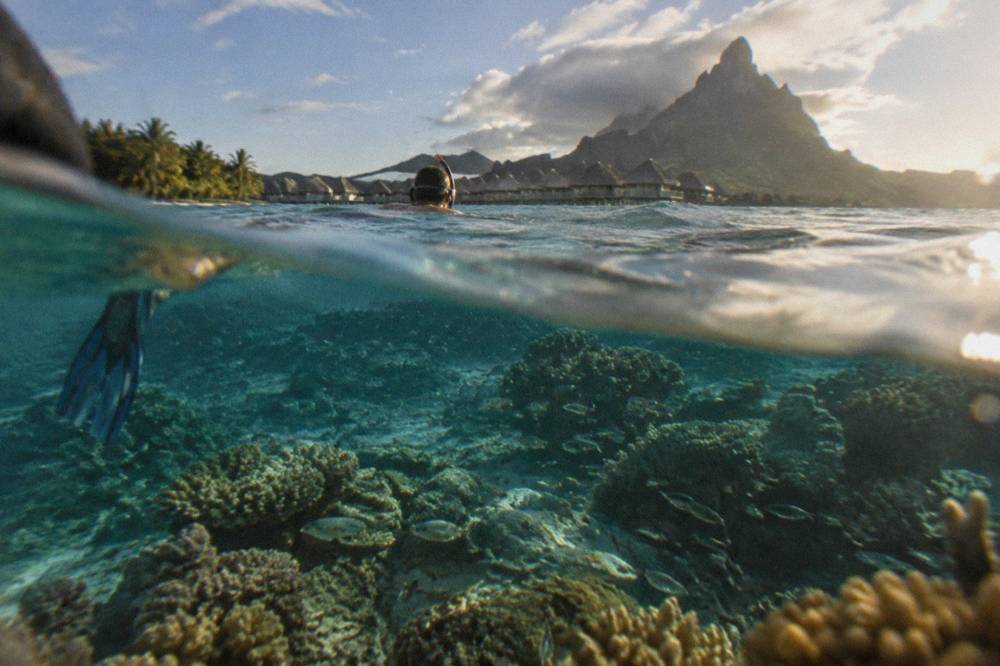
For a bungalow guest adding one boat day, the strongest fits are a shared half-day circle of the lagoon from $112 to $134 per person, a full day with a motu lunch from $144 to $173, or a private boat from $560 per group with flexible hours. All three include hotel or jetty pickup, which matters when your starting point is a resort pontoon.
The shared half day is the default pick. The Reef Discovery half day group signature tour runs 3 hours 30 minutes from $134 per person with a 5.0 rating from 1051 reviews, pickup listed, snorkel gear listed and free cancellation listed. The Rohivai half-day lagoon safari, from $112 per person and 4.9 from 259 reviews, is the same shape at a lower price. These tours hit coral gardens, ray and shark stops and a motu, and have you back at the resort by early afternoon for deck time.
| Tour style | Lineup example | Price basis | Duration | Rating and reviews |
|---|---|---|---|---|
| Shared half day | Reef Discovery Half Day Group Signature Tour | From $134 per person | 3 hours 30 minutes | 5.0 from 1051 reviews |
| Cheaper shared half day | Rohivai Half-Day Lagoon Safari | From $112 per person | 4 hours | 4.9 from 259 reviews |
| Full day with lunch | Full Day Lagoon Group Tour with Lunch | From $173 per person | 6 hours | 5.0 from 1715 reviews |
| Private boat | Private Lagoon, Snorkel and Motu Lunch | From $560 per group | 3 to 6 hours | 5.0 from 11 reviews |
The full day changes the rhythm rather than the snorkeling alone. Six to seven hours with a motu lunch, the featured Lagoon Service full day from $173 per person or the Motu Fanfan full day from $144, turns the boat into the day itself: snorkeling, a Polynesian lunch on a private islet, and a slow circle of the lagoon with Mount Otemanu, 727 m at its peak, in view the whole way. Guests on longer stays often book one of these and spend every other day off the deck. The lunch matters more than it sounds from a bungalow perspective, because it converts a tour into a complete outing: you leave after breakfast and return mid-afternoon, having eaten, snorkeled three or four distinct sites and seen the island from every angle of the lagoon.
The private boat is the bungalow logic applied to a tour. From $560 per group with flexible hours, or from $650 per group for the H2O Bora Bora private snorkeling trip at 3 hours 30 minutes, it collects you at your resort, goes where you ask within the rules, and leaves when you say. For a family sharing the cost, it can land close to shared-tour pricing per person with none of the strangers. It is also the format that most respects the deck habit: if the family wants a shorter day because the afternoon float is calling, a private operator can usually shape the hours, while a shared departure runs on its own timetable.
Between the shared and private poles sits one more option worth a sentence, the small-group cruise. Lagoon Service runs a 4-hour small-group snorkel cruise from $134 per person, rated 5.0 from 203 reviews, which splits the difference: more intimacy than a large shared boat, far cheaper than a private charter. Bungalow guests who dislike crowds but not price tags often land here.
How To Combine Deck Snorkeling With One Boat Day
The pattern that works best is simple: use the bungalow deck for daily short floats, and spend one morning of the stay on a guided tour that reaches the boat-only sites. Book the tour for early in the stay, so if weather moves it you still have days left to rebook, since free cancellation up to 24 hours is listed on nearly every listing.
Timing matters more than travelers expect. Operators and guides describe calmer water and clearer conditions in the dry season, May to October, and mornings are generally calmer than afternoons in any month. A tour booked for the first or second morning of a week-long stay gives you the best water of the day and a buffer if the operator reschedules for wind. The trade-off with the deck is real: at dawn the lagoon under your bungalow is at its stillest too, which is exactly why splitting the day, boat in the morning, deck in the late afternoon, satisfies both.
Wet-season guests, November to April, should weight the deck slightly higher. The Meteo-France climate sheet for the island's station shows the contrast plainly: January averages 245 mm of rain across 17.2 rain days, while September averages 64.6 mm across 9.3 days, and the months from May through October all sit below the wet-season figures. Squalls can cut visibility and move boats during the wet half of the year. The lagoon water stays warm year round, though: a secondary sea-temperature series puts it between 26.7 and 28.9 C across the calendar. So the deck float remains pleasant in any month, while the boat day becomes more of a weather-window decision.
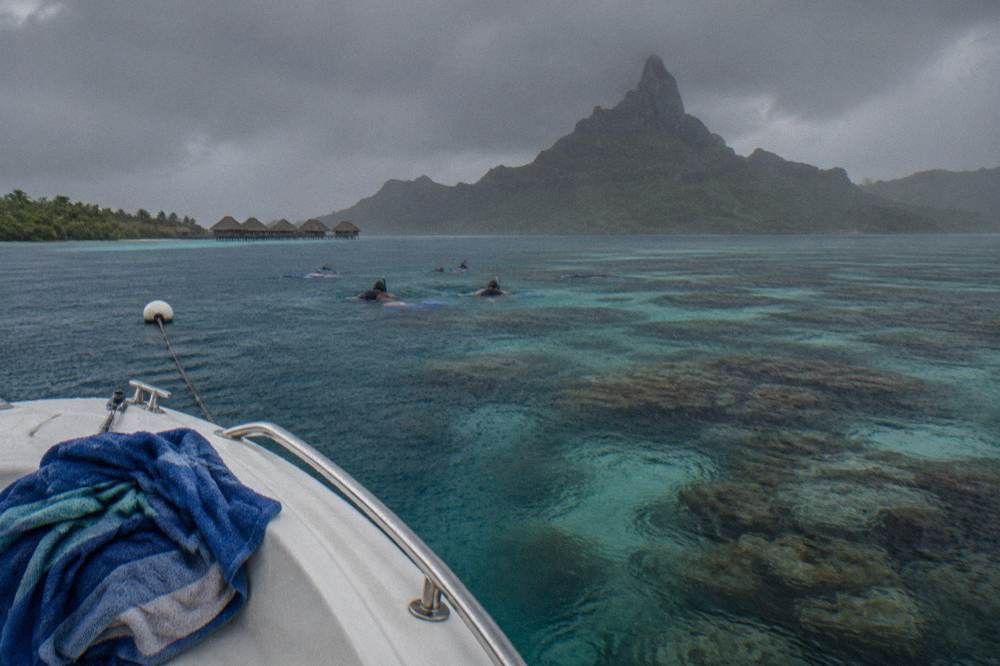
For the full-day option specifically, plan a lighter day around it. The full-day lagoon tour with lunch runs 6 hours from $173 per person, and guests report coming back full, salty and ready for nothing but the deck. Booking it mid-stay rather than on arrival day also means you arrive at the coral gardens already comfortable in the water from days of bungalow practice, which is exactly how the combination is meant to work.
One habit ties the whole week together: keep the snorkel gear out, not packed. A mask living on the deck railing gets used every day; a mask zipped in a suitcase gets used twice. The guests who report the most water time on bungalow stays are, consistently, the ones who treated the ladder as equipment rather than architecture, and paired it with one morning where the boat did the traveling.
Gear, Sunscreen And Etiquette At The Resort Lagoon
Pack your own mask, snorkel and reef shoes for the deck, since resort rental policies vary and the listings include gear only on the boat side. Use a mineral, non-nano zinc oxide or titanium dioxide sunscreen: there is no blanket chemical ban in French Polynesia, but reef-friendly formulas are strongly recommended by guides, and the same logic applies to the lagoon under your bungalow.
The gear point is practical. Snorkeling off a deck on impulse is only frictionless if the mask is already in the room. A cheap own-mask setup also covers the free shore option, Matira Beach, the island's only public beach, with its shallow sandy snorkeling over the same kind of water your deck sits above, as guides describe the beach. The what to bring snorkeling guide has the full packing list.
Etiquette under the deck is the same as on tour. Do not touch coral, do not chase or grab rays, shuffle your feet in sandy shallows where stingrays rest, and let any shark pass without pursuing it. The rules that bind operators, the 2006 protections on all sharks and rays and the ban on attracting sharks, reflect a wider posture: the lagoon is a shared asset, and the resort stretch of it is no exception. Guests who learn the etiquette once on a guided morning tend to apply it under the deck for the rest of the stay, which is one of the quieter arguments for booking the boat day first and the deck floats after.
One last planning note. Cruise passengers tender to the Vaitape quay, and most tours list pickup there, but overwater bungalow guests are usually collected at the resort pontoon itself, which is the single most convenient starting position on the island. If your tour's pickup details are not stated, confirm the dock at booking.
Common Questions About Snorkeling From Overwater Bungalows
Is it possible to swim and snorkel right off the deck of an overwater bungalow in Bora Bora?
Yes. Overwater bungalows sit directly over calm, shallow lagoon water with ladder or stair access from the deck, and resorts expect guests to swim. The water is mostly sandy flat with light fish life, so it is pleasant floating rather than coral-garden snorkeling.
Is the snorkeling under a bungalow as good as a tour?
No. The deck gives you unlimited free access to calm shallow water, while tours reach the coral gardens, the ray and shark congregation areas and the Anau manta station, all boat-only sites. Most guests find the two complement each other rather than compete.
Do I still need to book a boat tour if I have a bungalow?
If you want coral gardens, rays, sharks or mantas, yes. Lineup half days run from $105 to $151 per person, full days with lunch from $144 to $173, and private boats from $560 per group, nearly all with hotel pickup and free cancellation listed.
Will I see sharks or rays under my bungalow deck?
Possibly, and rays are commonly reported in resort shallows, but nothing is promised. Sharks and rays are wild animals, and the sites where they reliably congregate are reached by boat. The deck offers occasional passers-by rather than congregation areas.
What gear do I need for bungalow snorkeling?
Your own mask and snorkel at minimum, plus reef shoes for the sandy bottom, since resort rental availability varies. Boat tours in this lineup generally list snorkel gear as included, so own gear matters mainly for the deck and for Matira Beach.