Are There Dangerous Sharks In Bora Bora?
An honest look at the shark species in the Bora Bora lagoon, the protection rules that govern encounters, and what tour operators do to keep snorkel trips safe.
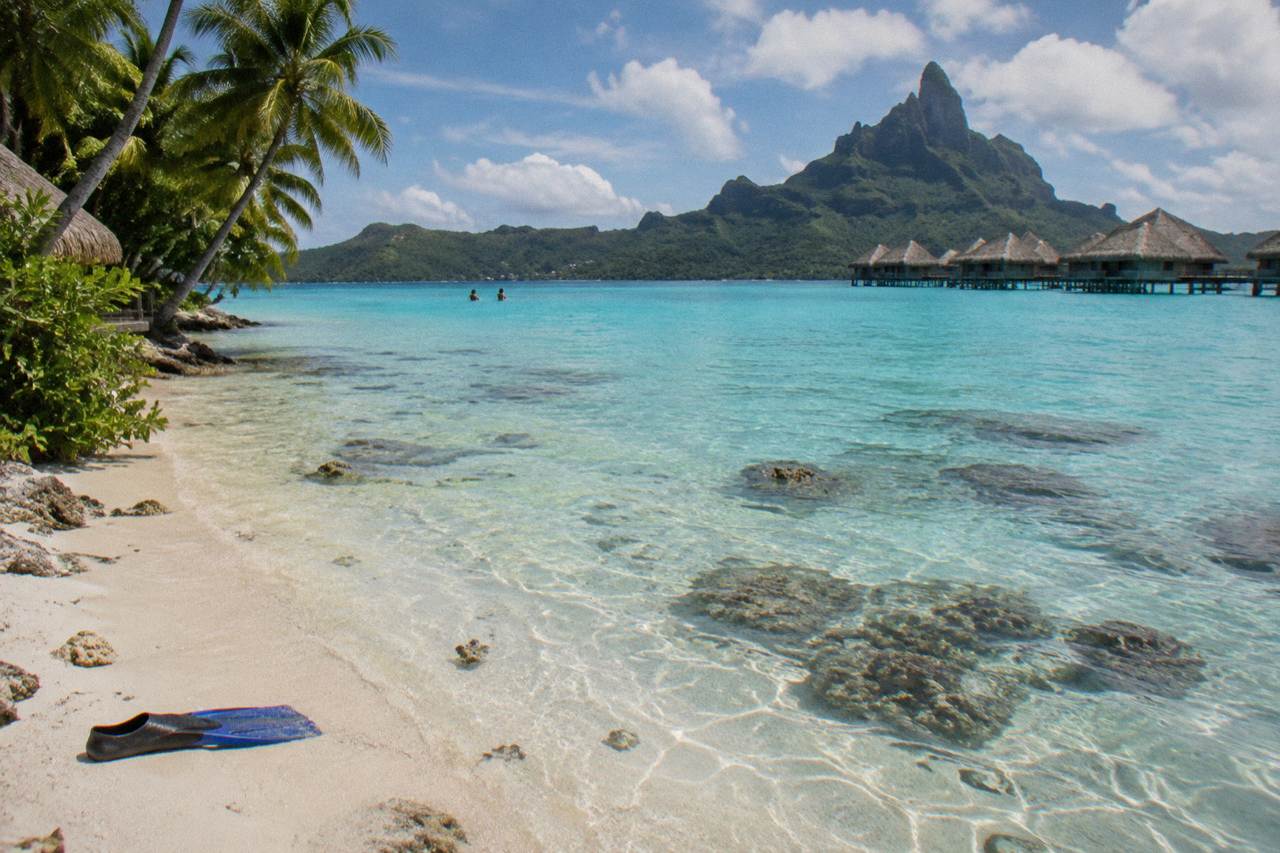
Sharks are part of the ordinary texture of the Bora Bora lagoon, not an exception to it. Snorkel tours here are built around meeting them: blacktip reef sharks and stingrays are the standard stops on the eco shark and ray cruise, the Reef Discovery half day, and the full-day lagoon tours, and the listings describe those encounters as a drawn feature rather than a risk to be managed quietly. That framing is worth interrogating rather than accepting. The honest picture sits between the two extremes a worried reader usually finds online: Bora Bora is not a place where dangerous sharks patrol the swim areas, and it is also not a place where any honest writer should call a wild animal risk-free. If seeing reef sharks from the surface leaves you curious about deeper water, the guide to whether diving in Bora Bora is worth it explains when tanks add something and when a snorkel tour gets you the same marine life.
Which Shark Species Live In The Lagoon?
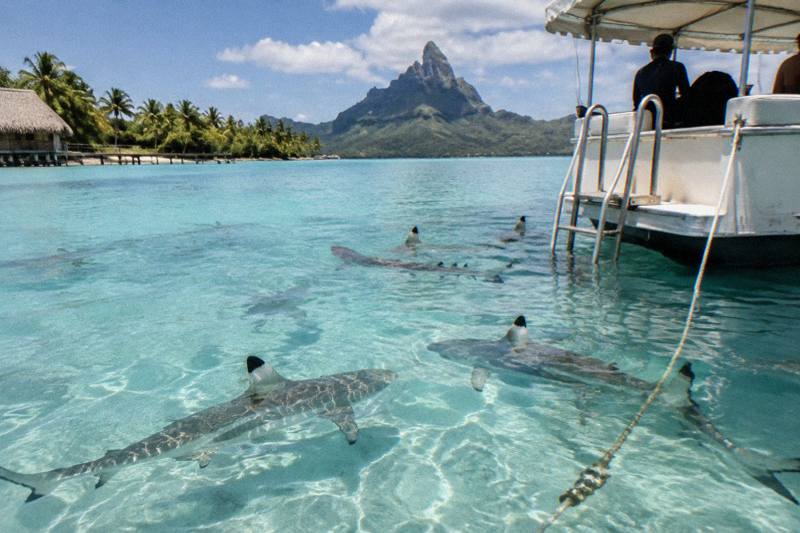
The short answer is that the sharks commonly encountered in the Bora Bora lagoon, mainly blacktip reef sharks typically 0.5 to 1.5 m long, are not considered a threat to snorkelers, and no tour on this site describes them as dangerous. Guides brief guests before every stop, rules apply, and French Polynesian law has protected all shark and ray species in its waters since 2006. Wild animals are never a zero-risk proposition, and no operator guarantees behavior. If you want the wider safety picture beyond the lagoon, our guide to visiting Bora Bora safely right now covers health, family logistics, and which tours run year-round.
The question almost always comes from someone standing at the edge of a booking decision. A reader worried about sharks does not need reassurance in the abstract, they need to know which animals are actually in the water, what the law says about how tours may interact with them, and what a guided encounter looks like in practice. This article works through all three, then looks past the lagoon at the species that live in deeper water, because that is where the honest nuance lives.
The species profile matters more than most visitors expect. The sharks that gather at the tour stops are small reef dwellers that have shared these waters with human activity for generations. The larger animals that people picture when they hear the word shark, oceanic species and bigger coastal predators, live outside the lagoon environment where snorkeling happens, and no tour on this site goes looking for them. A good comparison of the practical options, including the group-versus-private question, is in choosing a private or group lagoon tour.
These listings are the ones this article keeps returning to, because they are the tours whose listing text actually describes sharks: the eco snorkel cruise from Moana Adventure Tours (4.8 from 604 reviews, from $112 per person), the Reef Discovery signature half day (5.0 from 1,051 reviews, from $134 per person) and the full-day lagoon cruise with sharks and stingrays (4.8 from 734 reviews, from $154 per person). Each lists pickup, free cancellation and snorkel gear. None of them promises a sighting, because conditions and animals vary, and honest listings do not pretend otherwise.
Which Shark Species Live In The Bora Bora Lagoon?
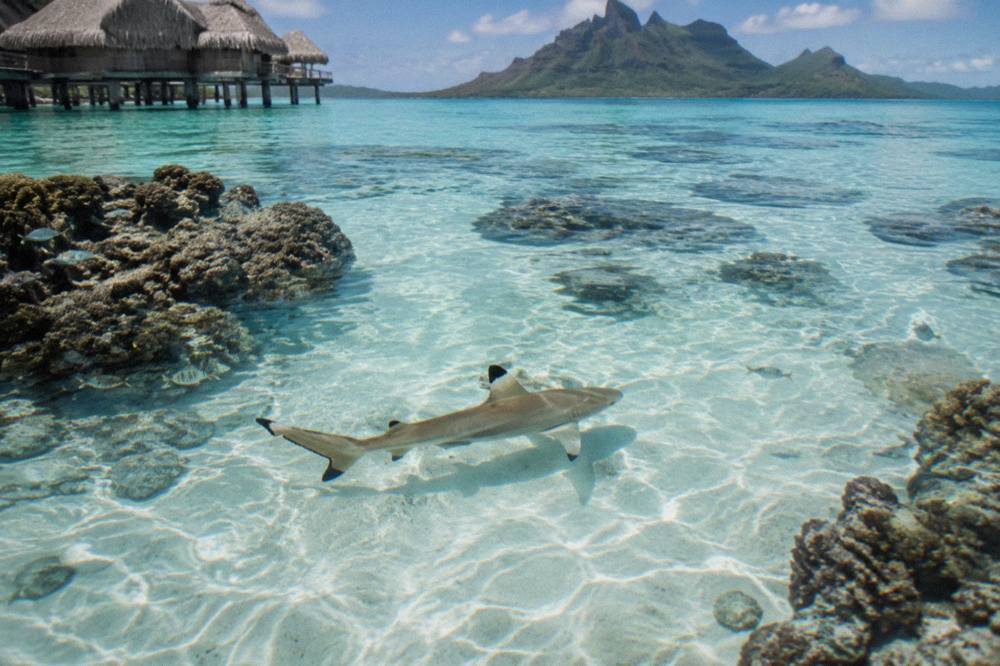
Blacktip reef sharks, typically 0.5 to 1.5 m long, are the species operators and guides name as the common encounter in the lagoon, and lemon sharks are reported occasionally in deeper lagoon areas. Ocean-going species associated with serious incidents are not part of the lagoon snorkel experience. Guides describe the reef species as accustomed to boats and people, which is a statement about habit, not a guarantee of behavior.
What follows is the species picture as the operators' own materials and guide sources present it. The table deliberately avoids words like harmless, because a site that sells these tours owes its readers a straighter register than that.
| Species | Where it is typically seen | Typical size reported | How guides describe the encounter |
|---|---|---|---|
| Blacktip reef shark | Shallow lagoon stops on tours, coral garden edges | 0.5 to 1.5 m | The standard tour encounter; guides brief guests before entering the water |
| Lemon shark | Deeper lagoon areas, occasionally | Reported up to about 3 m | Occasionally present in deeper areas; not a standard snorkel stop |
| Stingray (southern) | Sandy shallows at tour stops | Not stated in the lineup | Handled by guides; visitors advised to shuffle feet in sand and not to touch |
The stingray row belongs in a shark article because the two animals share the same stops and the same etiquette briefing. Stingrays use their barbed tail defensively if stepped on or grabbed, which is why the standard advice across guide sources is to shuffle your feet in sandy shallows and let the guides handle any close interaction. The same principle governs the sharks: the animals react to what people do, and the briefing exists to keep people doing predictable things.
None of this amounts to a claim that the lagoon is free of risk, and no source on file supports such a claim. What the record supports is narrower and more useful: the species involved are small reef dwellers, the encounters happen in shallow, guided settings, and the tours that run them every day are built around briefings and supervision rather than adrenaline. Readers who want the same honesty applied to the water itself can read whether it is safe to swim in Bora Bora and the companion piece on swimming with reef sharks specifically.
Is Swimming With Blacktip Reef Sharks Safe?
For snorkelers following a guide's briefing, the blacktip reef shark encounters offered on Bora Bora lagoon tours are managed rather than risky in the way the question implies. Operators supply flotation, guides supervise the water, and the species involved is a small reef shark accustomed to boat traffic. No source supports calling any wild shark encounter entirely without risk.
The mechanics of a stop are more mundane than most first-timers imagine. The boat anchors at a known site, the guide explains where to float, what not to do, and how long the stop lasts, and guests enter the water together. Several lagoon operators, including H2O Bora Bora, state in their own frequently asked questions that they provide life jackets and flotation and explicitly welcome non-swimmers, adapting to all swimming levels with guided supervision. That detail matters to a nervous reader more than any statistic: the commercial model of these tours depends on ordinary, cautious tourists having a calm experience.
The eco snorkel cruise that anchors this article's examples is a good illustration of how the framing works on a real listing. Moana Adventure Tours runs it as a 2.5-hour small-group trip from $107 per person on the sister listing, or the outrigger cruise version at 2 hours 30 minutes from $112 per person, both listing pickup, free cancellation and snorkel gear. The listing describes sharks and stingrays as stops, not as stunts, and the operator is among those whose eco approach is discussed in guide sources in terms of limiting or controlling feeding rather than staging it as spectacle. The difference between operators who visit natural congregation areas and those who do not is real, and the next section covers it.
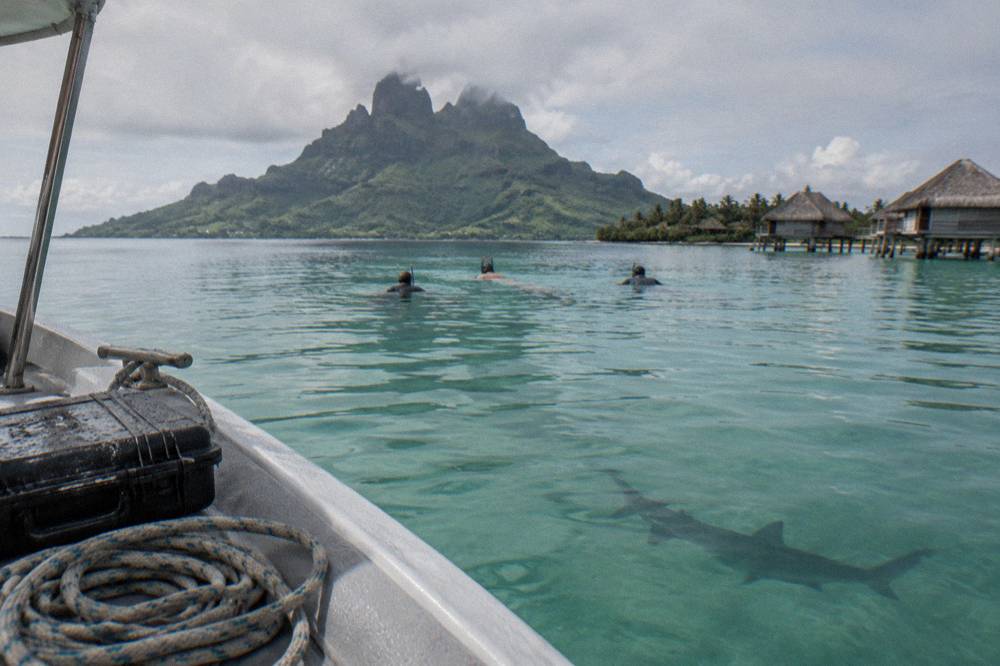
Supervision is the load-bearing safety feature, and it is worth saying so plainly. A solo snorkeler surprising a shark behaves differently from a briefed group floating at the surface while a guide watches. That is not a tour-industry talking point; it is the observable structure of every listed product: a guide, a briefing, a group, a time limit. Readers weighing whether they or their children should join can also read snorkeling in Bora Bora with kids, which addresses the age and confidence questions directly.
What Rules Protect Sharks And Snorkelers In French Polynesia?
French Polynesia has protected all shark and ray species in its waters since 2006, under what is described as the world's largest shark sanctuary. The Environmental Code prohibits any attempt to attract sharks or any action likely to modify their behavior, and whale interactions are separately regulated with approach distances and approved-provider requirements. These rules constrain what tours may do, which shapes how encounters run.
The sanctuary date matters because casual sources often get it wrong, some repeat a 2012 figure. The verified position from the Direction de l'Environnement's own leaflet on the rays and sharks of the territory is 2006, with the explicit prohibition on attraction and behavior modification quoted in the Environmental Code of French Polynesia. The practical effect on the water is that a listing may not sell baiting as a feature, and the tours reviewed here describe visits to places where sharks naturally gather. Other pages covering the same trip are gathered on Bora Bora Snorkeling Tours.
Whales fall under a separate framework, and it is one that snorkel readers sometimes blur into the shark question. Tahiti Tourisme's regulations require approved providers to keep 100 m from whales, 300 m for private boaters, travel no faster than 3 knots within 300 m, hold a parallel course and never encircle the animals. No listing in this lineup is a whale-watching product, and a snorkel tour that happens in season does not imply a whale swim. The separation is worth stating because unapproved whale approaches are the area where French Polynesian wildlife rules carry real teeth.
The feeding question deserves its own honesty. Lawful tours here do not feed sharks or rays; some eco-focused operators make that policy explicit and visit natural congregation areas instead. A territory guide to rays and sharks describes the species and the interaction norms, and a guide-site treatment of shark and ray encounters discusses how the feeding debate plays out in practice. This site's position is simply to report what each listing states, and to note that the law is unambiguous about attraction and behavior modification.
How Do Tour Operators Manage The Encounter?
Operators manage shark stops through briefings, guided supervision, flotation and set site choices, and the listings state these as standard practice. Gear is listed as included on most tours, pickup is listed on all of them, and free cancellation is listed on nearly all, which matters to a nervous booker. What no operator can manage is the animal itself, so no honest listing promises a sighting.
Reading the lineup side by side, the pattern is consistent. The Reef Discovery half day group signature tour, 5.0 from 1,051 reviews and from $134 per person, lists pickup, free cancellation and snorkel gear on a 3.5-hour shared format. The full-day lagoon cruise including snorkeling with sharks and stingrays, 4.8 from 734 reviews and from $154 per person, adds a listed meal over 6 hours. The half-day small-group cruise from Lagoon Service, 5.0 from 203 reviews at from $134 per person, runs the same stops in a smaller format. None of these listings prints a group-size number, and none should be assumed to.
| Listing | Format | Duration | Rating and reviews | Price basis | Meal |
|---|---|---|---|---|---|
| Eco Snorkel Cruise (Moana Adventure Tours) | Small group | 2.5 hours | 4.8 from 604 reviews | from $112 per person | Not stated |
| Reef Discovery Half Day Signature | Shared | 3.5 hours | 5.0 from 1,051 reviews | from $134 per person | Not stated |
| Full-Day Lagoon Cruise, Sharks and Stingrays | Shared | 6 hours | 4.8 from 734 reviews | from $154 per person | Listed |
| Half-Day Small-Group Cruise (Lagoon Service) | Small group | 4 hours | 5.0 from 203 reviews | from $134 per person | Not stated |
| 2.5-Hour Eco Shark Safari (Moana Adventure Tours) | Shared | 2.5 hours | 4.7 from 191 reviews | from $107 per person | Not stated |
The table shows the honest spread of the market rather than a single recommended product. A worried first-timer has a genuine choice: the shortest exposure at the lowest price, the most-reviewed half day, or the full-day format that spreads the same stops across a longer, slower day with lunch. The ratings are printed beside their review counts throughout this site because a 5.0 from 14 reviews and a 5.0 from 1,051 reviews are different facts, and readers deserve to see the pool.
The Reef Discovery half day earns its place in this discussion on the strength of that review pool and its circle-lagoon format, which puts multiple snorkel stops, and therefore multiple calm, briefed encounters, into one three-and-a-half-hour trip from $134 per person. For a nervous snorkeler, repetition with the same guide in the same morning is a reasonable way to turn one anxious stop into a routine one. The listing shows free cancellation, so the booking decision is reversible, which is exactly the property a worried reader should be looking for.
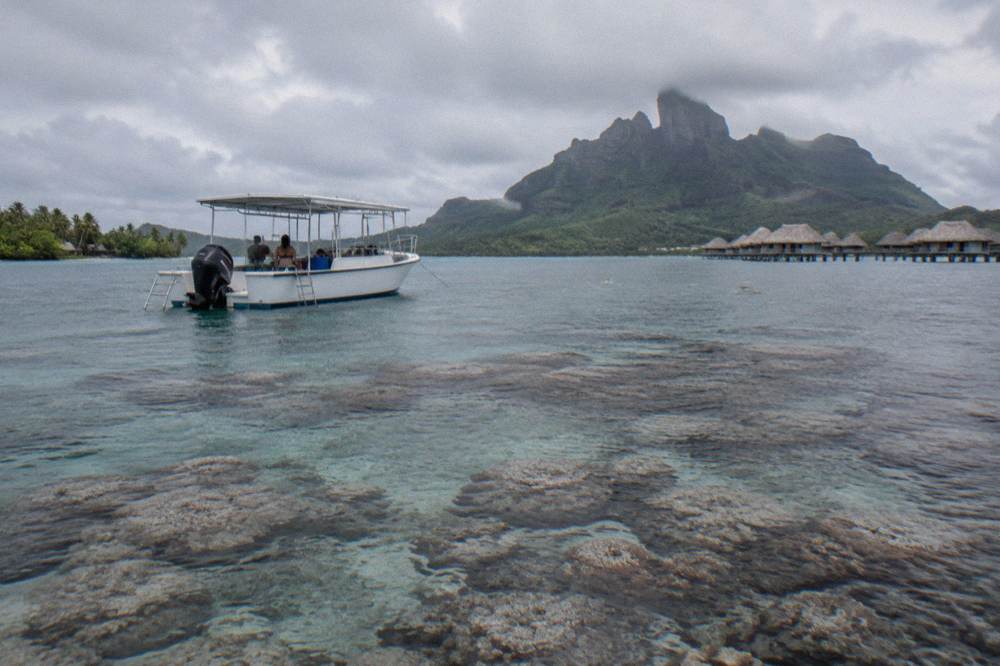
One more operator-side fact belongs here, because it changes what "dangerous" means in practice. The southern reef off Matira is now home to a 574-hectare no-take zone, established by decree in December 2025 and described in reporting on the new marine sanctuary as closed to fishing, boating and nautical activity. Tours do not enter it. The effect for this article is that the shark encounters on offer happen in the working lagoon, at sites the operators use routinely, inside a regulatory environment that takes marine protection seriously enough to close a section of reef entirely. More context on the sites themselves is in the guide to Bora Bora's snorkeling spots.
What About Bigger Sharks And Deeper Water?
The sharks associated with serious incidents worldwide are oceanic or large coastal species, and they are not part of the lagoon snorkel experience in Bora Bora. Lemon sharks are reported occasionally in deeper lagoon areas and described in guide sources as non-aggressive toward snorkelers, but deeper stops are better suited to confident swimmers. No source on file records a fatality from the lagoon's reef species in French Polynesia. If you're getting ready for a lagoon swim, our guide to reef-safe sunscreen in French Polynesia explains which mineral formulas snorkel operators ask guests to wear.
That last sentence is stated carefully, as the sources state it, and it should not be stretched into a general safety claim about sharks or about the ocean. The honest structure of the risk picture is geographic: the lagoon is shallow, sheltered and busy with supervised tourism; the ocean side of the reef is a different environment that snorkel tours do not treat as a playground. A detailed snorkeling guide to the island draws the same line, describing the manta cleaning station at Anau as boat-access only, deeper and more exposed than the shallow gardens, with guides deciding conditions on the day.
For readers whose real worry is deeper water rather than sharks, the practical answer is format choice. The full-day lagoon cruise including snorkeling with sharks and stingrays, 4.8 from 734 reviews and from $154 per person, mixes shallow stops with a longer day afloat and a listed meal, which suits a mixed-confidence group better than a short, stop-dense trip. The manta etiquette that applies at sites like Anau, staying at the surface, remaining calm and horizontal, never diving down or blocking an animal's path, is the same etiquette that governs shark stops, and guides repeat it because it works.
The question of whether any of this makes the lagoon "safe" is really a question about baseline honesty. Bora Bora Snorkeling Tours publishes these comparisons because a reader who understands the species, the rules and the operator practices books with clear expectations, and clear expectations are the foundation of a calm swim. Fear does not survive a good briefing; overconfidence does not survive a good guide. The tours below are the three this article has used as examples throughout, and each listing states its own cancellation terms.
Common Questions About Sharks In Bora Bora
Do the blacktip reef sharks around Bora Bora pose any danger to snorkelers?
The species commonly encountered on lagoon snorkel tours, mainly blacktip reef sharks typically 0.5 to 1.5 m long, are not described by operators or guides as a threat to snorkelers. Guides brief guests, flotation is provided, and French Polynesia has protected all sharks and rays since 2006. Wild animals are never entirely without risk, and no tour guarantees behavior or sightings.
How large do the sharks in Bora Bora's lagoon actually get?
Big is relative. Blacktip reef sharks, the common lagoon species, run about 0.5 to 1.5 m. Lemon sharks, reported up to about 3 m, appear occasionally in deeper lagoon areas and are described in guide sources as non-aggressive toward snorkelers. The large oceanic species people usually picture live outside the lagoon, where snorkel tours do not operate.
Do the tours feed the sharks?
No tour in the territory feeds sharks or rays. Some operators state an explicit no-feeding eco policy and visit natural congregation areas instead. This site reports only what each listing states. French Polynesian law prohibits attracting sharks or altering their behavior, so a listing may not sell baiting as a feature.
Can non-swimmers join a shark snorkel stop?
Several lagoon operators, including H2O Bora Bora, state that they provide life jackets and flotation and explicitly welcome non-swimmers, adapting to swimming levels with guided supervision. The listing for each tour states its own inclusions. Confident and cautious swimmers alike stay at the surface and follow the guide's briefing.
Is it safe for children to snorkel with the sharks?
Children are welcome on most lagoon tours with adult supervision, and many operators supply child-sized gear and life jackets. Some deeper stops are better suited to confident swimmers, and certain tours list age, weight or medical restrictions. Check the specific listing before booking for a family.
Has anyone been hurt by a shark in Bora Bora?
No source on file records a fatality from the lagoon's reef species in French Polynesia, and the guide sources describing blacktip reef sharks and lemon sharks report no such fatalities. That is a statement about the recorded record for these species, not a guarantee about wild animals. Stingray etiquette, shuffling feet in sand and not touching, is the more practical everyday precaution.