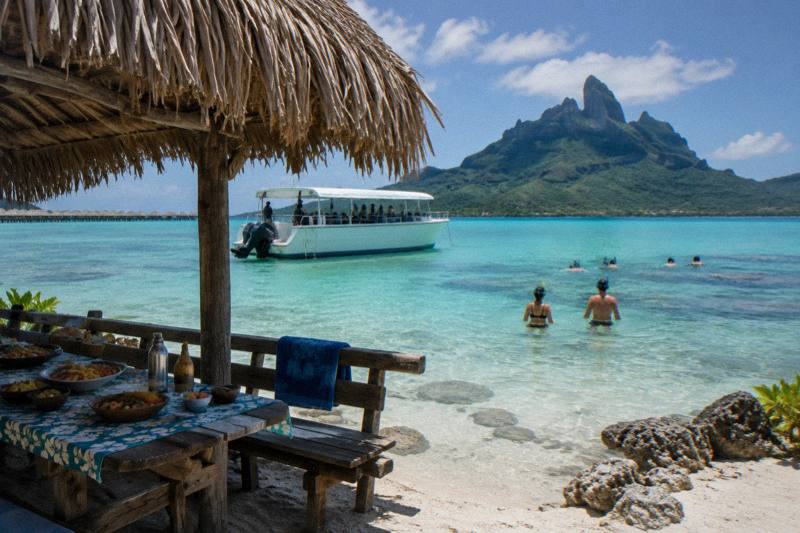
Which Reef-Safe Sunscreen Works In French Polynesia?
Mineral non-nano sunscreen is what Bora Bora snorkel operators ask guests to use. Here is what the label should say, what to avoid, and how it performs in the lagoon.
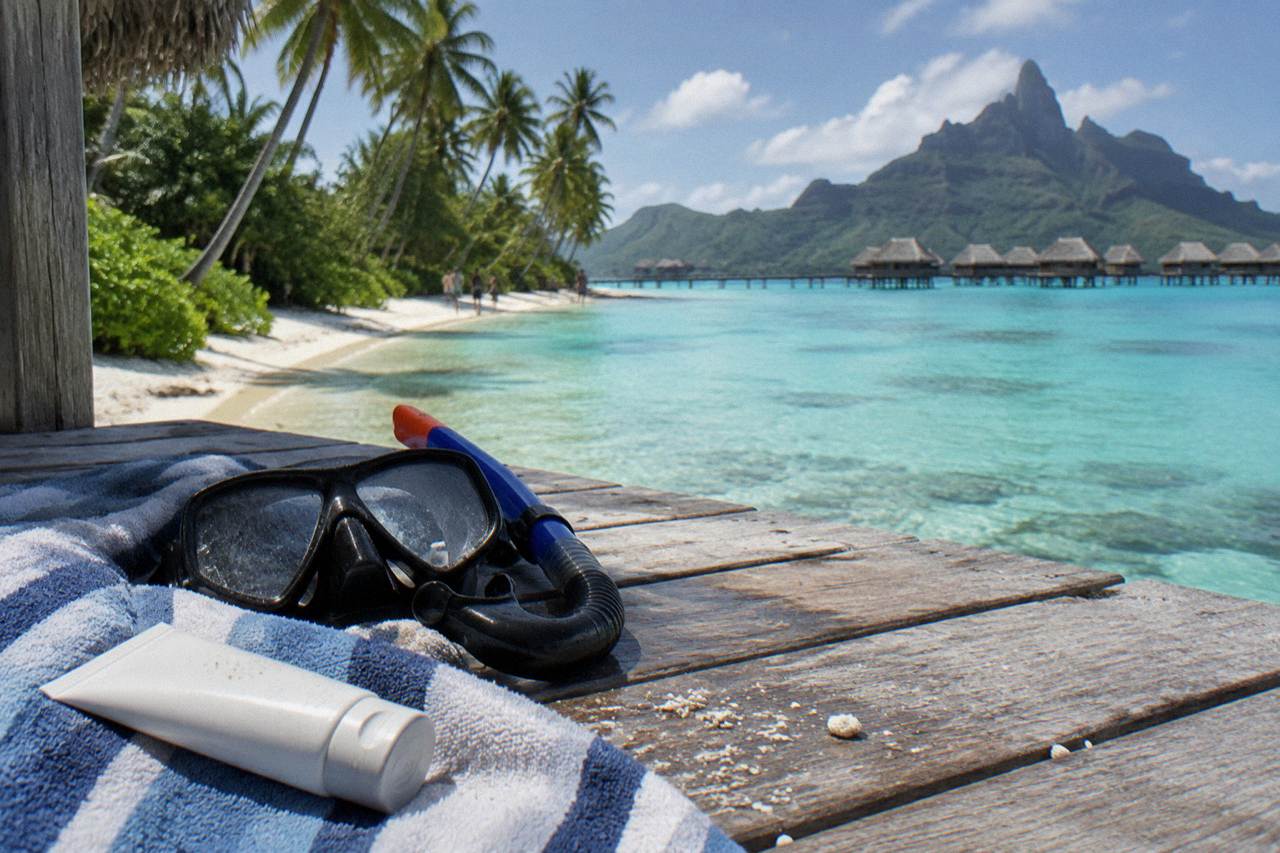
The short answer is a mineral sunscreen built on non-nano zinc oxide or titanium dioxide, applied generously and reapplied after every snorkel stop. French Polynesia has no blanket ban on chemical formulas, but reef-focused guides strongly recommend mineral ones, and several Bora Bora operators state an eco policy that fits the same logic. That recommendation comes from the same body of local guidance that asks snorkelers not to touch coral at the coral gardens or chase mantas at Anau. It is not a law, and no listing in the lineup can force a particular brand into your bag. What operators can do, and increasingly do, is brief guests before the boat leaves the dock.
The stakes are real enough that the question sits at the center of trip prep. French Polynesia has protected every shark and ray species in its waters since 2006, a sanctuary the Direction de l'Environnement summarizes in its own guidance leaflet, and the same environmental code prohibits anything that would alter a shark's behavior. Reef protection in the lagoon runs on the same instinct: keep the inputs clean. Sunscreen is one of the few inputs a visitor fully controls, and a single half-day lagoon tour can put a boatload of lotion into the water at the day's most visited sites. A trip like the Reef Discovery half-day circle lagoon snorkel, from $134 per person with gear and pickup listed, visits the kind of shallow coral gardens where residue concentrates, which is exactly why the sunscreen question comes up at the briefing.
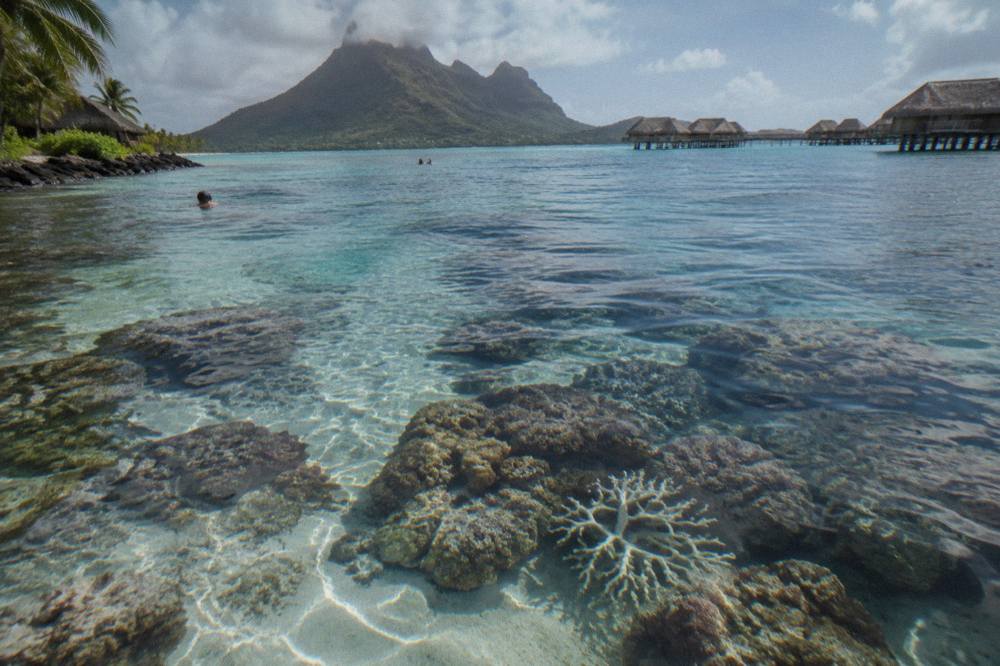
There is a second, purely practical reason the topic deserves ten minutes of planning before you fly. Mineral sunscreens behave differently from the chemical ones most people grew up with. They sit on the skin rather than absorbing, they can leave a white cast, and they need a different application technique to hit their labeled protection. Snorkelers who arrive with the wrong expectations often under-apply, then burn, then blame the product. Getting the choice right before the Reef Discovery circle lagoon snorkel or any other lagoon day means the rest of the prep, the mask, the rash guard, the towel, is the easy part, and the sunscreen simply works. For the rest of your day bag, the full Bora Bora snorkel packing checklist covers the gear worth bringing yourself and what the tours hand you on board.
Is Chemical Sunscreen Banned In Bora Bora?
No. As of 2026 there is no blanket chemical sunscreen ban anywhere in French Polynesia, and no Bora Bora listing on this site's lineup states a sunscreen rule as a booking condition. What exists instead is a strong, consistent recommendation from reef-focused guides: choose mineral formulas, meaning non-nano zinc oxide or titanium dioxide, and avoid oxybenzone, octinoxate and similar chemical filters. That recommendation is documented by local and regional guides covering the island, and it echoes sunscreen policy debates in destinations like Hawaii and Palau without matching them, since those jurisdictions passed actual bans and French Polynesia has not.
The distinction matters because travelers often arrive believing a law exists. Some packing lists circulating online repeat the claim that chemical sunscreen is confiscated at Papeete, which no source on file supports. Customs does not screen toiletry bags for oxybenzone. The practical enforcement, such as it is, happens socially: a guide on the full-day lagoon tour with lunch or the small-group snorkel cruise mentions it during the safety briefing, guests who brought mineral products nod, and the boat goes out. Nobody is turned away.
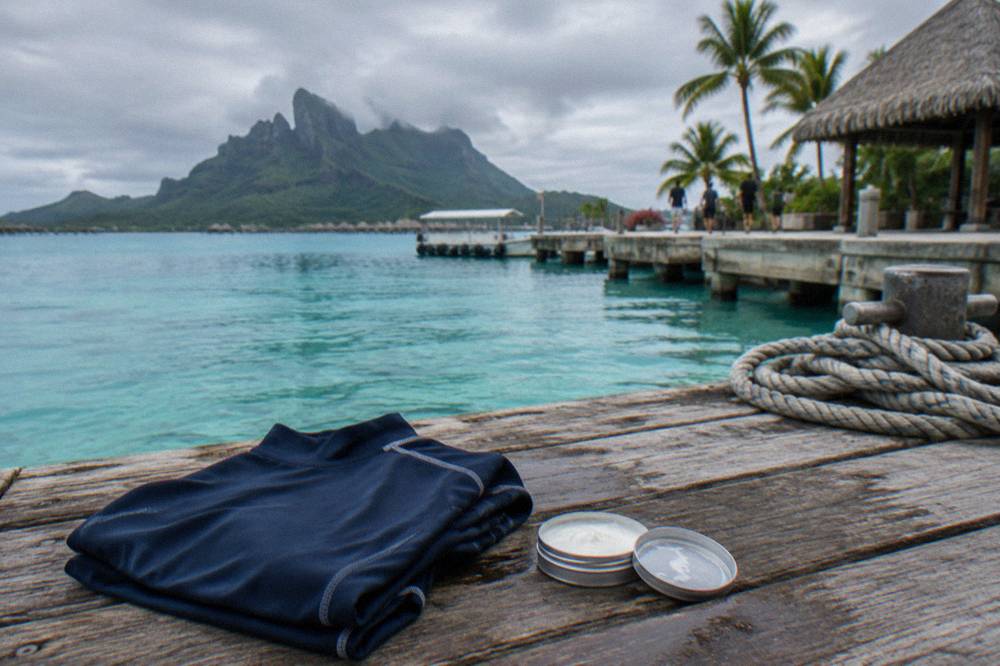
What the local guidance actually says is narrower and more useful. A mineral formula using only non-nano zinc oxide or titanium dioxide, and skipping oxybenzone, octinoxate and similar chemical filters, is described as strongly recommended for protecting coral reefs, per regional guidance on reef-friendly sunscreen in Bora Bora. That is a recommendation, not a statute. If a specific operator states a sunscreen requirement on its own listing or FAQ page, that requirement applies to that operator, and the honest move is to follow what the listing says rather than what a forum post claims.
The comparison with harder-line destinations explains why the question keeps coming up. Places that banned chemical filters did so after documenting coral damage at specific concentrations, and French Polynesian authorities have simply not traveled that road. The commune and the environmental code focus on other levers: the shark and ray protections, the whale approach rules in season, and the new Popora rahui, a 574 hectare full-protection zone on the southern reef off Matira established by decree in December 2025, closed to fishing, boating and nautical activity. Tours do not enter that zone. Against that backdrop, sunscreen remains a personal-choice layer of reef protection, and the mineral recommendation is the local consensus answer.
What Does Mineral Non-Nano Actually Mean On A Label?
Mineral means the active ingredients are zinc oxide, titanium dioxide, or both, physical filters that scatter ultraviolet light rather than absorbing it the way chemical filters do. Non-nano means the particles are sized above roughly 100 nanometers so they are less prone to being absorbed by coral tissue, and the label will usually state "non-nano" outright because manufacturers know shoppers look for it. A product that lists zinc oxide but not the particle size may still be nano, so the two words together are the standard you want.
Reading a label is easier once you know the four things worth checking. The active ingredient line comes first, and it should name only zinc oxide and titanium dioxide. The SPF number comes second, and dermatology guidance generally favors 30 to 50 for a day split between boat deck and water. Water resistance comes third, usually labeled 40 or 80 minutes, which matters enormously for snorkeling. Broad spectrum comes fourth, confirming the product covers UVA as well as UVB, relevant for long sessions in shallow, reflective lagoon water.
| Label element | What to look for | Why it matters for snorkeling |
|---|---|---|
| Active ingredients | Zinc oxide, titanium dioxide, or both | Mineral filters are what local reef guidance recommends |
| Particle size | "Non-nano" stated explicitly | Larger particles are considered less damaging to coral |
| SPF | 30 to 50 | Enough cover for boat time plus in-water time |
| Water resistance | 40 or 80 minute rating | Sets your reapplication clock between snorkel stops |
| Broad spectrum | Stated on the front | UVA protection for hours in open sun |
The filters to avoid are equally easy to name: oxybenzone and octinoxate are the two most cited, and regional guidance groups them with similar chemical filters as the ones to skip. A product advertising "reef friendly" on the front while listing oxybenzone in the actives is relying on marketing rather than chemistry, and the ingredient list always wins. This is also where price stops being a reliable signal. Some expensive resort boutique products are mineral and excellent, some are chemical with a green label, and some affordable pharmacy zinc sticks outperform both. The ingredient line is the only part of the package that does not spin.
One honest limitation deserves airtime. Mineral non-nano sunscreen has not been proven harmless to reefs in every condition, and researchers debate how much sunscreen contributes to reef stress relative to warming water and physical damage from anchors and touching. The recommendation stands because it is the lowest-regret option available: it filters UV, it satisfies the local guidance, and it removes the specific filters most often flagged in coral studies. Choosing it is cheap insurance rather than a rescue mission.
What Do Bora Bora Tour Operators Ask Guests To Wear?
In practice, operators ask for a mineral sunscreen and common-sense reef behavior: no touching coral, no chasing or handling animals, and sunscreen applied before boarding or at least before entering the water, not in the shallows over the reef. Some eco-focused tours go further and state a no-feeding policy for sharks and rays, visiting natural congregation areas instead of baited ones, and that same ethos extends to what they prefer guests bring onto the boat. No listing states a brand requirement, so any mineral product meeting the label standard above fits.
The pattern shows up across the local fleet. Guides describe blacktip reef sharks, typically half a meter to a meter and a half, as the common species on lagoon tours, and they brief guests on behavior rather than promising sightings. Manta etiquette at cleaning stations like Anau asks snorkelers to stay at the surface, remain calm and horizontal, and never dive down, touch, chase or block the animals, protections that sit under the same environmental code as the 2006 shark sanctuary. Sunscreen guidance travels in the same briefing because it is one more input the group controls together. Operators such as H2O Bora Bora and others around the lagoon also supply flotation and welcome non-swimmers, so the briefing covers people as carefully as it covers the reef.
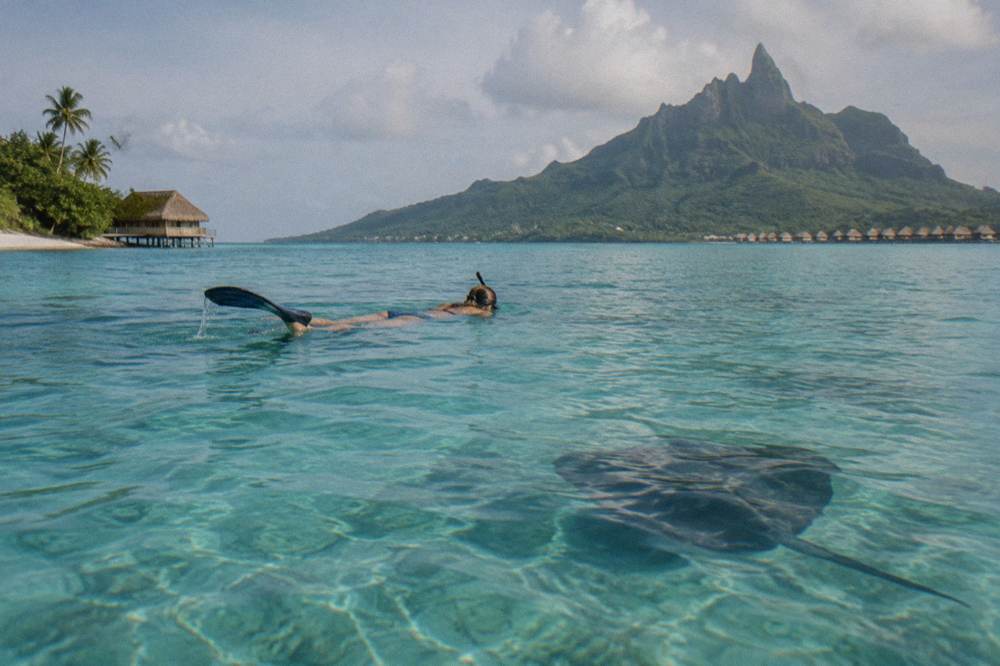
For tour-specific planning, the half-day formats are where sunscreen discipline matters most, because the itinerary packs several snorkel stops into a few hours with little shade between them. The small-group four-hour cruise run by Lagoon Service, from $134 per person and rated 5.0 from 203 reviews, lists pickup, gear and free cancellation, and its shorter sibling, the shared half-day snorkel from $130 per person rated 5.0 from 774 reviews, covers similar water in the same window. On either, an 80-minute water-resistant zinc applied at the dock and reapplied at the halfway point carries you through the coral garden, the ray stop and the shark stop without a gap in cover.
| Tour context | Sunscreen demand | Practical move |
|---|---|---|
| Half-day shared snorkel, about 3.5 hours | Multiple short in-water stops, full sun on deck | One pre-departure application, one mid-tour reapplication |
| Full-day lagoon tour with motu lunch, about 6 hours | Longest exposure, lunch break on land | Reapply at lunch and after each water session |
| Small-group cruise, about 4 hours | Fewer guests, similar stop count | Same cadence as shared, easier deck shade access |
| Private boat, morning or afternoon | You set the pace | Schedule reapplication between stops, keep the tube shaded |
Full-day guests face a different arithmetic. The full-day lagoon group tour with lunch, from $173 per person and carrying 1,715 reviews at 5.0, the largest review pool in the lineup, spends roughly six hours mixing boat time, water time and a motu lunch, and the lunch pause is the natural reapplication window that many snorkelers miss. The table above gives the cadence for each format, and the principle behind it is simple: sunscreen breaks down in water and towel contact faster than the label suggests, and the reef-friendly choice only works if it is actually on your skin.
How Do You Apply Mineral Sunscreen So It Works In The Lagoon?
Apply it 15 minutes before you get in the water, use more than feels reasonable, roughly a shot glass for a full body, and reapply every 80 minutes of water time or immediately after toweling off, whichever comes first. Mineral sunscreen works as a surface layer, so thin application is the single most common failure, and the white cast that people try to rub away is the layer actually doing the job. Skipping the rub-out entirely is a legitimate tactic.
The order of operations on tour day matters as much as the product. Sunscreen goes on before the rash guard or swimsuit where those garments sit, because UV strikes the edges fabric shifts expose, and it goes on dry skin, which helps the film set. On the boat, keep the tube in a shaded bag rather than the deck, since heat degrades formulas over a season. Before entering the water at a stop, check whether anything remains unabsorbed and give it a minute, which reduces the initial wash-off load. None of this is complicated, but each step protects either you or the reef, and usually both.
Faces and necks deserve special care because they take the most reflected light off the water and the most mask-edge friction. A zinc stick format solves part of this, since thick stick formulas resist washing off around the mask skirt, though they need deliberate blending at the hairline. Lips need an SPF balm, a detail routinely forgotten. Ears, the back of the neck, the tops of feet in open fins, and the backs of hands are the classic burn sites on lagoon tours, and they are also the easiest spots to cover thoroughly with a mineral product since precision is a strength of the thicker formulas.
Timing reapplication to the itinerary turns good intentions into practice. A typical half-day with a coral garden stop, a ray stop and a shark stop gives you two natural checkpoints: back on the boat after the first stop, and before the last. On a full day with a motu lunch, lunch is the big checkpoint plus one mid-morning touch-up. Guides rarely announce sunscreen breaks, so set your own cue, and remember that water-resistant ratings measure time in water, not time on the sunny deck. If in doubt about coverage later in the day, what to bring snorkeling in Bora Bora covers the rest of the kit that pairs with this routine.
What Else Protects You Besides Sunscreen?
A rash guard or UPF swim shirt blocks ultraviolet physically and needs no reapplication, a wide-brim hat and polarized sunglasses cover the boat time between stops, and shade on deck, when a boat offers it, cuts cumulative exposure for free. Layering fabric protection is also the most reef-neutral strategy there is, since a shirt washes nothing into the lagoon, and many regular snorkelers now treat mineral sunscreen as the supplement rather than the primary defense. Together they reduce how much product you need in the water at all.
The layering logic is worth spelling out. If a UPF 50 rash guard covers your torso and arms, the sunscreen question shrinks to face, neck, hands and lower legs, cutting both your application burden and the residue you contribute at each stop. Reef etiquette guidance already pushes the same direction: cover more skin, touch nothing, stay calm around animals. For guests heading out on a shark and ray excursion, the same kit that suits the swim with sharks and rays guide works for the sunscreen question too, because a well-covered snorkeler is a low-input snorkeler.
Warm water is the hidden variable in all of this. A secondary sea-temperature series puts the Bora Bora lagoon at 26 to 29 C year round, which means snorkelers stay in far longer than they would in temperate seas, and the dry season from May to October that operators describe as the calmest, clearest window is also the high-sun window (see Clearest Water). Guests booked onto the eco snorkel cruise with sharks and stingrays, from $112 per person at 4.8 from 604 reviews, or the 2.5-hour eco shark safari from $107 per person at 4.7 from 191 reviews, are out in exactly those conditions. The gear that pairs with mineral sunscreen, the rash guard, the hat for the ride, is the other half of the answer, and local snorkeling guides covering Bora Bora describe the same combination as standard practice.
Does Reef-Safe Sunscreen Cost More Or Work Less In Real Conditions?
A mineral non-nano sunscreen typically costs somewhat more per ounce than a mass-market chemical sport spray, but it does not work less when applied correctly, and in lagoon conditions it can outperform, because thicker zinc films resist wash-off better than thin chemical sprays that rinse off at the mask edge. The performance gap people remember usually traces to under-application, not to the filter chemistry, and the white cast is cosmetic rather than a protection failure.
Cost framing helps. A reef-adequate mineral tube for a week of snorkeling is a modest, one-time expense set against a tour that runs from $105 per person for the cheapest listing up to $1,776 per group for a private full-day charter. Even on that scale the sunscreen is rounding error. The real price of the wrong choice shows up either as a burn that costs you a snorkel day, or as the small personal contribution of chemical filters at sites visited by multiple boats daily, which no individual tube tips but every tube joins.
Practical performance notes close the case. Mineral lotions have improved markedly on the white-cast problem, and tinted versions exist for faces. Sticks and thicker pastes last longest in water but need deliberate spreading. Sprays labeled mineral are often partly chemical or apply too thinly to trust, so a spray that lists only zinc oxide still deserves a careful hand. Whichever format lands in your bag, test it once at home, because a reaction discovered on the boat is a bad morning, and check that everything else in the kit, the mask fit, the fin sizing, is settled before departure day.
For a site that spends its days on this lagoon, built around honest comparison of what the boats actually offer, the sunscreen answer is one of the few that costs almost nothing and benefits every stop on every itinerary. This article's guidance pairs naturally with the Reef Discovery circle lagoon snorkel, the featured half-day on Bora Bora Snorkeling Tours, rated 5.0 from 1,051 reviews and listed from $134 per person with pickup, gear and free cancellation, where the coral garden stop is precisely the shallow, sunlit water the mineral recommendation was written for.
Common Questions About Reef-Safe Sunscreen In French Polynesia
What sunscreen formula does local reef guidance in French Polynesia recommend for lagoon snorkeling?
A mineral sunscreen using non-nano zinc oxide, titanium dioxide, or both, at SPF 30 to 50 with a 40 or 80 minute water-resistance rating. There is no blanket chemical ban in French Polynesia, but this is the formula local reef guidance strongly recommends for lagoon snorkeling.
Is chemical sunscreen illegal in Bora Bora?
No. As of 2026 no law bans chemical sunscreen in French Polynesia, and no tour listing on this site states a sunscreen brand requirement. The mineral recommendation is guidance from reef-focused operators and regional guides, not an enforceable rule, though individual operators may state their own policies.
What ingredients should I avoid in reef sunscreen?
Oxybenzone and octinoxate are the two chemical filters most often flagged, and regional guidance groups them with similar chemical filters to skip. The active ingredient line should list only zinc oxide and titanium dioxide, ideally with "non-nano" stated explicitly, since front-of-pack "reef friendly" claims are not regulated.
Do Bora Bora tour operators provide sunscreen?
The listings state snorkel gear as included on most tours, but sunscreen is not listed as an inclusion anywhere in the lineup. Bring your own, applied before boarding, and carry the tube in a shaded bag for mid-tour reapplication at the stops.
How often should I reapply sunscreen while snorkeling?
Follow the water-resistance rating on the label, usually 40 or 80 minutes of water time, and reapply immediately after toweling off. On a half-day tour with several stops, that means roughly two applications; on a full-day tour with a motu lunch, use the lunch break as the main reapplication window.
Is a rash guard better than reef-safe sunscreen?
They do different jobs. A UPF rash guard physically blocks ultraviolet with no reapplication and washes nothing into the lagoon, which makes it the most reef-neutral protection, while sunscreen covers the exposed face, neck and hands. Most experienced snorkelers use both together and treat mineral sunscreen as the supplement.