Where Is The Clearest Water For Snorkeling In Bora Bora?
A research-backed guide to which parts of the Bora Bora lagoon run clearest for snorkeling, which months and hours give the best water, and which tours stop where.
Which Bora Bora Spots Have The Clearest Water?
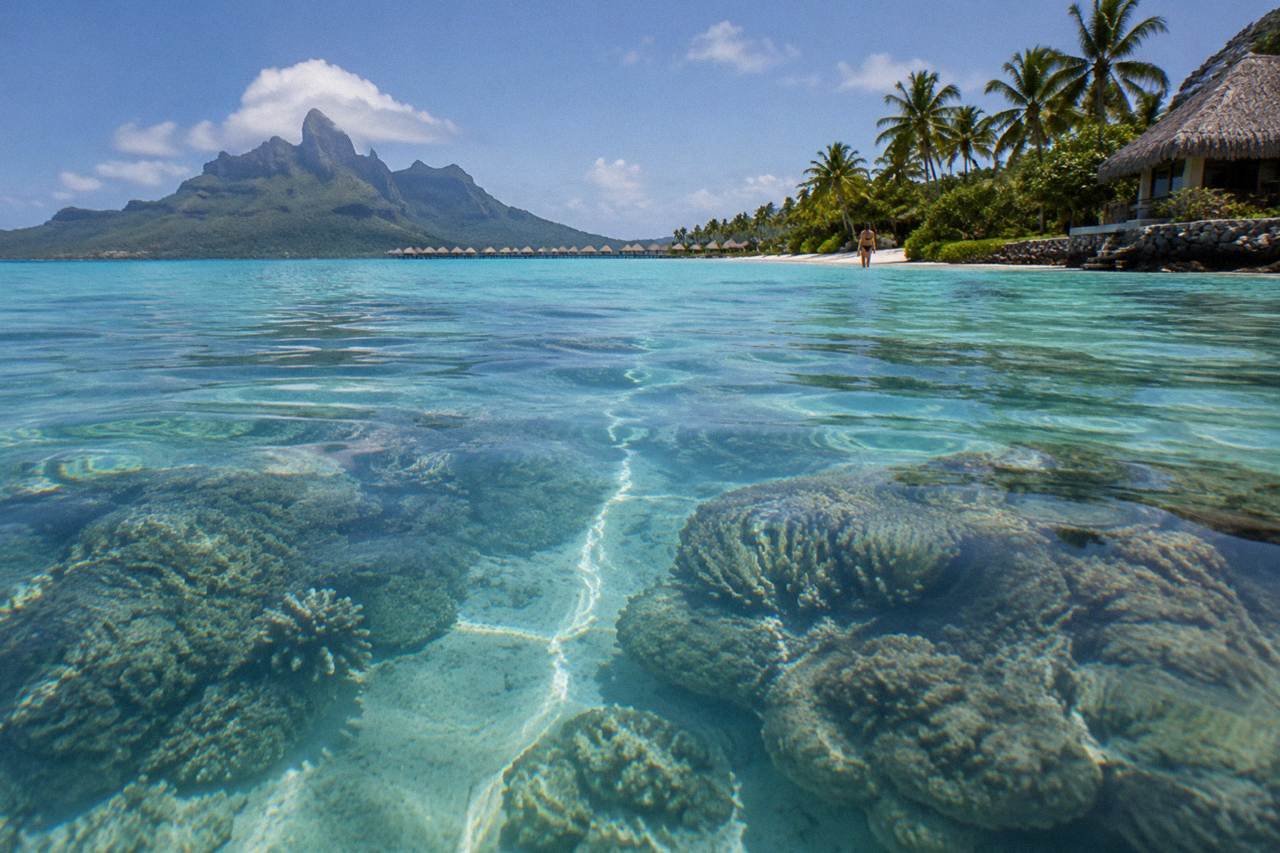
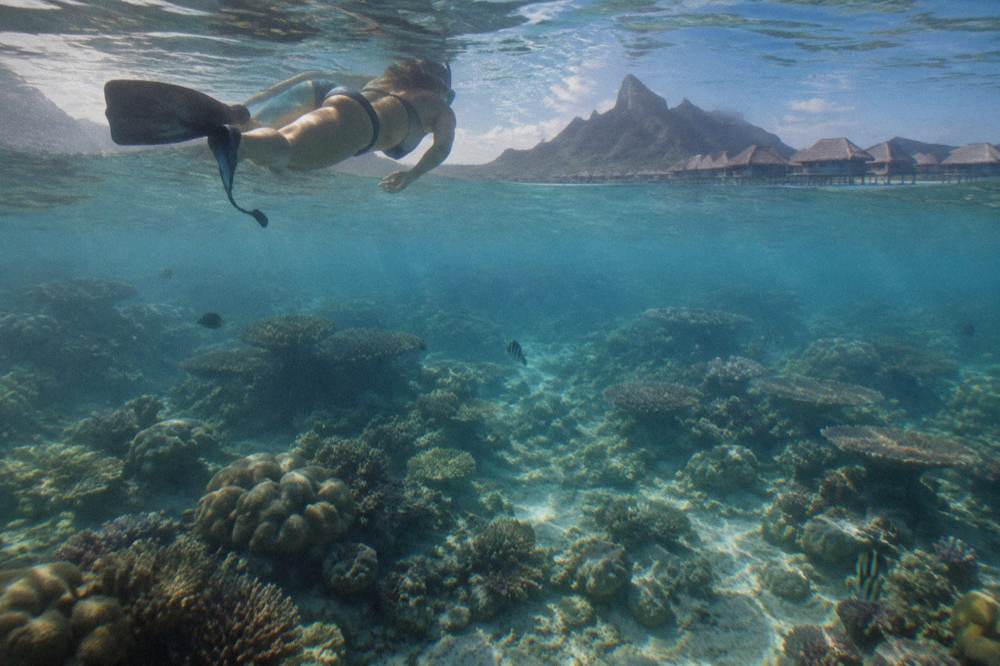
The clearest snorkeling water in Bora Bora sits in the sheltered coral gardens inside the lagoon, reached by boat: the southern gardens near Motu Piti Uu Uta, the fish-dense patch guides call the Aquarium, and the quieter Motu Tane garden on the north side. Conditions run clearest in the dry season, May to October, and on mornings before the afternoon wind picks up; Matira Beach is the one clear-water site you can reach from shore for free.
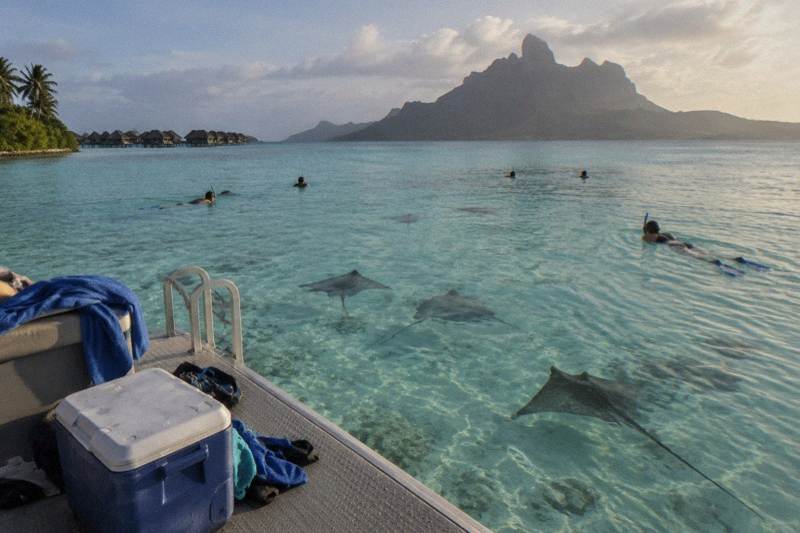
The short version is that Bora Bora's clarity is a story about geology. The island sits inside a lagoon ringed by a barrier reef, so ocean swell arrives already broken. What reaches the snorkel sites is water that has settled over sand and coral, and that settling is why the interior sites read like glass on a calm morning. The same geography means conditions are not uniform: the sheltered pockets near the motus behave differently from the more exposed east side, where the Anau manta ray cleaning station sits in deeper, more open water that can carry particles after wind or rain.
Current guide reporting ranks the shore-accessible options bluntly: Matira Beach and Matira Point are described as the only shore-accessible snorkeling spot worth recommending, while the Anau manta station is reachable in practice only through a boat tour, with no public shore access recommended because of private property, currents and reef protection. Everything else on the clearest-water list is a boat stop, which is why the lagoon tours, and not the beach, are where the clear water actually gets used.
Why Does The Bora Bora Lagoon Run So Clear?
The Bora Bora lagoon runs clear because a barrier reef breaks the ocean swell before it reaches the snorkel sites, letting water settle over pale sand and patch coral, while dry-season trade winds and low rainfall keep sediment suspended only briefly, and the volcanic slopes around 727 m Mount Otemanu shed little fine sediment compared with river-fed lagoons elsewhere.
Rain is the main thing that degrades clarity, and the rainfall record explains the seasonality precisely. The Meteo-France climate sheet for the Bora Bora station records 61.9 mm of rain in July and 63.7 mm in August, against 245 mm in January and 250.7 mm in December. Counting only days with at least 1 mm of rain, July averages 9.4 and August 8.8 days, while January averages 17.2. That is the mechanical difference between dry-season water and wet-season water: fewer and smaller freshwater pulses disturbing the lagoon, and fewer cloudy run-off events tinting the shallows near the main island.
Wind is the second factor. Trade winds strengthen through the day, and by afternoon they can lift a chop that stirs sand in the shallow garden sites and cuts the light. This is why operators and guides describe mornings as the calmer window, and why several listings schedule departures in the morning by default. The fresh reporting on the southern coral gardens says early morning is recommended for calmer water and better visibility, which matches what the Meteo-France rainfall pattern implies about when the lagoon has had the longest quiet stretch to settle.
| Factor | Effect on clarity | When it helps most |
|---|---|---|
| Barrier reef | Breaks ocean swell, lets interior water settle | Always, all year |
| Low rainfall | Fewer freshwater and run-off pulses | Dry season, May to October |
| Light morning wind | Less sand stirred in shallow gardens | Early departures, before midday |
| Tide and current | Moves particles through deeper channels | Calmer at slack and early morning |
| Wind exposure | East-side sites like Anau carry more particles | Sheltered southern and northern gardens |
None of this guarantees a condition on any given day. Wind, rain and visibility are variable, and no honest guide or operator will promise a metre figure or a sighting. What the record does support is the pattern: the same site that reads brilliantly at 8 a.m. in August can read milky by 3 p.m. in February, and the tours that leave early in the dry season are simply buying the better side of that pattern.
Which Snorkel Sites Have The Clearest Water?
The clearest water sits in the sheltered lagoon coral gardens: the southern coral gardens near Motu Piti Uu Uta, the Aquarium patch in the same area, and the Motu Tane garden on the north side, plus the shallow water off Matira Beach, the one shore-access option. The exposed Anau manta station on the east side runs more variable and sometimes particle-loaded, but reef mantas gather there, so tours accept the trade-off.
Current guide reporting describes the southern coral gardens as beginner-friendly and sheltered, with blacktip reef sharks, stingrays and schools of reef fish commonly reported, and early morning recommended for the calmest conditions. The Aquarium patch is noted for the density of its reef fish, butterflyfish, angelfish, parrotfish and damselfish, in clear sheltered water. Motu Tane's garden on the north side is reported as quieter than the southern sites with good visibility, hard and soft corals, stingrays and blacktip sharks, and occasional eagle rays; guides favor it for photos. These are qualitative descriptions from operators and guide reporting, not measured visibility figures, and no honest source prints one.
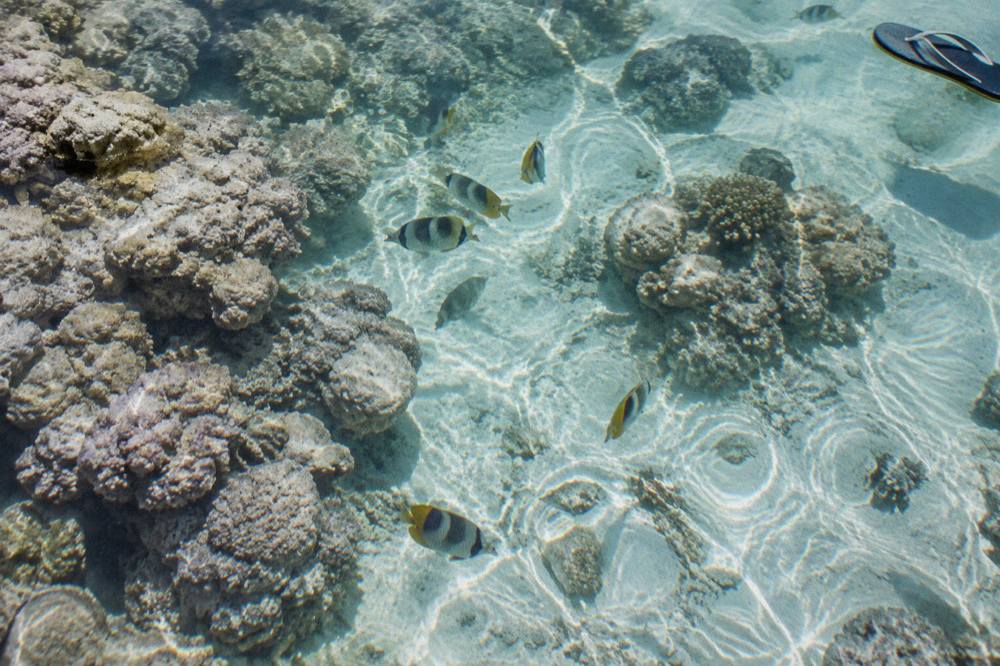
Matira Beach is the outlier because it is free and public. The beach at the southern tip of the main island has shallow lagoon water over sand, suitable for swimming and snorkeling with your own gear, and stingrays, butterflyfish, Moorish idols and parrotfish are commonly reported close to shore. Reporting notes the coral there is not pristine; the value is the easy, no-cost access to genuinely clear, shallow water. For everything else, the clear sites need a boat.
| Site | Access | Water character | Commonly reported |
|---|---|---|---|
| Southern coral gardens (Motu Piti Uu Uta) | Boat only | Sheltered, clearest early morning | Blacktip sharks, stingrays, reef fish |
| The Aquarium (Motu Pitiuu Uta area) | Boat only, lagoon tour stop | Clear, sheltered | Dense reef fish, stingrays |
| Motu Tane garden | Boat only, north side | Quieter, good visibility | Corals, stingrays, blacktip sharks, eagle rays |
| Anau manta cleaning station | Boat only, east side | Deeper, exposed, sometimes particle-loaded | Reef mantas, turtles, eagle rays |
| Matira Beach and Point | Shore, free public beach | Shallow over sand | Stingrays, butterflyfish, parrotfish |
The Reef Discovery half day group signature tour, run by Reef Discovery, circles the lagoon in 3 hours 30 minutes from $134 per person with pickup and snorkel gear listed, and holds a 5.0 rating from 1051 reviews; a circle-lagoon format is a sensible pick when your priority is clear water, because it strings several of the sheltered garden stops into one morning. The listing is the operator's own product, and the full-day lagoon group tour with lunch, from $173 per person with a 5.0 rating from 1715 reviews, the most reviewed listing in this category, covers similar water on a longer day. Both can be compared on Bora Bora Snorkeling Tours against the eco snorkel cruise with sharks and stingrays from $112 per person.
Should you book a tour to see the clear water rather than swim from shore? For the garden sites, yes. The reporting is consistent that the high-clarity pockets have no practical shore access, and the boats that hold permits and local knowledge are how nearly every visitor reaches them. More context on the trade-offs sits in the shore versus boat snorkeling comparison and in the guide to Bora Bora's snorkeling spots.
Which Months Have The Clearest Water?
The clearest months are July through September, the heart of the dry season, when rainfall averages 61.9 to 64.6 mm per month and rain days average 8.8 to 9.4. May, June and October are close behind. The wet season, November to April, roughly doubles the monthly rainfall and the number of rain days, and clarity in the shallow sites drops accordingly, though a calm stretch between showers can still produce clear water in any month.
The rainfall record from the Meteo-France climate sheet makes the calendar explicit. Monthly averages run 245 mm in January, 211.5 mm in February and 168.1 mm in March, then fall steadily through 143.9 mm in April and 112 mm in May to the July and August minimum, before climbing back through 108.7 mm in October and 250.7 mm in December. The yearly total is 1654.1 mm, and almost two thirds of it falls in the six wet-season months.
| Month | Average rainfall | Rain days (1 mm or more) | Clarity outlook |
|---|---|---|---|
| January | 245 mm | 17.2 | Lowest, run-off and cloud common |
| February | 211.5 mm | 15.3 | Low, wet season |
| March | 168.1 mm | 14.5 | Mixed |
| April | 143.9 mm | 11.8 | Improving late month |
| May | 112 mm | 11.4 | Good, dry season begins |
| June | 85.5 mm | 9.7 | Very good |
| July | 61.9 mm | 9.4 | Best, calm and dry |
| August | 63.7 mm | 8.8 | Best, fewest rain days |
| September | 64.6 mm | 9.3 | Very good |
| October | 108.7 mm | 10.6 | Good, shoulder month |
| November | 138.5 mm | 12.3 | Mixed, wet season returns |
| December | 250.7 mm | 16.8 | Lowest, holiday-month trade-off |
Two more seasonal notes matter to snorkelers. Water temperature barely moves: a secondary sea-temperature series puts the lagoon at 26.7 C in August, its coolest, and 28.4 C in January and February, its warmest, so no month requires a wetsuit for most people. And July to November is the humpback whale season per Tahiti Tourisme, which overlaps the clearest-water window; no standard lagoon snorkel tour on this site is a whale-watching product, but approved providers follow strict distance rules, 100 m for approved vessels, if whales appear while you are out.
The shoulder logic is worth planning around. July and August are the busiest and most expensive months of the dry season, while May, June, September and October deliver similar weather with fewer crowds and lower rates, according to current trip-planning reporting. A September visitor gets nearly all of the clarity advantage of August with measurably more space on the water, which also matters for small-group formats like the 4-hour small-group cruise from $134 per person or the Lagoon Service half day listings.
Does Time Of Day Change The Water?
Yes. Mornings are consistently reported as calmer and clearer than afternoons, because trade winds build through the day and stir sand in the shallow garden sites while cutting the surface light. The practical version is simple: take the earliest departure a listing offers, be in the water before midday, and treat the afternoon as beach time rather than snorkel time. The southern coral gardens are explicitly recommended early for this reason.
This is one of the few clarity levers that works in every season. In the wet season, an early start often gets you into the water before the afternoon convective showers build; in the dry season, it beats the wind. The half-day listings that offer morning and afternoon slots, such as the shared half day snorkel boat tour from $130 per person with a 5.0 rating from 774 reviews, or the H2O Bora Bora small-group snorkel boat tour from $128 per person, effectively sell the same water at two different times of day, and the morning slot is the one that tracks the calmest conditions.
Light matters as much as texture. Low morning sun across clear water lights up coral and fish in a way flat midday light does not, and guides favor Motu Tane's northern garden for photos partly for this reason. None of this is a promise; wind can stay down all afternoon, and an overcast morning can flatten the colors. The pattern is simply strong enough that operators set their schedules around it, and a visitor who does the same gets the better water more often than not.
Which Tours Give You The Best Chance At Clear Water?
For the best odds at clear water, pick the circle-lagoon tours that reach several sheltered garden stops in one morning: the Reef Discovery half day from $134 per person, the full-day lagoon group tour with lunch from $173 per person, and the eco snorkel cruise from $112 per person. All three run early departures that put you in the water during the calm window, with pickup, free cancellation and snorkel gear included.
We compared the listings with exactly this question in mind. The Reef Discovery half day, 3 hours 30 minutes, is the purest clarity play: short, early, and structured around the lagoon's signature stops. The full-day lagoon group tour with lunch, 6 hours and the most reviewed listing in the lineup at 1715 reviews with a 5.0 rating, spends longer out and adds a motu lunch, which means it rides through part of the afternoon. The eco snorkel cruise by Moana Adventure Tours, 2 hours 30 minutes from $112 per person with a 4.8 rating from 604 reviews, is the shortest and cheapest of the three, an outrigger-canoe based format that suits a port day or a hesitant swimmer.
Private formats buy control over timing rather than a different lagoon. The private boat snorkeling tour from $650 per group for up to your own party, 3 hours 30 minutes, and the La Plage private lagoon experience from $605 per group let you leave at first light and linger where the water reads best, at several times the shared-listing price. At the other end of the scale, the full-day combo tours, like the lagoon cruise and 4WD tour from $158 per person, split the day between the water and the island, a reasonable choice when clarity is one priority among several.
One protection note belongs in any clarity conversation: sharks and rays are fully protected in French Polynesia under the Environmental Code, which prohibits attracting sharks or altering their behaviour, and some listings, including certain eco cruises, state a no-feeding policy while visiting natural congregation areas. The clearest water and the best-regulated wildlife encounters tend to come from the same operators, which is a good filter when comparing listings.
What About The New Protected Zone Off Matira?
The new protected zone is the Popora rahui, a 574-hectare no-take area on the southern reef off Matira, established by decree in December 2025 and closed to fishing, boating, anchoring and nautical activity, with no tours entering. It is the first fully protected zone of its kind in a French Polynesia lagoon, yet it does not affect the standard garden stops, the Lagoonarium or Matira Beach, so for snorkelers nothing about the clear-water map changes.
The zone runs along roughly 7 km of southern reef and prohibits motorized circulation, nautical and tourism activity and noise, with narrow exemptions for limited traditional and scientific uses. Reporting from December 2025 through 2026 is consistent that core tourist sites, the boat-access coral gardens, Anau and the Lagoonarium, are unaffected. Matira Beach remains a free public beach with shallow shore snorkeling outside the protected band, so the one shore option on the clearest-water list still stands. The Matira Beach snorkeling guide covers it in detail.
Full-day listing context for the southern water includes the full-day Bora Bora experience with lunch on Motu Fanfan, 7 hours from $144 per person with a 4.9 rating from 185 reviews, and the sharks and rays full-day cruise from $154 per person, both of which work the lagoon south and east of the protected band. Anau, the manta station on the east side, is the site most reshaped by access rules: boat-only in practice now, with guides deciding conditions on the day and briefing guests on etiquette, staying at the surface, calm and horizontal, never chasing or blocking the animals. If you're weighing how much time each of these outings demands, the guide to Bora Bora lagoon tour durations breaks down every option from short lagoon excursions to full days on the water.
Common Questions About Clear Water In Bora Bora
Which snorkeling spots around Bora Bora have the most transparent water?
In Bora Bora, the clearest water sits in the sheltered boat-access coral gardens, the southern gardens near Motu Piti Uu Uta, the Aquarium patch and the Motu Tane garden on the north side, with Matira Beach the only free shore option. Clarity peaks in the dry season from May to October and on mornings before the wind builds.
Does rain affect snorkeling visibility in Bora Bora?
Yes. Freshwater pulses and run-off tint the shallow sites, which is why the dry season months, July through September averaging under 65 mm of rain, are the clearest and the wet season months, up to 250 mm, are the most variable. A calm dry stretch between showers can still produce clear water at any time of year.
Is the water clearer in the morning or afternoon?
The morning. Trade winds build through the day and stir sand in the shallow gardens while flattening the light, and guides explicitly recommend early sessions at the southern coral gardens. Booking the earliest departure a listing offers is the single most reliable timing move.
Can you snorkel in clear water without a tour?
Only at Matira Beach, the free public beach at the southern tip of the main island, which has shallow water over sand and commonly reported rays and reef fish. The high-clarity garden sites and the Anau manta station have no practical shore access, so nearly all of the clearest water is reached by boat.
Which month has the clearest water in Bora Bora?
August, with the fewest rain days of the year at 8.8 and just 63.7 mm of rain on average, closely followed by July and September. September is the smart shoulder pick, offering nearly the same clarity with fewer crowds and lower rates than the July and August peak.