What To Bring On A Bora Bora Snorkel Tour
Most Bora Bora lagoon tours hand you a mask, fins and a boat; everything else is on you. This is the short list of what actually earns its place in your day bag, from mineral sunscreen to cash for the motu lunch stop, and what every listed tour already includes.
Short answer
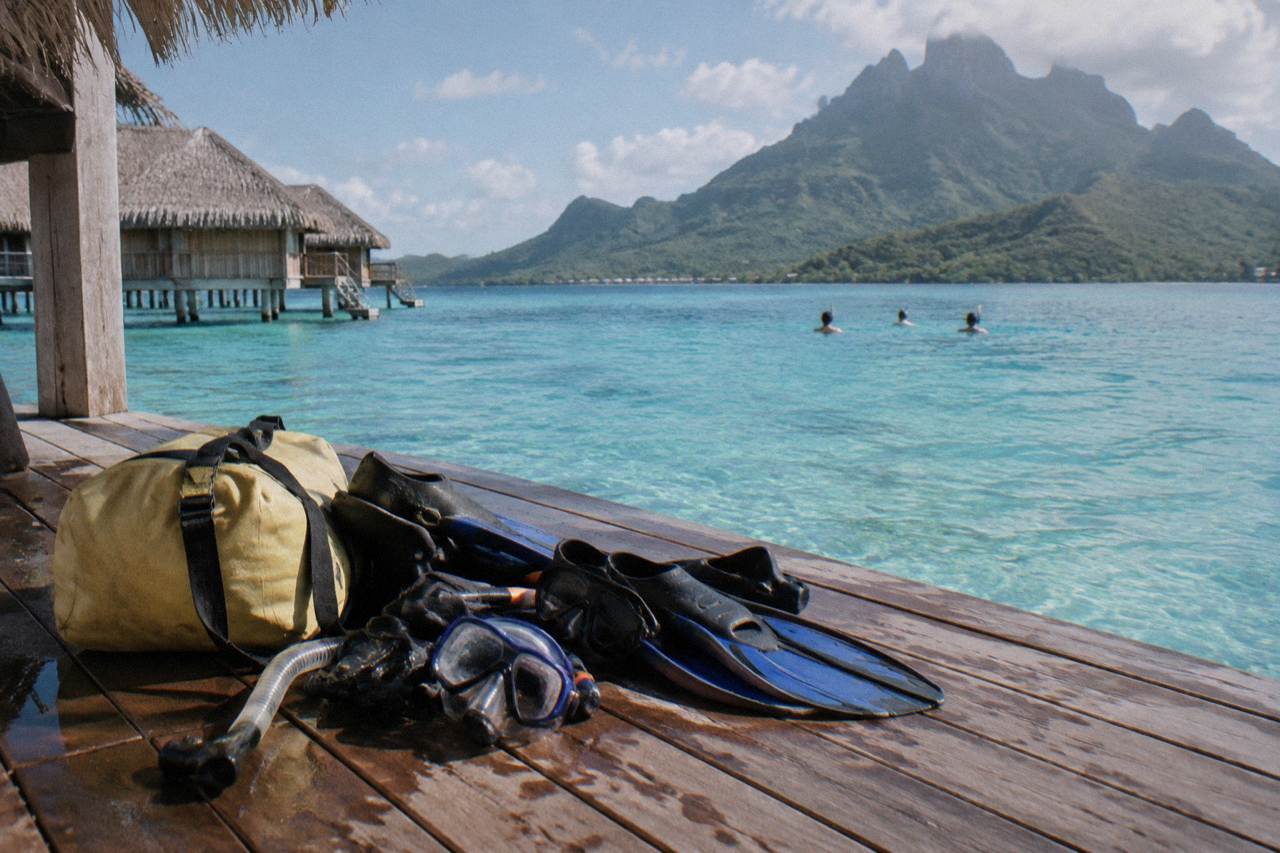
Bring reef-safe mineral sunscreen, a rash guard, water shoes, a towel, a dry bag, sunglasses, a hat, cash for tips and incidentals, and a waterproof camera. The tours themselves list snorkel gear and pickup as included, so your bag stays small: a change of clothes, sea-sickness remedy if you need it, and nothing that cannot survive salt water.
Most Bora Bora lagoon tours already hand you the essentials: every half-day and full-day listing on this site's lineup states snorkel gear is included, from the Reef Discovery half day to the full-day lagoon tour with lunch, which carries 5.0 from 1,715 reviews, the deepest review pool in the lineup. That leaves a surprisingly short list of things only you can bring, and a few items, the wrong sunscreen, flip-flops instead of water shoes, that actively work against you on a lagoon day. The ocean here sits at 26.9 to 28.9 degrees Celsius across the year per a secondary sea-temperature series, boats leave from resort docks and the Vaitape quay, and several hours pass with no shops in sight. What you carry on is what you have.
This guide walks the list item by item, in the order the day will demand them: sun protection first, then clothing and footwear, then the camera question, then money, and finally the small comforts that separate a good day on the water from a cranky one.
Do You Need Reef-Safe Sunscreen In Bora Bora?
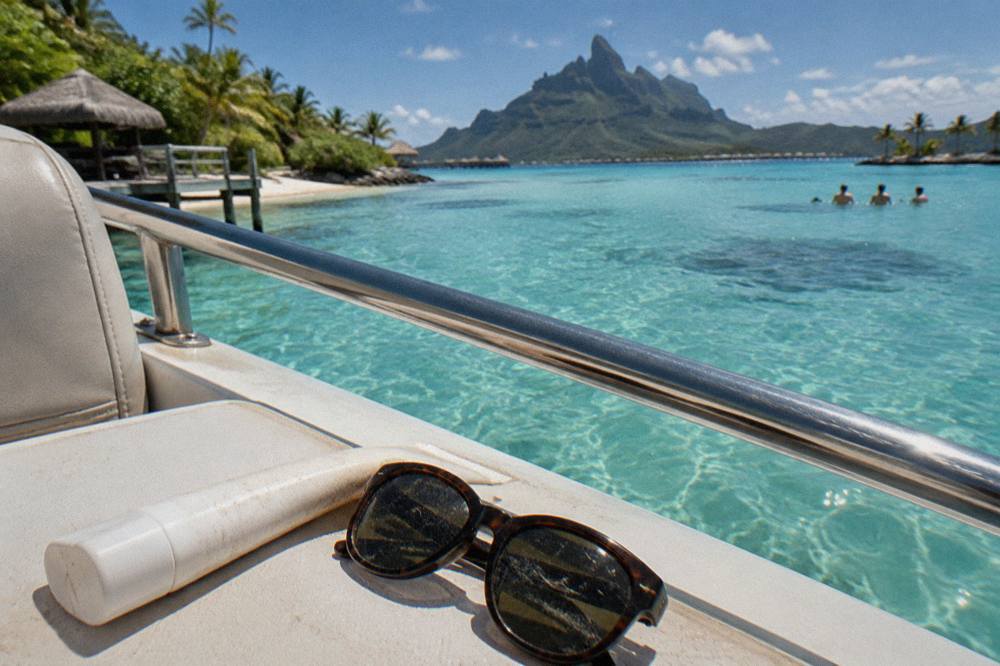
Yes, bring a mineral sunscreen even though no law requires it. There is no blanket chemical-sunscreen ban in French Polynesia as of 2026, so nobody will confiscate oxybenzone at the dock. But guides across the lagoon strongly recommend non-nano zinc oxide or titanium dioxide formulas, because the reef you are floating over is the whole reason the tours exist. A bottle that says "reef-safe" without listing a mineral active ingredient is not one. For help sorting real mineral formulas from marketing claims, our guide to reef-safe sunscreen in French Polynesia covers what the label should say and how each option holds up in the lagoon.
The practical distinction matters more than the label. Mineral sunscreens sit on the skin and wash off as a white film rather than dissolving into the water column around the coral gardens. Guides recommend avoiding oxybenzone, octinoxate and similar chemical filters entirely, and the same advice appears repeatedly in independent Bora Bora snorkeling guides. There is no official French Polynesian source on file for a sunscreen rule, so treat this as strong local practice rather than law, and check whether your specific tour states its own policy in the booking details. Some eco-focused cruises do.
Application discipline beats brand choice. Put the first coat on before you board, while your skin is dry, and reapply at the motu lunch stop rather than mid-swim. The sun in French Polynesia is intense year-round, and the dry season months of May to October that bring the calmest water also bring the most relentless sun. A single morning application is the most common sunburn mistake on lagoon tours, and the second most common is forgetting the backs of your knees, which face straight up while you snorkel.
For deeper background on the chemistry and the coral argument, see reef-safe sunscreen rules in French Polynesia, and note that the southern reef off Matira now has a 574-hectare full-protection zone closed to boats and nautical activity since December 2025, a sign of how seriously the lagoon is now managed.
| Sun protection item | Why it belongs in the bag | Notes for the lagoon |
|---|---|---|
| Mineral sunscreen (zinc oxide or titanium dioxide) | Strongly recommended by guides; no chemical ban exists | Reapply at lunch, not mid-swim |
| Rash guard | Blocks sun for hours without washing off | Pairs with swim tights for pale skin |
| Hat with a strap | Shade on the boat ride between stops | Without a strap it goes overboard |
| Polarized sunglasses | Cuts lagoon glare, helps spot rays in shallow water | Strap or croakies worth packing |
| Lip balm with SPF | Lips burn fastest on open water | Small enough to forget, painful to miss |
What Clothes And Footwear Work On A Bora Bora Lagoon Day?
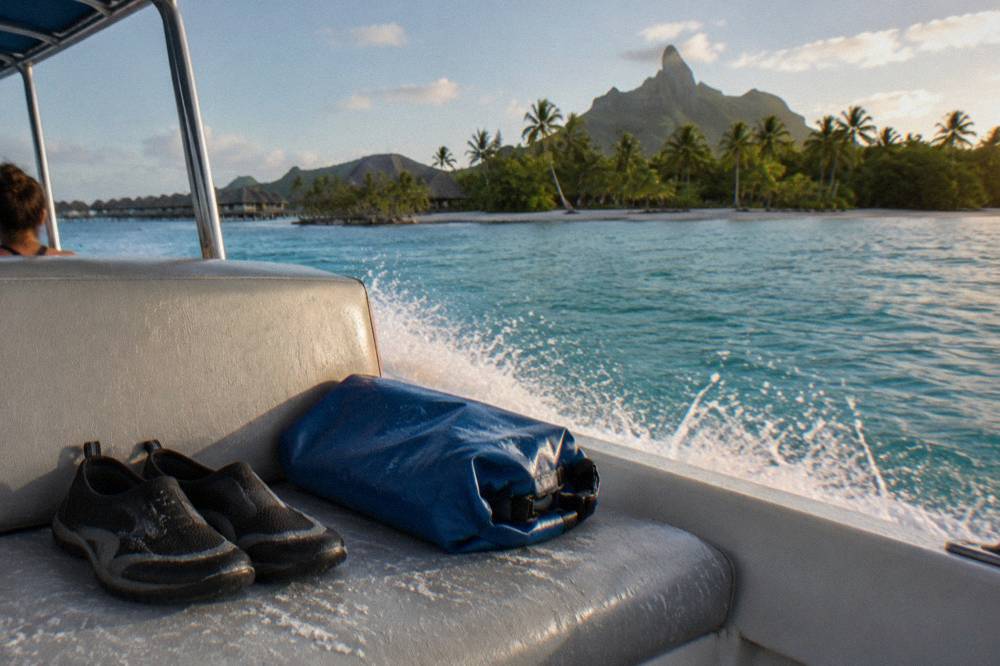
A rash guard over swimwear, water shoes with a sole, and a dry change of clothes for after the tour. The rash guard is the single highest-value clothing item: it shields your back during hours face-down in the water, where sunscreen rubs off on your mask strap. Water shoes matter at the motu stops, where coral rubble and dead coral fragments underfoot are sharp. Flip-flops do not survive a coral garden. Wear the swimwear to the dock.
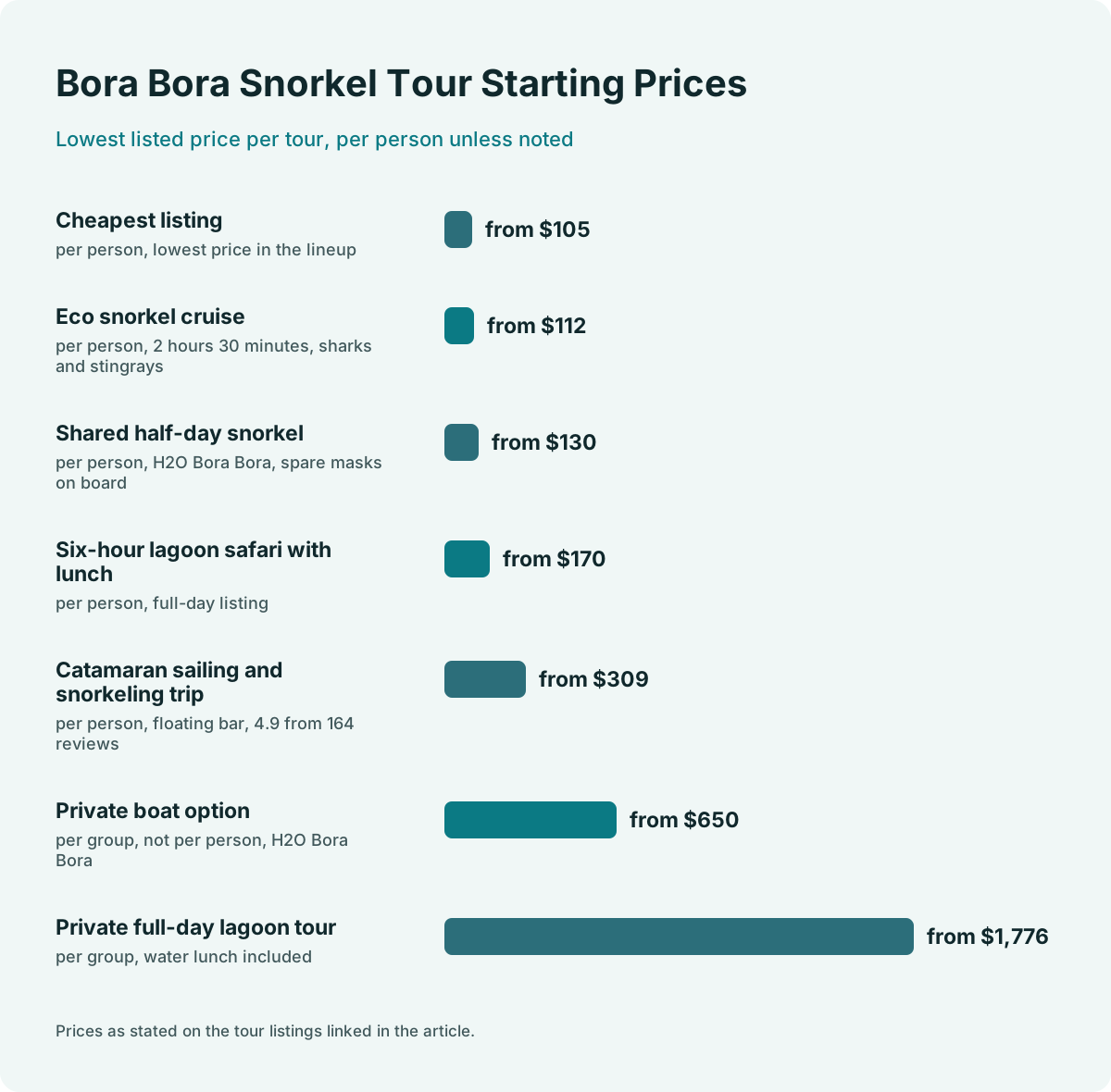
Water shoes deserve their own sentence because they are the item people most often skip. The boat itself is fine barefoot, and most crews will ask you to remove shoes on deck anyway. The problem is the motu: lunch stops like Motu Fanfan, visited by both the half-day and full-day Bora Bora Experience listings, involve walking from the boat across reef flats and coral gravel. A thin-soled aqua shoe handles that; a flip-flop folds and dumps you on the rubble. If your tour is one of the shared lagoon safaris from around $112 per person, the motu fruit or lunch stop is part of the draw, so dress for it.
Clothing after the boat is a smaller question. You will be damp, salty and, on the ride back into the wind, cooler than you expect. A light dry layer, something that packs to nothing, turns the return leg from a shiver into part of the trip. On full-day listings like the six-hour lagoon safari with lunch from $170 per person, that return leg comes late afternoon, when the tropical sun has dropped and the boat speed adds wind chill to wet skin.
Between those three listings you cover the whole clothing question. The Reef Discovery half day at 3 hours 30 minutes is a morning or afternoon commitment where one rash guard sees you through. The full-day lagoon tour with lunch runs 6 hours and wants the dry layer packed. The eco snorkel cruise with sharks and stingrays, 2 hours 30 minutes from $112 per person, is short enough that a towel and sunscreen are genuinely all you need beyond swimwear.
Should You Bring Your Own Snorkel Mask Or Use The Tour's?
Use the tour's gear on your first outing, since every listing on this site's lineup includes snorkel equipment at no rental cost and with hygiene handled by the operator. Bring your own mask only if you already own one that fits, especially if masks leak on your face shape or you need prescription lenses. Fins are never worth the luggage space.
The fit argument is real, though. A mask that leaks turns a manta stop into a frustration, and faces vary enough that a borrowed mask occasionally will not seal. If that happens, tell the crew early; operators like H2O Bora Bora, which runs both the shared half-day snorkel from $130 per person and the private boat option from $650 per group, carry spare masks and sizes. Their published FAQ confirms gear, flotation and supervision are adapted to swimming level, including for non-swimmers, which tells you the equipment drawer is deeper than one size fits all.
Prescription masks are the one clear case for ownership. Several operators accommodate them, but the listings do not promise it, so if you wear glasses strongly, bring your own solution: a prescription mask, or contact lenses under a standard mask. Soft contacts work under most masks, though a face-plant seal check before the first stop is wise. Anti-fog solution or a small bottle of baby shampoo is a nice-to-have that fits in a pocket; crews usually have gel on board but not always enough for a full boat.
How Do You Keep A Camera Safe On The Water?
A waterproof case or a floating strap, decided before the boat leaves the dock. Lagoon water is calm in the dry season but boats move, and the drop from a swim platform is the classic way phones die in Bora Bora. A hard waterproof case rated for immersion, not just splash, protects the phone; a floating wrist strap saves it if it goes over anyway. Disposable underwater film cameras still work and cost little to lose.
The decision tree is short. If your phone is recent and waterproof-rated, add the floating strap and a touch-screen-compatible pouch, and trust the rating for surface snorkeling rather than free-diving. If you carry a real camera, a dry bag stored under the bench, opened only on the boat, keeps it alive; the shooting happens on a phone or a housed action cam in the water. Action cameras with their own housing are the sweet spot for shark and ray stops, where the animals move and you will want both hands free for swimming.
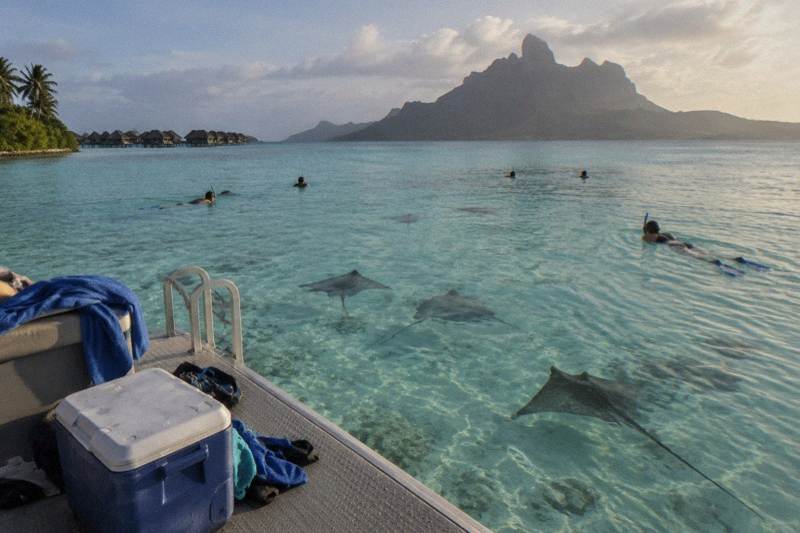
One etiquette point that doubles as camera advice: at sites like the Anau manta cleaning station, guides ask snorkelers to stay at the surface, remain horizontal and never chase or block the animals. A wide, calm shot from the surface beats a chase clip every time, and the animals keep their natural behavior, which is the point of the protected status they carry. French Polynesia has protected all shark and ray species in its waters since 2006 under the Environmental Code, which prohibits any attempt to attract sharks or alter their behavior; the practical version for you is simple, photograph from where you float and let the guide position the boat.
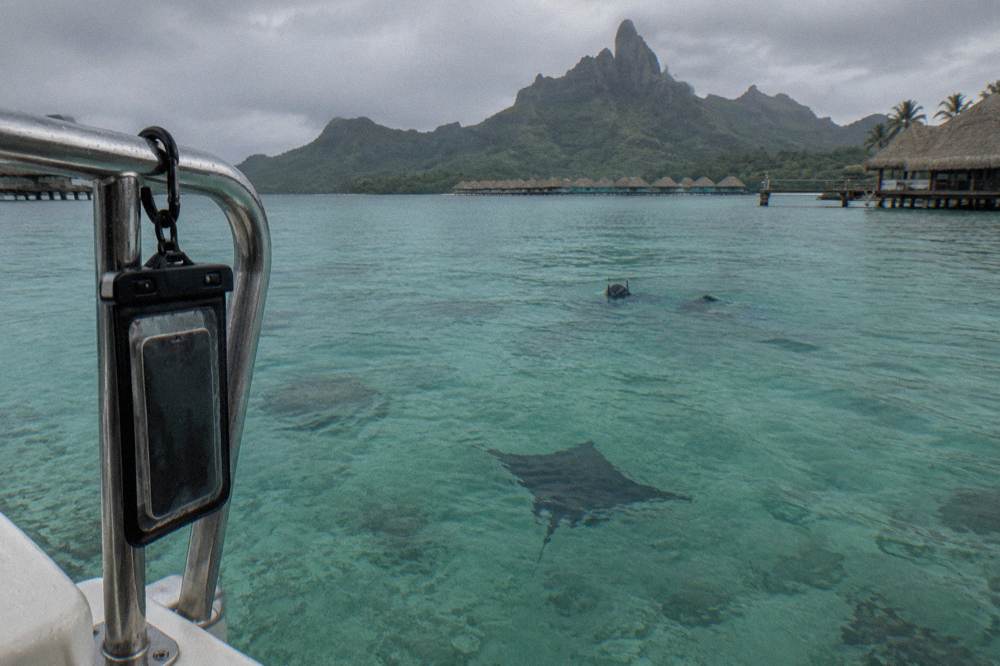
The catamaran sailing and snorkeling trip with its floating bar, from $309 per person and 4.9 from 164 reviews, is the listing where the camera question matters most: sail shots, mountain backdrops of Otemanu at 727 m, and a swim stop all in one afternoon. That is the day a dry bag and a floating strap genuinely earn their luggage space, and the small-group format leaves deck room to work with.
Do You Need Cash On A Bora Bora Snorkel Tour?
Yes, bring cash for your guide's tip and for anything you buy at a motu or back in Vaitape, since the tour itself is prepaid at booking, from $105 per person for the cheapest tour on this site upward. Cards are widely accepted in town, but a small boat on a motu is a cash-and-goodwill environment, so carry Pacific francs, XPF; tips are not obligatory and are always appreciated.
How much is a judgment call, and the site's piece on tipping lagoon tour guides in Bora Bora covers the conventions in detail. The short version for your wallet: budget notes rather than coins, decide before disembarking so the goodbyes are not a scramble, and treat it as a direct thank-you to the crew rather than a service charge. Nothing in the listed tour price flows to a tip pool.
The motu stop is the second cash moment. Full-day listings with lunch included, such as the private full-day lagoon tour with its water lunch from $1,776 per group, cover food on the water. But half-day listings often state "meal: not stated", and if your route passes a beach club or a fruit stand near Matira, small XPF notes are what work. There is no ATM on a motu. The visitor tax, currently 200 XPF per person per night at classified hotels, is collected by your accommodation, not by tours, so it never touches your day bag.
| Money question | What to do | Why |
|---|---|---|
| Paying for the tour | Prepaid at booking | Nothing due on the boat |
| Tipping the guide | Small XPF notes, decided before disembarkation | Not obligatory, always appreciated |
| Motu and beach club buys | Cash in XPF | No card machines, no ATMs on the water |
| Vaitape souvenirs | Card usually works | Town shops are equipped |
| Visitor tax | Paid via your hotel or cruise line | Never collected on tours |
What Small Items Make The Day Better?
Sea-sickness remedy if you are prone to it, a towel, a dry bag for the ride home, motion-sickness tablets taken before boarding, and a refillable water bottle. The boats are stable inside the lagoon and crossings are short, but the channel legs between stops can rock. Towels are stated as included on some listings and not stated on others, so pack yours and be pleasantly surprised. Water is usually offered, not guaranteed.
The remedy timing matters: tablets work taken before the motion starts, not after, so dose at the dock. Inside the lagoon itself the water is typically flat, especially in the dry season from May to October when rainfall drops to its annual low; the Meteo-France station at Bora Bora's airport records 61.9 mm of rain in July against 245 mm in January. The wettest months, December through February, are when a squall can roughen a crossing, and when the rain jacket you did not pack becomes the item you think about most.
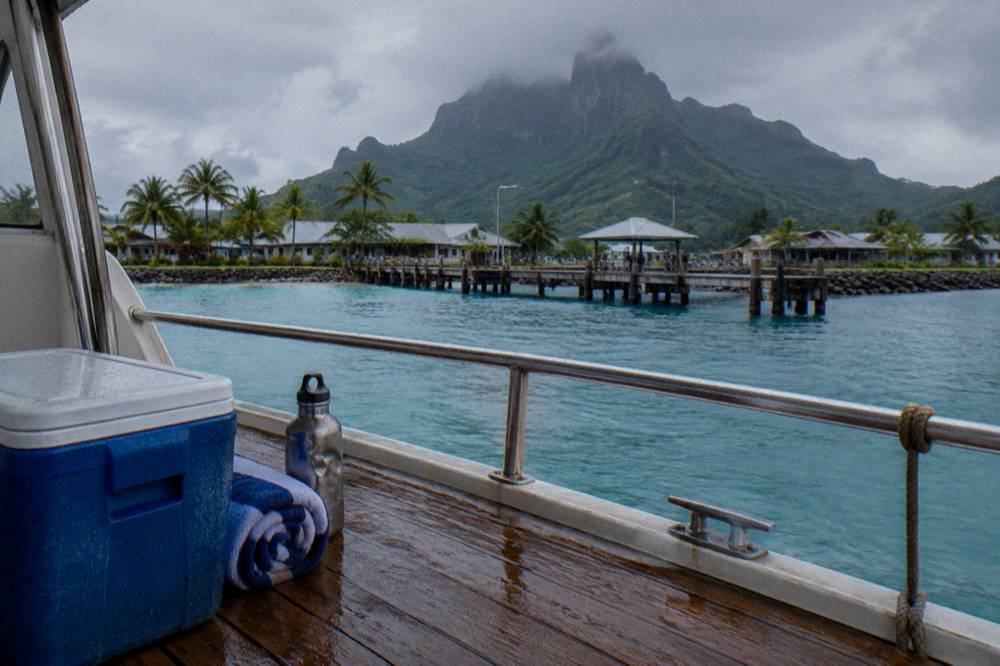
The dry bag is the quiet hero of the list. It keeps the change of clothes dry for the ride home, protects documents if you are a cruise passenger straight off the tender, and doubles as a pillow on the bench seat. Cruise passengers should note the logistics: ships anchor in the lagoon and tender to the Vaitape quay, a ride of typically 15 to 20 minutes, and the tender wharf sits about 50 m on foot from Vaitape where most tours pick up. A day bag that closes and carries hands-free makes that whole chain easier.
Should First-Time Snorkelers Pack Anything Different?
Yes: a rash guard rather than sunscreen-only protection, a noodle or vest acceptance, and ear plugs if you swim prone to ear trouble. Operators in the lineup welcome non-swimmers with flotation and guided supervision, so the packing difference is comfort, not capability. A swim shirt reduces the sunburn risk for someone spending longer floating, and nose clips help the face-in-water adjustment period that puts beginners off.
The confidence items are small and cheap. A nose clip stops the splash-in-the-sinuses jolt that ends first snorkels early; after an hour most people discard it, but that first hour is when tours are won or lost. Fogging is the other beginner killer, and a drop of baby shampoo spread inside the mask, rinsed once, keeps a rental mask clear for a stop or two. Defogging is something crews handle, but knowing the trick means you never wait for it.
Families packing for children should add child-sized considerations: many operators supply child-sized gear and life jackets, though some stops suit confident swimmers better, and certain listings carry age or medical restrictions stated at booking. The site's guide to Bora Bora snorkeling with kids covers which formats fit which ages. For the bag itself, add a second towel per child, a snack that survives heat, and the reef-safe sunscreen in a strength you have tested at home, because a reaction on a boat is a bad place to discover one.
If your group spans swimmers and non-swimmers, the jet ski and eco shark ray combo, 6 hours 30 minutes from $303 per person with lunch included, splits the day between riding and floating, so nobody spends six hours doing their weaker activity. Gear for the snorkel half is included per the listing; you bring the sunscreen, the water shoes and the dry layer for both halves.
The Full Packing List, In One Table
Everything on this page in one place: sun protection, water shoes, rash guard, towel, dry bag, cash, camera protection, water bottle, motion-sickness remedy, and a change of clothes. What you leave behind matters too: fins, hair dryers, anything precious that is not waterproof, and more than one bag per person, since deck space on shared boats is shared by definition. The tour brings the mask, the boat and the guide.
| Item | Bring or skip | Why |
|---|---|---|
| Mineral sunscreen | Bring | Guides strongly recommend; chemical filters discouraged |
| Rash guard | Bring | Hours of back-down sun exposure |
| Water shoes | Bring | Coral rubble at motu stops |
| Towel | Bring | Included on some listings, not stated on others |
| Dry bag | Bring | Keeps the change of clothes and documents dry |
| Cash in XPF | Bring | Tips and motu purchases |
| Waterproof camera case or floating strap | Bring | The classic phone-loss scenario is the swim platform |
| Refillable water bottle | Bring | Hydration in tropical sun |
| Motion-sickness tablets | Bring if prone | Dose before boarding, not after |
| Your own mask | Only if fitted or prescription | Tours include gear |
| Fins | Skip | Provided and bulky |
| More than one bag | Skip | Shared deck space |
A final word on volume. The best-packed day bag for a Bora Bora lagoon tour is a soft, closable bag the size of a small backpack, carried hands-free from the Vaitape quay or your resort dock. Everything on the bring-list fits in it with room for the towel you may not need. The people who enjoy these tours most travel light onto the boat, because the lagoon, the sharks, the rays and the motu lunch are all provided by someone else; your only jobs are sun protection, sure footing, dry clothes for after and enough cash to say thank you. If you are unsure how much that thank-you should be, the guide to tipping lagoon tour guides in Bora Bora covers what is customary and how to sort out the cash before you board.
Whether the day is the 3 hours 30 minutes of the Reef Discovery half day, the 6-hour full-day lagoon tour with lunch, or the 2 hours 30 minutes of the eco shark and ray cruise, the bag barely changes; only the dry layer and the second sunscreen application scale with the hours. Bora Bora Snorkeling Tours keeps the full lineup with prices, ratings and inclusions if you are still choosing the format. For water conditions month by month, see lagoon water temperature and clarity, and for the free shore option at Matira, the public beach needs nothing but your own gear.
Common Questions About What To Bring On A Bora Bora Snorkel Tour
Do I need to bring snorkel gear on a Bora Bora tour?
No. Every listing in the lineup states snorkel equipment is included. Bring your own mask only if you have a fitted one or need prescription lenses; fins are provided and never worth the luggage.
Is reef-safe sunscreen required in Bora Bora?
There is no blanket chemical-sunscreen ban in French Polynesia as of 2026. Guides strongly recommend mineral formulas with non-nano zinc oxide or titanium dioxide, so bring one and reapply at the lunch stop.
Do I need water shoes for the motu stops?
Yes, bring a pair with a real sole. Motu walks cross coral rubble and dead coral fragments that flip-flops do not protect against. Most crews ask for bare feet on the boat deck itself.
How much cash should I bring on a lagoon tour?
Enough Pacific francs for the guide's tip and any motu or beach club purchase. The tour price is prepaid at booking, so cash on the water is only for gratuities and small buys; there are no ATMs on a motu.
Should I take sea-sickness tablets before a Bora Bora lagoon tour?
If you are prone to motion sickness, yes, and take them before boarding. The lagoon interior is typically calm and crossings are short, but channel legs between stops can rock, especially in the wet season from November to April.
Do Bora Bora tours provide towels?
Some listings state towels as included and others do not state them at all, which is not the same as saying no. Pack your own and treat an included towel as a bonus.