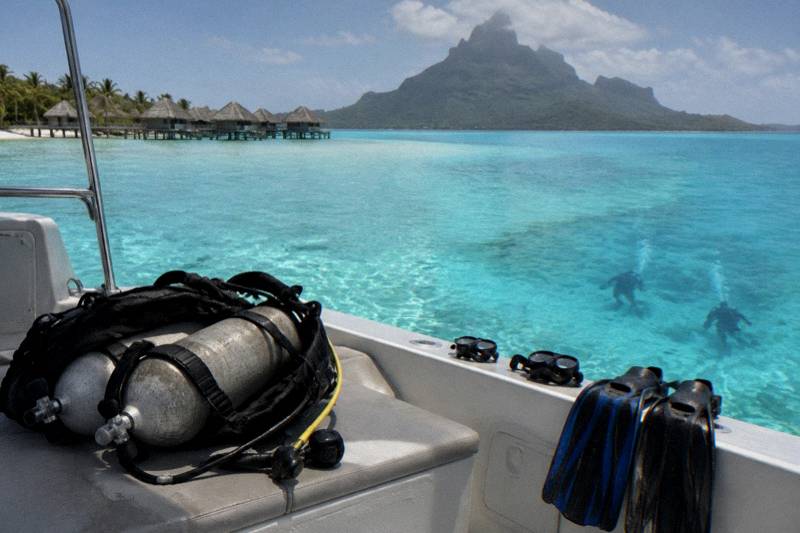
Is Diving Good In Bora Bora?
An honest look at scuba diving in Bora Bora, what the lagoon offers below the surface, and when a snorkel tour gives you the same marine life for less money and no certification.
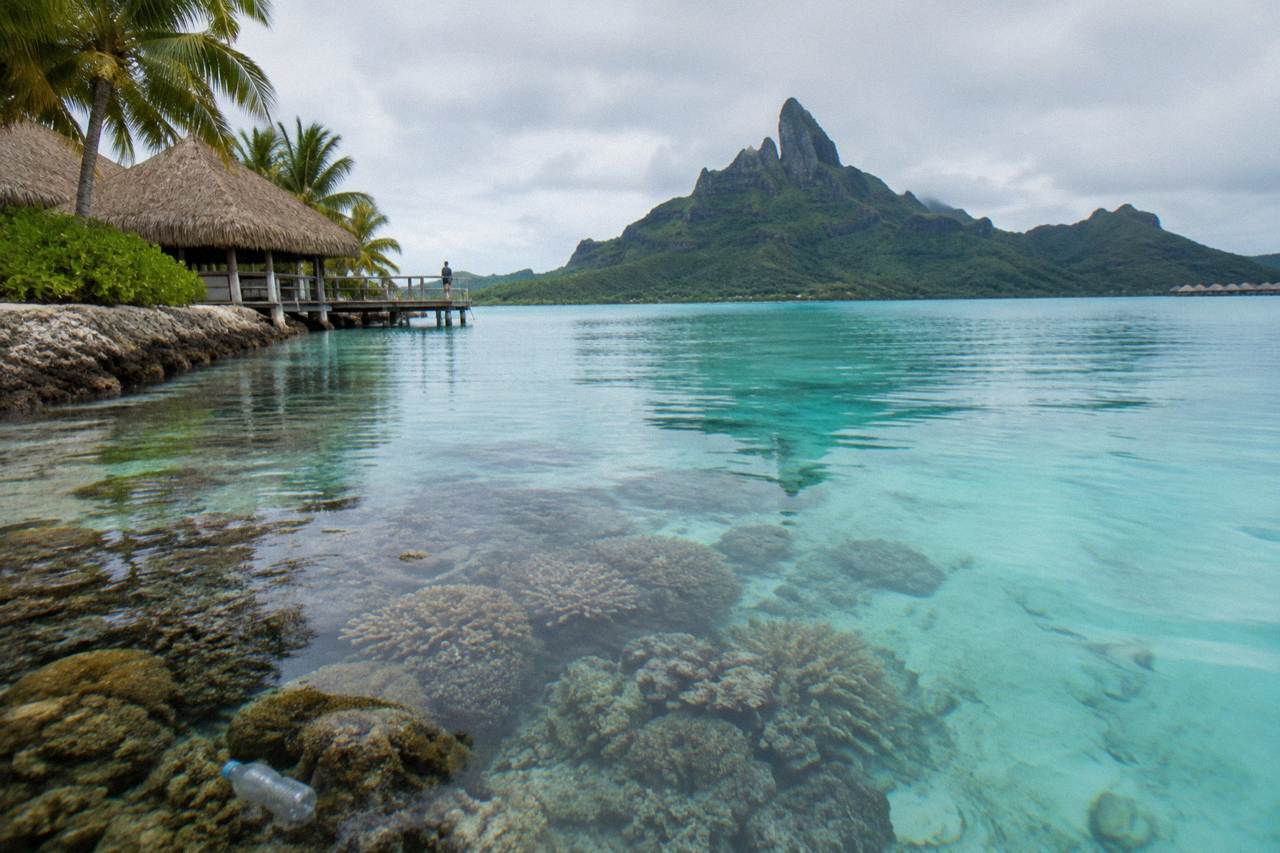
How Good Is Bora Bora Diving?
Yes, diving in Bora Bora is good, and it is rarely the reason people leave disappointed. The lagoon holds healthy coral gardens, manta cleaning stations, eagle rays, reef sharks and turtles, and operators describe clear, warm water most of the year. But the same marine life sits shallow enough that snorkelers on a boat tour see nearly all of it, which is why the island is better known for the surface view.
That tension is the whole story. Bora Bora is a shallow, sheltered lagoon inside a barrier reef, and the animals people cross the world for, manta rays at Anau, blacktip reef sharks, southern stingrays, dense clouds of reef fish at the coral gardens, congregate at depths a confident snorkeler can reach from the surface. Guides and diving writers describe the manta ray cleaning station at Anau on the east side of the lagoon as the signature underwater experience, and boat tours, not shore access, are the way in: current conditions, private property frontage and reef protection mean there is no recommended public shore route to the site, so everyone arrives by boat whether they carry a tank or a mask. An operator's own snorkeling map of the Anau site describes two coral reefs separated by sand, with reef mantas visiting wrasse cleaning stations, plus turtles, eagle rays and blacktip sharks in the area.
Diving adds depth, bottom time and the outer reef drop-offs outside the lagoon, and certified divers who want that will enjoy it. What diving does not add, in this particular lagoon, is a different cast of animals. That is the honest comparison this article works through: what a tank buys you here, what it costs, and when the smarter call is a half-day lagoon snorkel tour like the Moana Adventure Tours eco cruise that stops at the coral garden, the rays and the blacktip sharks in two and a half hours.
For readers who want to skip ahead to the surface option, these are the three lagoon tours that come up most often in this comparison, and the same trio returns at the end of the article.
What Does Diving Add That Snorkeling Does Not?
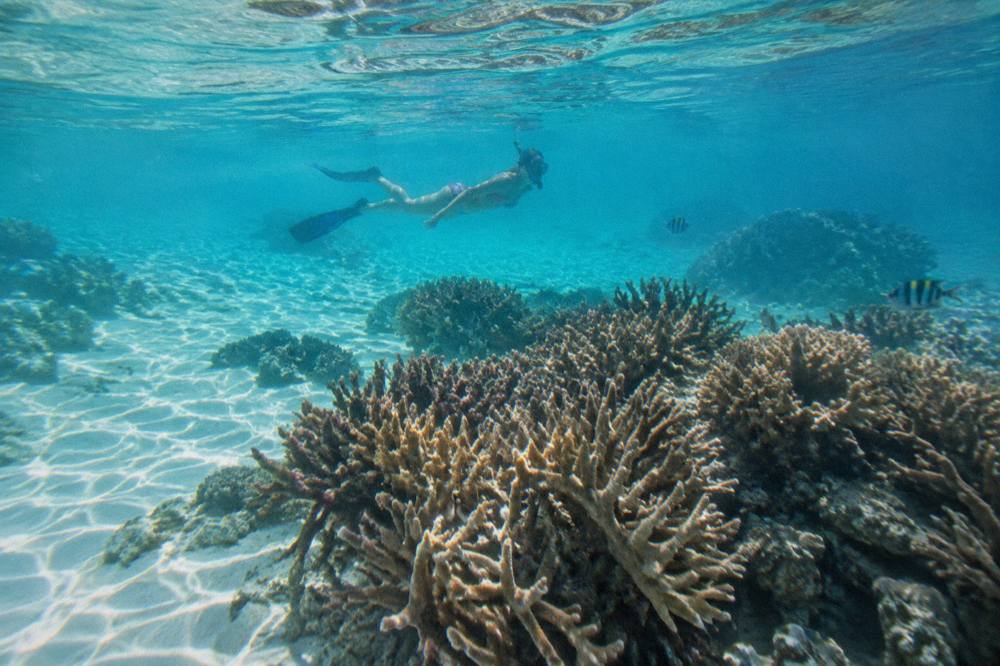
Diving buys three things: time, depth and the outer reef. A diver can hold position beside a cleaning station or drift along a drop-off for the length of a tank instead of a breath, and can dive the ocean side of the barrier reef where bigger water passes. Inside the lagoon itself, the species list is largely the same from either end of a snorkel.
Start with time, because it matters at the manta sites. Etiquette guidance for Anau asks snorkelers to stay at the surface, remain calm and horizontal, and never dive down, touch, chase or block the animals, because the rays come to the cleaning station on their own schedule and spooked mantas simply leave. A snorkeler watching from above gets the encounter on those terms. A diver parked quietly at depth near the station gets a longer look at a different angle, though the same protection rules apply to everyone: French Polynesia has shielded all shark and ray species in its waters since 2006, and the territory's Environmental Code states plainly that any attempt to attract sharks, or any action likely to alter their behavior, is strictly prohibited. No lawful tour, diver or snorkeler, feeds or baits mantas or sharks as a feature.
Depth is the second difference, and in Bora Bora it is a smaller advantage than divers might assume. Much of the lagoon's celebrated marine life lives shallow. Guides describe the coral gardens as beginner-level snorkeling over sand, with stingrays, butterflyfish, Moorish idols, parrotfish and sergeant majors commonly reported, and blacktip reef sharks, typically half a meter to a meter and a half long, regularly seen at the southern gardens near Motu Piti Uu Uta. A diver dropping below a snorkel group at the same site sees the same families of fish, closer to the coral heads, for longer. The dramatic topography, walls, canyons, deep blue, sits on the ocean side of the reef or in the sand channels, and that is where dive boats earn their keep. For a closer look at the site itself, the full guide to the Coral Gardens snorkel stop covers which tours include it, what conditions to expect, and how the marine life changes across the lagoon.
The outer reef is the genuine diving exclusive. Snorkel tours work the calm water inside the barrier reef; dive operators can run the passes and drop-offs where current, depth and exposure make surface swimming unattractive. Divers who have traveled in Palau, Cozumel or the Red Sea should calibrate expectations: writers covering Bora Bora consistently frame it as a manta and lagoon-life destination rather than a big-pelagic or wall-diving heavyweight, and its sheltered, silty-in-places lagoon favors easy, pretty dives over dramatic ones. A dive-oriented trip planner's overview of snorkeling and diving in Bora Bora makes the same point from the other direction, noting the lagoon's clearest, calmest water comes in the dry season from May to October, a window this site examines in its guide to the best time to snorkel in Bora Bora. For travelers who would rather skip the boat ride entirely, our guide to snorkeling straight from an overwater bungalow deck covers what that sandy, shallow lagoon water actually delivers and when a guided outing still earns its keep.
| What you want | Diving | Snorkeling from a boat tour |
|---|---|---|
| Long encounters at cleaning stations | Yes, bottom time on a tank | Yes, from the surface, on the animals' terms |
| Blacktip reef sharks | Commonly seen | Commonly seen on lagoon tours |
| Stingray interactions in shallow sand | Possible | A standard stop on most lagoon tours |
| Outer reef walls and drop-offs | Yes | Generally no, tours stay inside the lagoon |
| Certification or intro course needed | Yes | No |
| Typical half-day cost | Set by each dive operator, check the operator | From $105 per person on this site's lineup |
The bottom line of the table is the reason this site exists. Every animal row is a tie or a snorkeling win, and only the outer reef row belongs to diving outright. That is a fair sporting verdict on the question, and it is why a reader deciding between the two activities may reasonably end up booking the snorkel tour instead.
Do You Need Certification To Dive In Bora Bora?
No, certification is not required to dive in Bora Bora, because local dive operators offer beginner experiences and introductory dives with instruction and supervision, exactly as dive operators do worldwide. A certification course takes days, however, and a resort-course intro dive does not make you a diver for the rest of your trip. Travelers without a card should weigh an intro dive against a lagoon snorkel tour that needs no training at all.
The practical question is what your week looks like. A typical Bora Bora stay runs four or five nights, and it is an island where the water activities stack up fast: a lagoon snorkel tour, a jet ski circuit, maybe a 4WD safari on the mountain side. Fitting an introductory dive into that program is possible, but it consumes a half day for a single shallow experience, while a half-day snorkel tour such as the Reef Discovery circle-lagoon trip covers coral gardens, ray and shark stops in three and a half hours, from $134 per person, with a 5.0 rating from 1,051 reviews, pickup and snorkel gear listed and free cancellation stated at booking.
Certified divers face the mirror-image choice. If you hold a card, a two-tank morning dive is a fine way to spend a day, and nothing here argues against it. The argument is against assuming the card is necessary for the lagoon's signature sights. It is not. The manta station at Anau is reached by boat, the sharks and rays gather in snorkeling depth, and the most reviewed tour on this site's entire lineup, with 1,715 reviews, is not a dive at all but the Lagoon Service full-day lagoon group tour with lunch, from $173 per person for six hours.
So is a day on the water enough, without a tank?
When Is Snorkeling Enough In The Bora Bora Lagoon?
Snorkeling is enough for most visitors, most of the time, when three things hold: your priority species is mantas, sharks, rays or reef fish rather than deep walls, you are comfortable at the surface with flotation available, and you would rather spend from $105 to $173 per person on a half or full day than pay dive pricing and possibly training time. Divers chasing outer-reef topography are the main group who should not settle.
Comfort at the surface is a lower bar than many non-swimmers fear. Operator FAQ pages from lagoon outfitters state that life jackets and flotation are provided and non-swimmers are welcome, with guides adapting to swimming ability, the same operator policies behind this site's answer to whether non-swimmers can snorkel in Bora Bora. Families get the same deal: children are welcome on most lagoon tours with adult supervision, and operators supply child-sized gear and life jackets, though deeper or more exposed stops suit confident swimmers. A diving vacation is a harder thing to share across mixed abilities, because half the family waits on the boat.
The weather case for snorkeling is also strong. The dry season from May to October brings the calmer, clearer conditions both activities prefer, and operators describe mornings as generally calmer than afternoons on the lagoon. A sea-temperature series puts the lagoon between 26.7 and 28.9 degrees Celsius across the year, warm enough that no thermal protection is needed for snorkeling and only thin exposure suits for long dives. The Meteo-France climate sheet for the island's station shows rainfall falling steadily from the wet season into the dry months, with roughly nine or ten rain days in the heart of the dry season against fifteen to seventeen in the wettest months, which is why the May to October window, and within it the shoulder months rather than the July and August peak, is when both snorkel and dive bookings behave best.
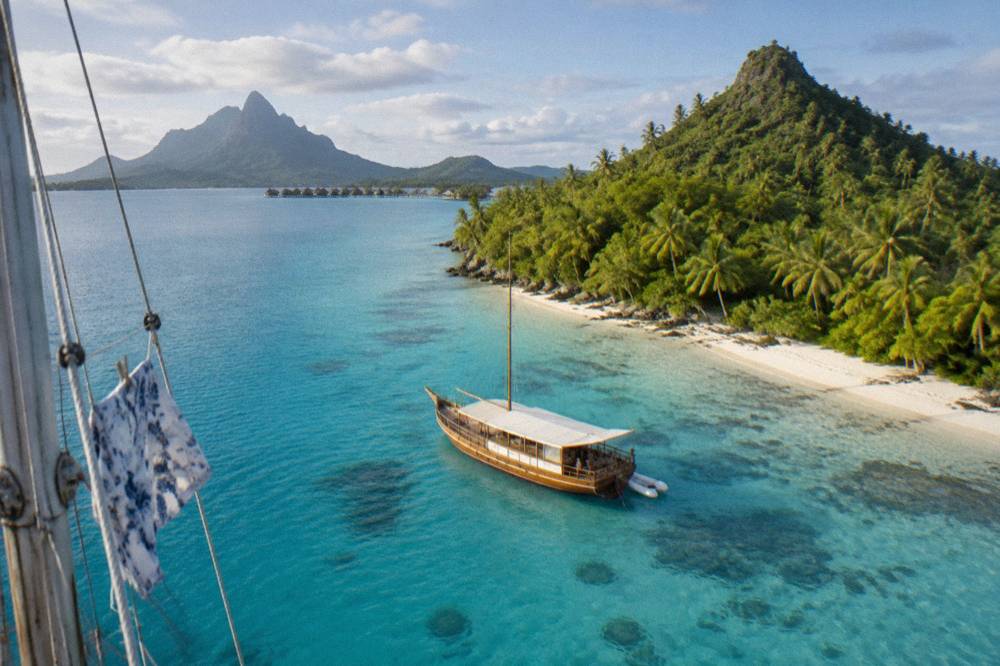
One constraint applies to everyone equally, and it is new: since December 2025 a 574-hectare no-take zone, the Popora rahui, has closed the southern reef off Matira to fishing, boating and all nautical activity, per the decree establishing French Polynesia's first fully protected lagoon reserve of this class. No dive operator and no lagoon tour enters it. Matira Beach itself, the island's public beach with free access and shallow shore snorkeling over sand, remains open outside the reserve boundary, and it is the one spot where you can slip into the water without any booking at all.
Which Lagoon Tours Work Best For Non-Divers?
The tours that replace diving best are the half-day and full-day lagoon snorkel tours that hit coral gardens, ray and shark stops and a manta-adjacent anchorage in one loop. On this site's lineup the standouts are the Moana eco cruise from $112 per person, the Reef Discovery half day from $134, and the Lagoon Service full day with lunch from $173, which holds 5.0 from 1,715 reviews, the deepest review pool listed.
Each fills a different slot. The eco snorkel cruise by outrigger canoe is the shortest and cheapest way to the trilogy of stops, two and a half hours, from $112 per person, 4.8 from 604 reviews, with pickup, gear and free cancellation listed, and Moana Adventure Tours markets it explicitly as an eco product that visits natural congregation areas rather than feeding. That matters under local rules: shark and ray feeding as a sales line sits badly with a sanctuary that has protected every shark and ray species since 2006, and several eco-focused operators state a no-feeding policy outright.
Above it sits the full-day tier, where the trade is time and lunch. The Lagoon Service full-day group tour with lunch, six hours, from $173 per person, is the most reviewed listing in the lineup at 1,715 reviews with a 5.0 rating, and it bundles the circle-lagoon snorkel stops with a motu lunch. A diver comparing a two-tank morning against a full-day lagoon tour is comparing one deep morning against six hours of surface time, food included, and many travelers pick the six hours. That comparison, timing and what a tour day actually contains, is broken out in a separate article on how long a Bora Bora lagoon tour takes.
Between those poles sit the specialists. The Reef Discovery half day covers the lagoon circuit in three and a half hours from $134 per person with a 5.0 from 1,051 reviews. Small-group options like the Lagoon Service four-hour cruise, from $134 with 5.0 from 203 reviews, trim the passenger count. And two formats diverge from the standard boat entirely: a private boat charter, from $650 per group with H2O Bora Bora, 5.0 from 126 reviews, lets a family or couple set their own snorkel stops without anyone needing a certification, while the small-group luxury catamaran with sailing, snorkeling and a floating bar, from $309 per person, 4.9 from 164 reviews, swaps dive-boat utility for sail-and-drink comfort.
| Listing | Format and length | From | Rating and reviews | Suits a diver how? |
|---|---|---|---|---|
| Eco snorkel cruise (Moana Adventure Tours) | Shared, 2.5 hours | $112 per person | 4.8 from 604 | Quick hit before or after a dive morning |
| Reef Discovery half day | Shared, 3.5 hours | $134 per person | 5.0 from 1,051 | The classic lagoon circuit, no training |
| Lagoon Service full day with lunch | Small group, 6 hours | $173 per person | 5.0 from 1,715 | The full-day alternative to two dives |
| Private boat lagoon snorkel (H2O Bora Bora) | Private, 3.5 hours | $650 per group | 5.0 from 126 | Set your own sites, dive-family friendly |
| Luxury catamaran sail and snorkel | Small group, 4 hours | $309 per person | 4.9 from 164 | Surface day with sailing and a floating bar |
Combo products stretch the same logic onto land and engines. The jet ski tour paired with the eco shark and ray snorkel cruise runs six and a half hours from $303 per person, 4.8 from 391 reviews, with lunch listed, and the lagoon cruise plus 4WD island tour runs eight hours from $158 per person, 4.7 from 222 reviews. A traveler who wants one big day that mixes adrenaline, island sightseeing and the lagoon's marine life gets it in a single booking, something no dive shop offers.
How Much Does Diving Cost Compared With Snorkeling?
Dive pricing in Bora Bora is set by each operator and is not published on this site's tour lineup, so treat any figure a dive shop quotes as the number that counts. Snorkel tour pricing is firm and public: shared half-day lagoon tours run from $105 to $151 per person, full-day tours with lunch from $144 to $224, private boats from $560 per group. The gap widens once training or multiple days enter the picture.
The snorkel numbers deserve their own paragraph because they are the comparison's fixed side. Cheapest in the lineup is the half-day Bora Bora Experience with fruits on Motu Fanfan, from $105 per person, 4.9 from 47 reviews. The Rohivai shared half-day lagoon safari sits at from $112 per person, 4.9 from 259 reviews. The eco shark safari is from $107, the Vavau three-hour lagoon snorkel from $118, and the small-group meal-included trip from $128. Full days with motu lunches run from $144 for the seven-hour Motu Fanfan day, 4.9 from 185 reviews, up to $224 for the English-only Blue Lagoon cruise, 4.6 from 14 reviews. A family of four choosing a shared half-day tour over an introductory-dive morning is choosing between four modest tour fares and whatever four intro dives cost, plus the training time.
What you cannot do honestly is quote the dive side, and this article will not guess at it. Dive operators in Vaitape and at the resorts publish their own rates for intro dives, single fun dives, packages and courses, and those figures move with season and demand. The structural point stands regardless of the exact numbers: a snorkel tour needs no course, no gear beyond what the listing includes, and no medical screening beyond the basics, and every listing above includes pickup, with free cancellation listed on all but one.
One cost that is genuinely free deserves the last word in this section. Matira Beach is the island's public beach, free to access, with shallow shore snorkeling over sand where stingrays and reef fish are commonly reported. It is not the manta station and it is not the shark stops; those need a boat, and the budget question is covered in this site's guide to free and cheap things to do in Bora Bora. But as a baseline for what the lagoon's surface offers at zero cost, it frames every pricing decision above.
Is It Safe To Dive Or Snorkel With The Sharks In Bora Bora?
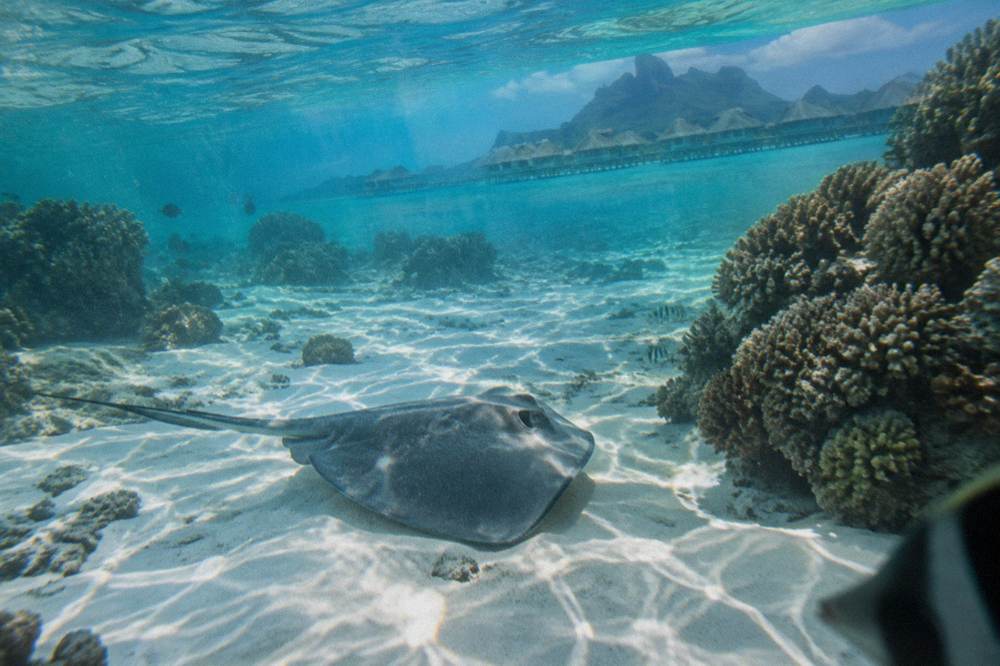
The species snorkelers and divers meet inside the lagoon, blacktip reef sharks typically half a meter to a meter and a half, plus stingrays and occasional lemon sharks in deeper areas, are the same from either depth, and the safety framework is identical: guides brief guests, flotation is available, rays are never grabbed or stepped on, and no operator may attract or bait sharks under the 2006 sanctuary rules. Depth changes the view, not the risk profile.
Stingray etiquette is the one place behavior really matters. Rays use their barbed tail defensively, and the standing advice is to shuffle feet in sandy shallows and let guides manage any close interaction rather than touching or feeding the animals. Shark behavior follows the sanctuary logic: operators report blacktip reef sharks as the common encounter species, and guides brief guests on keeping distance and calm movement rather than promising anything about sightings, because none of this is guaranteeable and no honest listing pretends otherwise. This site treats the shark-safety question in more depth in its article on whether it is safe to swim with reef sharks in Bora Bora.
Sunscreen is the quiet variable both groups share. There is no blanket chemical-sunscreen ban in French Polynesia, but mineral formulas based on non-nano zinc oxide or titanium dioxide are strongly recommended by guides for reef protection, a recommendation rather than a law, and it applies to divers and snorkelers identically. This site keeps a full page on reef-safe sunscreen in French Polynesia for readers who want the detail.
Worth repeating from earlier, one clause rather than a second explanation: the manta rules at cleaning stations, stay at the surface, stay horizontal, never chase or block, apply to everyone in the water.
For the reader who has weighed all of this and decided the surface view wins, or wants a boat day to pair with a single dive morning, these are the three listings this comparison keeps returning to.
The full-day option earns its solo slot for the way it closes the gap: six hours, lunch on a motu, and every headline species in the lagoon from the surface, from $173 per person. Against a pair of dives it is cheaper than most two-tank mornings once gear and weights are counted, and unlike the dives, everyone in the family can come.
Whatever you decide, Bora Bora Snorkeling Tours keeps the live listings, prices and review counts for every lagoon product in the lineup, and the operator's own booking page carries the final word on dates, pickup points and availability for each departure.
Common Questions About Diving In Bora Bora
Is Bora Bora worth it as a dive destination?
Yes, especially for manta rays, lagoon reefs and easy conditions in warm water. It is not a big-wall or pelagic destination on the scale of the world's famous dive regions, and much of the same marine life is visible to snorkelers, so divers who prioritize bottom time and the outer reef get the most from it.
Do I need to be certified to dive in Bora Bora?
No. Local dive operators offer introductory dives with instruction and supervision for beginners, as dive operators do worldwide. A certification course takes multiple days, so short-stay visitors usually weigh a single intro dive against a half-day lagoon snorkel tour that needs no training.
Can snorkelers see manta rays in Bora Bora?
Yes, manta encounters are regularly reported from boat tours at surface sites such as the Anau cleaning station, which has no public shore access and is reached only by boat. Sightings are never guaranteed, and etiquette rules ask snorkelers to stay calm at the surface and never chase, touch or block the animals.
Is it safe to swim with the sharks while diving or snorkeling?
The common lagoon species is the blacktip reef shark, typically half a meter to a meter and a half, and guides brief guests on behavior in the water. French Polynesia has protected all sharks and rays since 2006 and prohibits attracting or baiting them, so tours visit natural congregation areas. No sighting or safety outcome is guaranteed, but millions of guided swims have taken place under these rules.
What does a lagoon snorkel tour cost compared with diving?
Shared half-day lagoon snorkel tours on this site's lineup run from $105 to $151 per person and full-day tours with lunch from $144 to $224, private boats from $560 per group. Dive pricing is set by each operator and is not in the lineup, so check the dive operator's own rates for intro dives and packages.
When is the best time to dive or snorkel in Bora Bora?
The dry season from May to October brings lower rainfall and the calmest, clearest lagoon conditions, with mornings generally calmer than afternoons. Humpback whales pass through the wider waters from July to November, though no lagoon snorkel or dive tour in the lineup is a whale-watching product.