Coral Gardens Bora Bora: Where It Is And What You See
The Coral Garden is the name guides and listings give to the shallow coral channel stops inside the Bora Bora lagoon, reached almost exclusively by boat. This guide maps the sites, the marine life reported there, and the tours that build their route around them.
Short answer
The coral gardens sit in shallow, sheltered water inside the Bora Bora lagoon near the southern motus, reached by boat tour rather than from shore. Shared half day snorkel tours from $112 to $151 per person include the stop, with gear and pickup listed on most. Conditions are typically calmest in the May to October dry season.
Bora Bora's coral gardens are not one fenced-off attraction with a ticket booth. The name covers a handful of shallow, coral-rich channels and patch reefs inside the lagoon, mostly around the southern motus, where boat tours stop to let guests drift over hard and soft coral with dense reef fish around them. Guides use the singular "Coral Garden" on listings, but the routes differ, and the stop you get depends on which operator you book and where the calm water is that morning. This guide lays out what is actually known about the sites, what marine life is commonly reported there, and how the lineup of bookable lagoon tours handles the stop, so you can compare listings on facts rather than on the phrase "coral garden" alone.
What And Where Are The Coral Gardens In Bora Bora?
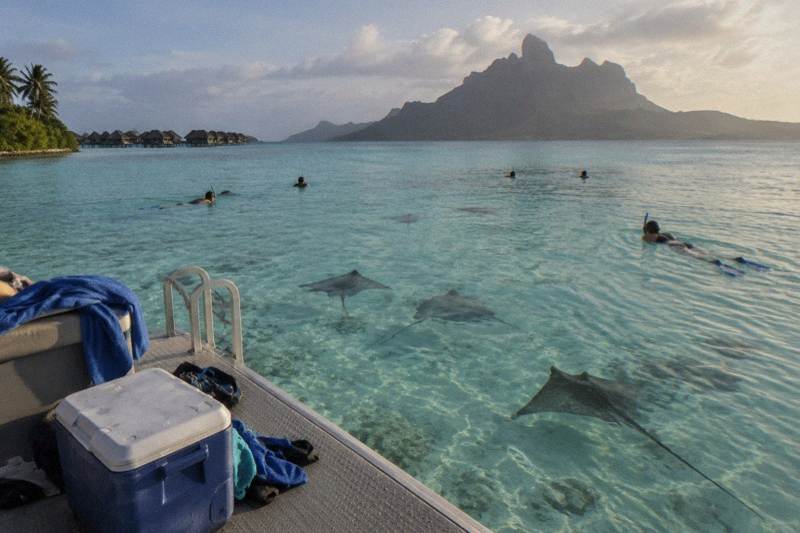
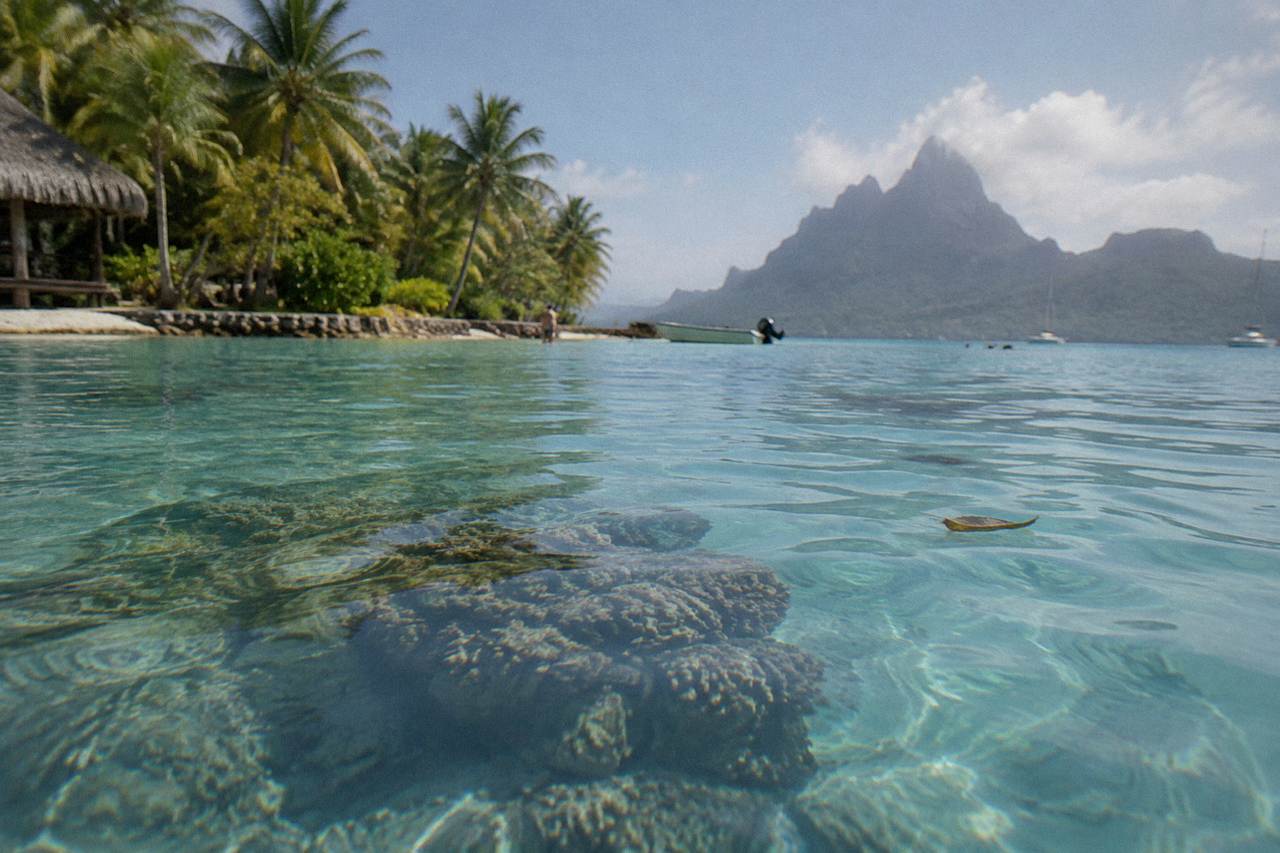
The coral gardens are shallow coral formations inside the protected Bora Bora lagoon, concentrated around the southern motus near Motu Piti Uu Uta and neighboring islets, and they are reached almost exclusively by boat tour rather than from shore. Guides describe them as beginner-level, sheltered water, with the best conditions typically early morning before the afternoon breeze picks up.
The sites that current guide material groups under the coral garden label cluster in the south of the lagoon. The Southern Coral Gardens near Motu Piti Uu Uta are described in recent snorkel guides as boat-only access and beginner-friendly, with blacktip reef sharks commonly reported alongside stingrays and schools of reef fish. A second frequently named stop, called simply the Aquarium, sits in the Motu Pitiuu Uta area and is noted for the density of its reef fish, including butterflyfish, angelfish, parrotfish and damselfish, in clear sheltered water. Farther north, the Motu Tane coral garden is described as quieter than the southern sites, favored for photography, with hard and soft corals, stingrays and occasional eagle rays or moray eels reported. Guides note that no depth or visibility figure should be treated as fixed: conditions move with tide, wind and season, and the listings themselves print none.
One thing has changed on the map recently. In December 2025 a 574 hectare no-take marine protected area, the Popora rahui, was established by decree on the southern reef off Matira. It is closed to fishing, boating, anchoring and nautical activity, the first full-protection lagoon zone of its kind in French Polynesia. Tour routes do not enter it, and the coral garden stops described above sit outside its boundary. For a fuller map of where you can and cannot get in the water, see the Bora Bora snorkeling spots guide.
| Named stop | Location in the lagoon | Access | Character reported by guides |
|---|---|---|---|
| Southern Coral Gardens | Near Motu Piti Uu Uta, south lagoon | Boat only | Beginner friendly, blacktip reef sharks and stingrays commonly reported |
| The Aquarium | Motu Pitiuu Uta area | Boat, lagoon tour routes | Noted for dense reef fish in sheltered, clear water |
| Motu Tane coral garden | North side of the lagoon | Boat only | Quieter than southern sites, favored for photos |
| Anau | East side of the lagoon | Boat only, no shore access | Manta ray cleaning station, deeper and more exposed than the gardens |
| Matira Beach | Southern tip of the main island | Shore, free public beach | Shallow water over sand, bring your own gear |
Which Bora Bora Tours Include The Coral Gardens Stop?
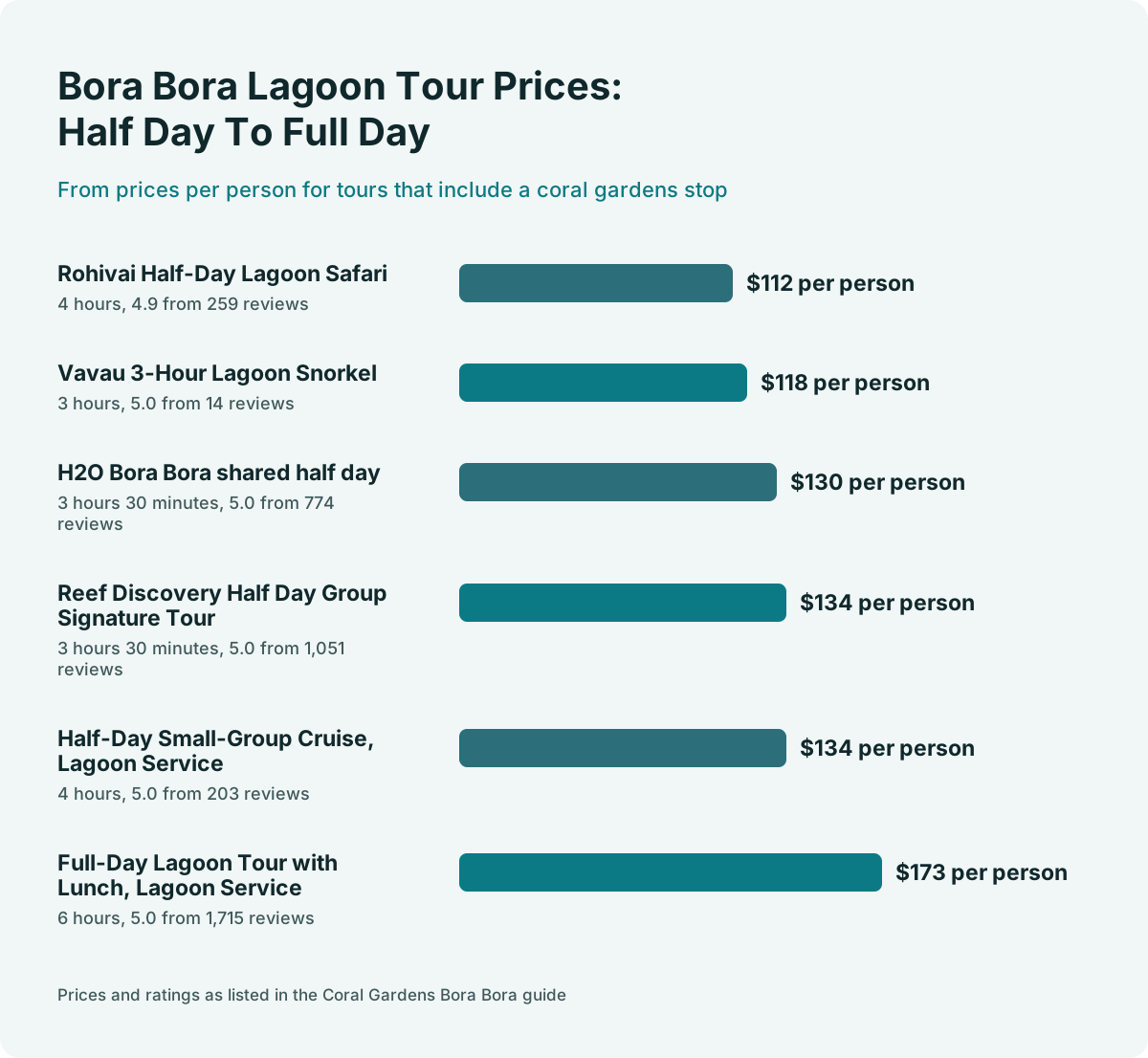
Most shared and small-group half day lagoon tours in Bora Bora include a coral gardens stop alongside shark and ray sites. Options range from the Rohivai half-day lagoon safari at $112 per person to its 5-hour version with a meal at $151, plus the H2O Bora Bora shared half day at 3 hours 30 minutes from $130 and the small-group Lagoon Service cruise, 4 hours from $134, with pickup, gear and free cancellation listed.
The coral garden is the backbone of the half day lagoon snorkel format. Operators including H2O Bora Bora, Reef Discovery, Lagoon Service, Rohivai Tours and Vavau Adventures all run versions of the same broad circuit: a coral garden drift, a shark and ray stop, and time over sandbars or motu edges. The differences that matter when comparing are duration, group label, price and what is included beyond the boat. The Reef Discovery Half Day Group Signature Tour, from $134 per person for 3 hours 30 minutes, carries a 5.0 rating from 1,051 reviews, one of the deepest review pools in the lineup. The shared morning or afternoon snorkel from H2O Bora Bora, from $130 per person, splits the day into two departures, which matters if you want the calmer morning water.
Full-day versions stretch the same circuit and add a motu lunch. The full-day lagoon group tour with lunch from Lagoon Service, from $173 per person for 6 hours, is the lineup's most reviewed listing at 1,715 reviews with a 5.0 rating. The Vavau Adventures full-day lagoon snorkelling tour, from $158 per person for 7 hours, runs the circle-island route with BBQ lunch in the lineup's inclusions. If your priority is maximizing time over coral rather than variety of stops, the longer format simply spends more of the day in the water. The trade-offs between formats are laid out in the private versus group lagoon tour guide.
| Tour | Format | Duration | From | Rating and reviews |
|---|---|---|---|---|
| Half day Snorkeling Shared Boat Tour, H2O Bora Bora | Shared | 3 hours 30 minutes | $130 per person | 5.0 from 774 reviews |
| Reef Discovery Half Day Group Signature Tour | Shared | 3 hours 30 minutes | $134 per person | 5.0 from 1,051 reviews |
| Half-Day Small-Group Cruise, Lagoon Service | Small group | 4 hours | $134 per person | 5.0 from 203 reviews |
| Rohivai Half-Day Lagoon Safari | Shared | 4 hours | $112 per person | 4.9 from 259 reviews |
| Vavau 3-Hour Lagoon Snorkel | Shared | 3 hours | $118 per person | 5.0 from 14 reviews |
| Full-Day Lagoon Tour with Lunch, Lagoon Service | Small group | 6 hours | $173 per person | 5.0 from 1,715 reviews |
One comparison point that comes up in cruise research: ship-sponsored excursions are typically priced higher than independent equivalents for a comparable lagoon circuit, and independent tours pick up at the Vaitape quay, about 50 m on foot from the tender wharf. That logistics chain, tender to quay to tour boat, is covered in the Bora Bora cruise shore excursions guide.
Is The Coral Garden Stop In Bora Bora Suitable For Beginners?
Yes, in the framing guides and operators use: the southern coral garden stops are described as beginner-level, shallow and sheltered, and several Bora Bora operators explicitly welcome non-swimmers, supplying life jackets and flotation with guided supervision. Listings for the tours above state snorkel gear is included, and guides brief guests at each stop before anyone enters the water. No sighting or condition is guaranteed, and sites are chosen on the day.
The beginner reputation of the coral gardens comes from their physical setting. They sit inside the lagoon, behind the reef, in water guides describe as shallow enough to stand or float comfortably, and operators favor them precisely because the current and exposure are mild compared with the outer reef or the Anau station on the east side. Guides decide conditions on the day and brief guests before each stop; that phrasing, from current operator material, is the honest version of what a listing can promise. Nothing about wildlife is guaranteed, and no responsible listing says otherwise.
For hesitant swimmers, the practical differences between tours are pickup, gear and group label. The listing for the H2O Bora Bora shared half day states pickup, snorkel gear and free cancellation are included, with morning and afternoon departures. The same operator's FAQ page states plainly that life jackets and flotation are provided and non-swimmers are welcome, with supervision adapted to swimming level, and similar language appears across the local operator community on the H2O Bora Bora FAQ page. The question of whether non-swimmers should snorkel at all has its own treatment in can non-swimmers snorkel in Bora Bora, and families weighing it for children can read the Bora Bora snorkeling with kids piece.
Etiquette at the gardens is straightforward and worth repeating. Coral is fragile and slow-growing, so fins off and no standing on or touching the coral is the rule guides enforce. French Polynesia has protected all shark and ray species in its waters since 2006 under the Environmental Code, which prohibits attracting sharks or altering their behavior, so the shark stops that pair with the coral garden are observation stops, not feeding shows, whatever older travel copy implies. More on that in the swim with sharks and rays guide.
What Marine Life Is Commonly Reported At The Bora Bora Coral Gardens?
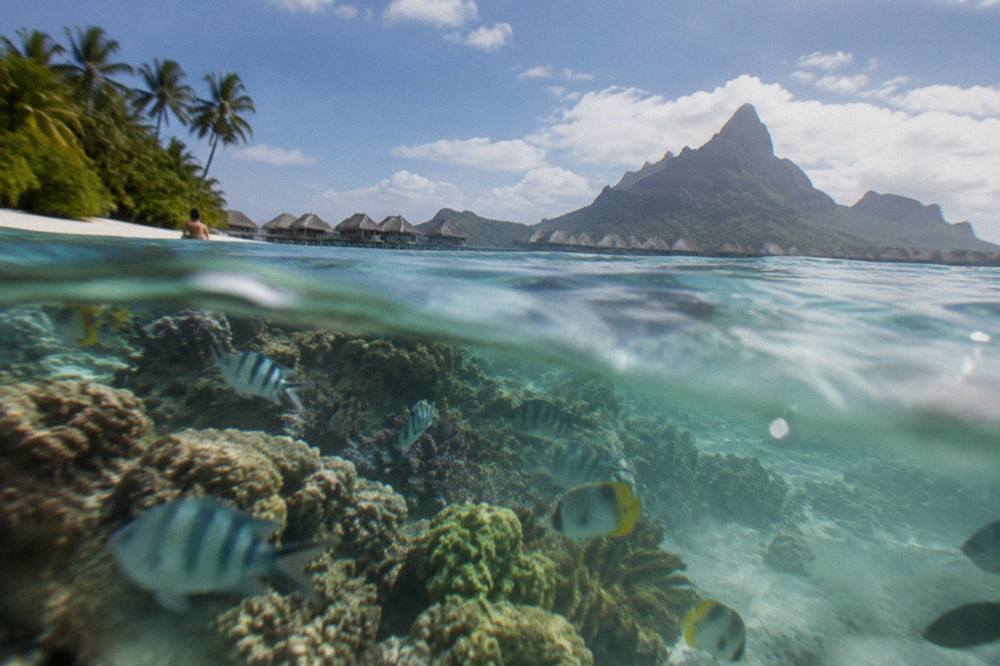
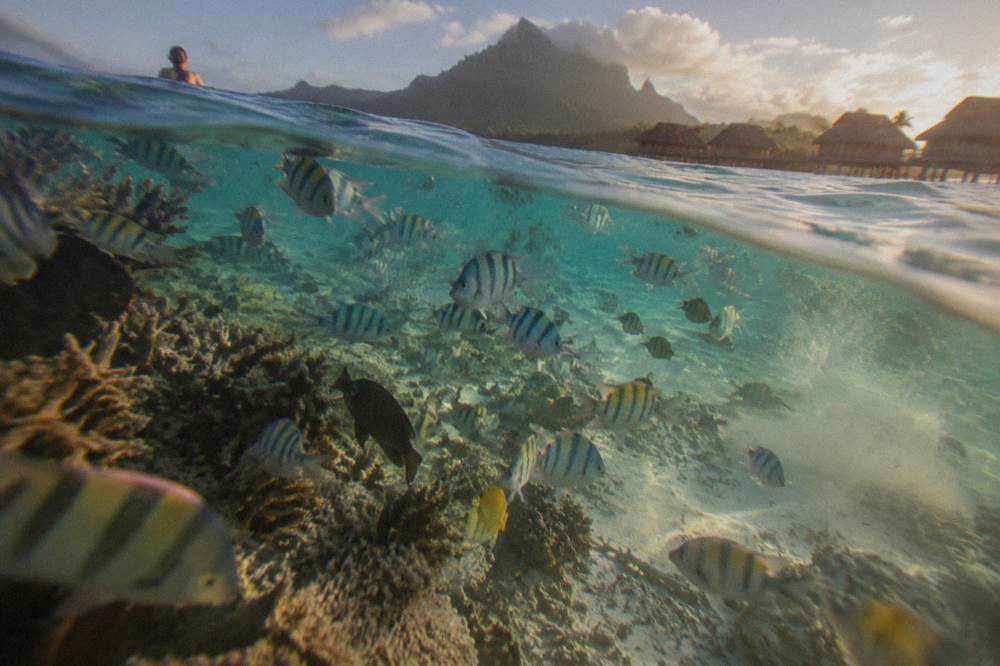
Guides and guest reports from the southern coral gardens consistently name butterflyfish, Moorish idols, parrotfish, sergeant majors and damselfish, with stingrays and blacktip reef sharks commonly seen at adjacent stops on the same tour circuit. Blacktip reef sharks, typically 0.5 to 1.5 m, are the species most often encountered in the lagoon, and manta rays appear at the separate Anau station rather than at the gardens.
The fish list at a coral garden stop is a reef community, not a big-animal roll call. The density is the attraction: recent guides single out the Aquarium stop for exceptional numbers of butterflyfish, angelfish, parrotfish and damselfish in sheltered, clear water. Stingrays work the sand patches between coral heads, and guests report eagle rays and moray eels occasionally at the quieter Motu Tane garden on the north side. Guides note the coral itself is described honestly in current material as not pristine in places, which is true of shallow lagoon systems worldwide and no reason to skip the stop.
The sharks that make Bora Bora famous belong to the deeper edges of the same circuit. Blacktip reef sharks, typically 0.5 to 1.5 m, are the common lagoon species, and lemon sharks appear occasionally in deeper lagoon areas. Current safety material advises letting guides handle any close interaction with rays, shuffling feet in sandy shallows, and not touching or chasing anything, and manta etiquette at Anau means staying at the surface, calm and horizontal, never blocking the animals' path. The dedicated treatment is in the reef shark safety article. Whale season, July to November, belongs to approved whale-watching providers, not to snorkel tours, and no listing is a whale product.
When Is The Best Light And Calmest Water At The Coral Gardens In Bora Bora?
The May to October dry season brings the lowest rainfall and the calmest lagoon conditions, and mornings are generally calmer than afternoons at the southern coral garden stops, which is why several operators schedule morning departures. A sea-temperature series puts the lagoon at 26 to 29 C year-round, so warmth is never the limiting factor, wind and rain squalls are.
Rainfall tells the seasonal story cleanly. The Meteo-France climate sheet for the Bora Bora station records 61.9 mm of rain in July against 245 mm in January, and rain days fall from 17.2 in January to 8.8 in August. Operators and guides describe clearer water in the dry season, and cruise activity concentrates in the same May to October window for calmer lagoon conditions. Within any given day, guides recommend early morning at the southern coral gardens for calmer water and better light, and the H2O Bora Bora shared half day's morning departure exists partly for that reason. The full index of guides sits on Bora Bora Snorkeling Tours.
| Month | Rainfall (mm) | Rain days (1 mm or more) | Season |
|---|---|---|---|
| January | 245.0 | 17.2 | Wet |
| April | 143.9 | 11.8 | Wet |
| July | 61.9 | 9.4 | Dry |
| August | 63.7 | 8.8 | Dry |
| October | 108.7 | 10.6 | Dry |
| December | 250.7 | 16.8 | Wet |
The wet season, November to April, brings warmer water and more rain squalls with reduced clarity at times, but tours run year-round and rebook or refund on weather cancellations, a policy the Rohivai listings state explicitly. Shoulder months such as May, June, September and October are repeatedly flagged as the value play: dry-season conditions with fewer crowds. The full seasonal picture, including whale season timing, is in the best time to snorkel in Bora Bora guide, and the month-by-month trade-offs for the island overall sit in the best time to visit Bora Bora.
Can You Reach The Coral Gardens From Matira Beach Or Vaitape?
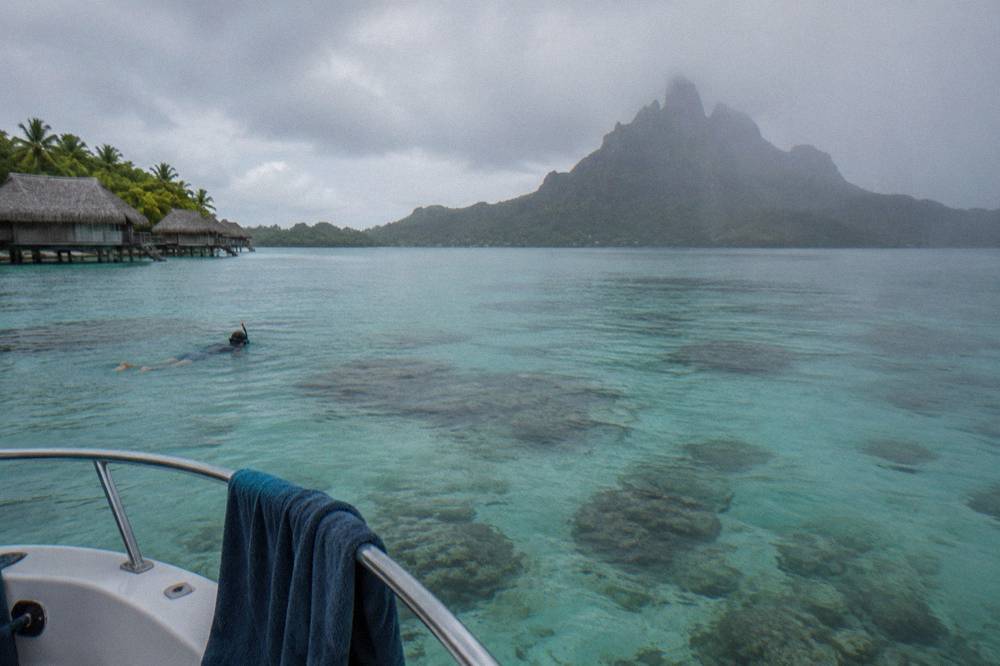
Not in practice. Current guides name Matira Beach as the only shore-accessible snorkeling spot in Bora Bora, a free public beach with shallow water over sand, while the coral gardens, the Aquarium and the Anau manta station are all boat-access stops on tour routes. From Vaitape, the tender quay and tour departures are a short walk apart, and tours list pickup from resorts and the quay.
The geography is simple once you see it. The coral gardens sit out among the motus that ring the lagoon, and the public road network ends on the main island. Matira Beach, at the southern tip of the main island, is the one spot where you can walk in from shore with your own gear for free, and its snorkeling is over sand and scattered coral rather than the concentrated coral channels of the boat stops. Current guide material is explicit that the Anau manta station has no recommended shore approach, and the same logic applies to the gardens: private property, currents and reef protection all point to going by boat. The Matira situation, including the new rahui on the reef just south of it, is covered in the Matira Beach snorkeling guide.
Vaitape works as the practical base for independent travelers. Cruise ships anchor in the lagoon and tender passengers to the Vaitape quay, and the tender wharf sits about 50 m on foot from the waterfront where tours depart. Listings across the lineup state hotel and quay pickup, with Rohivai's tours alone listing pickup from 19 locations including the major resort docks and Vaitape itself. If you are staying on the main island rather than a resort motu, a shared half day with pickup listed, such as the half day shared snorkeling tour, removes the transport question entirely.
| Starting point | Shore snorkeling nearby | Getting to the coral gardens | Notes |
|---|---|---|---|
| Matira Beach | Yes, free public beach, shallow water | Short drive to Vaitape or resort pickup | Bring your own gear for the beach |
| Vaitape | Limited waterfront | Tour departures and pickup at the quay | About 50 m from the cruise tender wharf |
| Resort motus | Varies by resort, not public | Most tours list resort dock pickup | Confirm your dock at booking |
| Cruise ship | None from the tender quay | Quay pickup on independent tours | Tender ride typically 15 to 20 minutes |
How Do The Coral Gardens Compare To Other Bora Bora Snorkel Stops?
The coral gardens offer the densest reef fish and the most beginner-friendly conditions of Bora Bora's main snorkel stops, while Anau is the manta site, the shark and ray sandbars are the big-animal stops, and the Lagoonarium is a guided natural-enclosure alternative from a motu. Most half day tours combine two or three of these stop types in one circuit, which is why the coral garden rarely stands alone.
Think of the lagoon's snorkel geography as a menu. The coral gardens are the reef fish course, shallow and colorful. The shark and ray stops that share the circuit are the wildlife course, with blacktip reef sharks and stingrays commonly reported, conducted under the 2006 shark and ray protections. Anau on the east side is the manta course, deeper and more exposed, best for confident snorkelers. The Lagoonarium, a natural lagoon enclosure on a motu, runs its own guided half-day format with sharks, rays, turtles and reef fish, described in the Bora Bora Lagoonarium guide. Divers weighing the same question can read scuba diving versus snorkeling in Bora Bora, though no dive product exists in this lineup. For a straight answer on whether the lagoon justifies tanks and certification, an honest assessment of diving in Bora Bora weighs what you actually see below the surface against what a simple snorkel tour covers.
Because tours bundle stops, choosing between listings is really choosing the bundle. A 3 hour shared circuit such as the Vavau lagoon snorkel, from $118 per person, moves quickly between a garden and a shark stop. A 4 hour small-group cruise from Lagoon Service, from $134 per person, spreads the same stops over more water time with fewer guests. The eco angle matters too: some operators, including Moana Adventure Tours on its 2.5-hour eco shark safari from $107 per person, state a no-feeding policy and visit natural congregation areas rather than baited sites, which suits travelers who want the 2006 protections reflected in practice. That choice between feeding-policy styles is examined in the swimming with sharks and rays guide.
What Should You Budget For A Coral Gardens Tour In Bora Bora?
Shared half day lagoon tours that include the coral garden stop run from $105 per person for the Motu Fanfan fruits excursion to $151 per person for the 5-hour Rohivai safari with meal, with most clustered between $112 and $150. Small-group versions run from $128 to $134 per person, and private boats start from $560 per group with flexible hours, up to from $1,776 per group for a private full day with water lunch.
The cheapest listing overall is the half-day Bora Bora Experience with fruits on Motu Fanfan, from $105 per person for 4 hours, and the most reviewed is the full-day lagoon group tour with lunch at 1,715 reviews from $173 per person. Those two figures frame the real spread: you are choosing between roughly $105 and $224 per person on the shared full-day end, with the Blue Lagoon cruise from Teina Tuaiva at the top of that band at from $224 per person for 6 hours with lunch. Private pricing is per group, not per person, so a party of four can narrow the gap between a private boat at from $605 per group and four shared seats. The full cost breakdown, including the island-level budget context, lives in the Bora Bora snorkeling cost guide, and the free side of the island is covered honestly in free things to do in Bora Bora.
| Budget band | What you get | Example listings |
|---|---|---|
| $105 to $120 per person | Shared half day, 3 to 4 hours, gear and pickup listed | Motu Fanfan fruits excursion from $105, Vavau 3-hour snorkel from $118 |
| $121 to $151 per person | Shared or small group half day, longer circuits, some with meals | H2O shared half day from $130, 5-hour Rohivai safari with meal from $151 |
| $154 to $224 per person | Full day with motu lunch, 6 to 7 hours | Full-day lagoon tour with lunch from $173, Blue Lagoon cruise from $224 |
| From $560 per group | Private boat, flexible hours | Private lagoon and motu lunch from $560 per group, up to from $1,776 per group |
Cancellation terms are consistent across most of the lineup: free cancellation is listed on nearly every tour here, and the Rohivai listings state that weather cancellations allow rebooking or a full refund. That matters in a lagoon where the wind decides the day's route. Nothing in the lineup prices a guarantee of any particular stop, because no honest operator can.
What Should You Bring For The Coral Garden Stop?
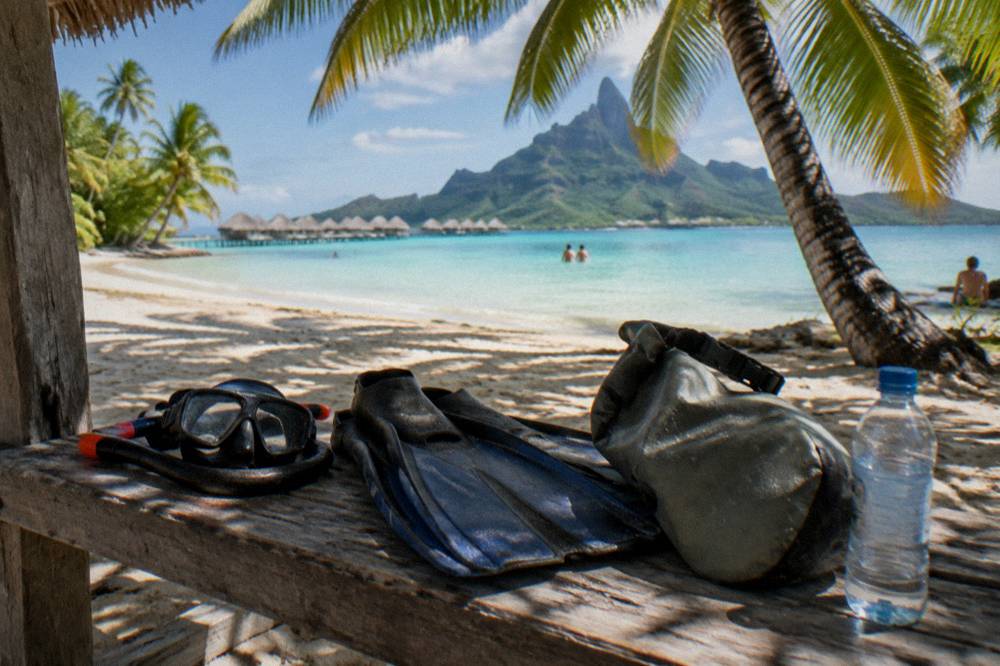
Bring what the listings do not: reef-safe mineral sunscreen, a rash guard for long floats, and nothing that touches coral. Snorkel gear is listed as included on nearly every tour in this guide, towels and drinks appear on some Rohivai and Vavau inclusions, and a dry bag keeps the rest dry between stops. Fins stay off your feet whenever you are near coral, and guides will say so again on the boat.
On sunscreen, the honest position is that French Polynesia has no blanket chemical-sunscreen ban, but guides strongly recommend mineral non-nano zinc oxide or titanium dioxide formulas to protect the reef you are floating over. That recommendation, not a law, is the reason to pack the right bottle, and the full treatment is in reef-safe sunscreen in French Polynesia. A rash guard does double duty against sun and scrapes, water shoes help on motu landings, and the packing question has its own page in what to bring snorkeling in Bora Bora.
Common Questions About The Coral Gardens In Bora Bora
Where are the coral gardens in Bora Bora?
The named coral garden stops sit in shallow water among the southern motus of the Bora Bora lagoon, near Motu Piti Uu Uta and neighboring islets, with a quieter garden off Motu Tane on the north side. All are reached by boat tour; Matira Beach is the only shore-accessible snorkeling spot guides recommend.
Can you snorkel the coral gardens from shore in Bora Bora?
No. The gardens sit out among the motus and current guides describe them as boat-only stops. Matira Beach, a free public beach at the southern tip of the main island, offers shallow shore snorkeling over sand, but it is not the coral garden itself.
How deep is the coral garden in Bora Bora?
No depth figure is reliably sourced and none is printed here. Guides describe the southern gardens as shallow, sheltered and beginner friendly, and conditions vary with tide and season. The site is chosen by the guide on the day.
Which tours include the coral garden stop?
Most half day lagoon circuits include a coral garden plus shark and ray stops. Examples from the lineup include the H2O Bora Bora shared half day from $130 per person, the Reef Discovery half day from $134 per person and the Vavau 3-hour snorkel from $118 per person.
What fish will you see at the Bora Bora coral gardens?
Commonly reported species include butterflyfish, Moorish idols, parrotfish, sergeant majors and damselfish, with stingrays over the sand patches and occasional eagle rays or moray eels at the northern garden. Sightings are never guaranteed; the reef fish community is the reliable part.
When is the best time to snorkel the coral gardens in Bora Bora?
The May to October dry season brings the lowest rainfall and calmest conditions, and mornings are generally calmer than afternoons. A sea-temperature series puts the lagoon at 26 to 29 C year-round, so warmth is not the constraint, wind is.