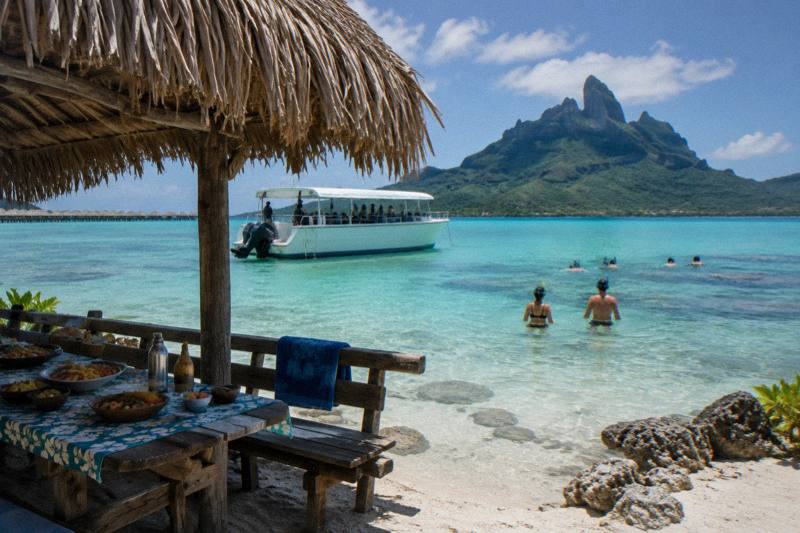
Best Time To Visit Bora Bora Month By Month
Bora Bora has two real seasons, a dry one from May to October and a wet one from November to April, and the month you pick changes the rain you get, the water you swim in and the price you pay for a lagoon tour.
Short answer
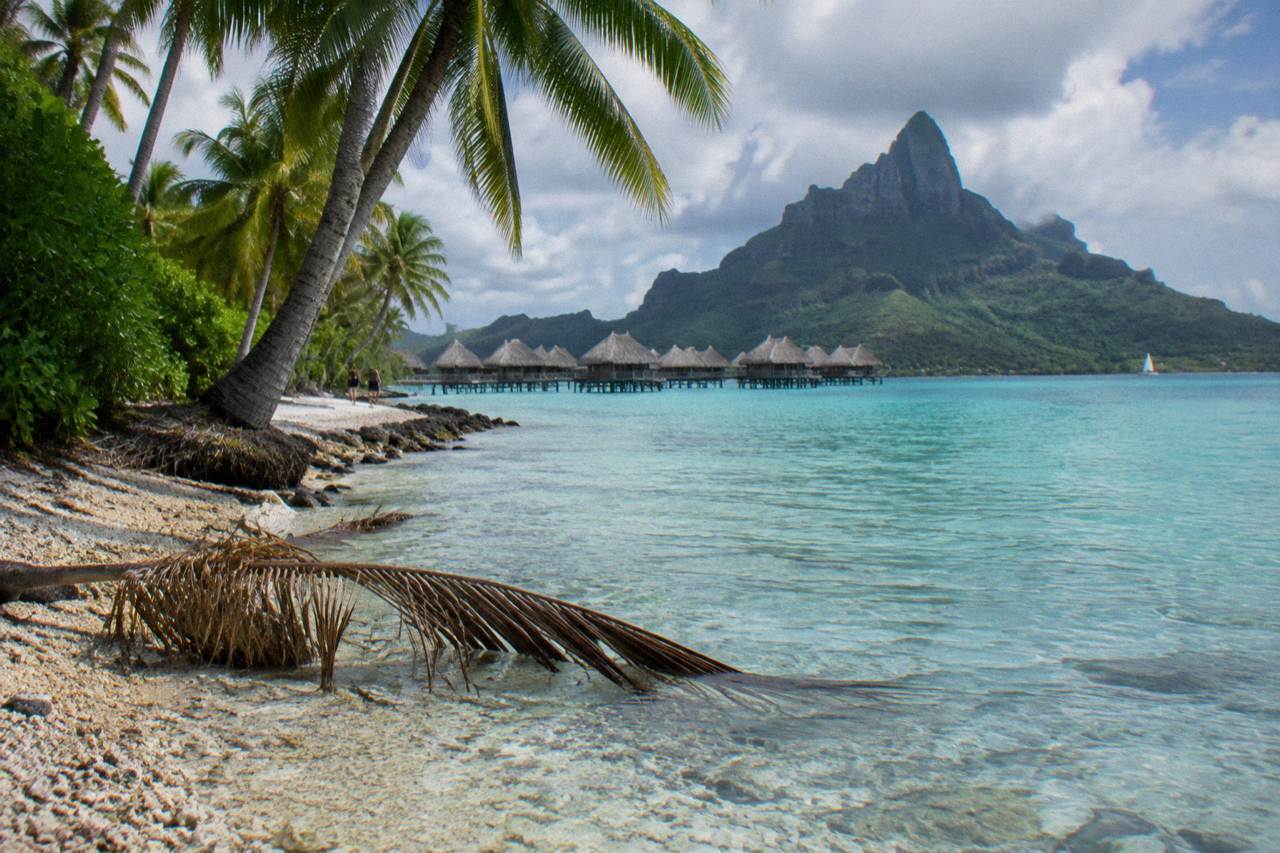
The best months to visit Bora Bora are May, June, September and October. They sit inside the May to October dry season, with rainfall dropping to 61.9 to 112 mm per month against 245 mm in January, but outside the crowded and expensive July to August peak. Half-day lagoon tours run from $105 per person year-round.
Bora Bora gets 1,654.1 mm of rain in an average year, and almost two thirds of it falls in the five months from November to March. That single number explains most of what matters about timing a trip here: the dry season from May to October brings the calmer lagoon, the lower rain-day counts and the bulk of the visitors, while the wet season trades a quieter island and lower rates for warmer water and passing showers. Month choice on this island is really a choice between three things, weather reliability, crowd levels and price, and the sweet spot where all three overlap is narrower than most guides admit. If Fiji is also on your shortlist, the same seasonal logic applies there too, so our Fiji versus Bora Bora comparison covers how the two stack up on cost, snorkeling and crowds.
The lagoon is the reason most people come, and the lagoon has opinions about the calendar. Operators describe clearer water and calmer surface conditions in the dry season; a sea-temperature series puts the lagoon at 26.7 to 28.9 C depending on the month, so it never gets genuinely cold. The full-day lagoon group tour with lunch from Lagoon Service, the lineup's most reviewed listing at 1,715 reviews, from $173 per person, runs year-round, as does the Reef Discovery half day and the eco shark and ray cruise. Timing changes the conditions, not the menu of tours.
What Is The Best Month To Visit Bora Bora?
The best month to visit Bora Bora is September, with May, June and October close behind. September combines the year's lowest rainfall, 64.6 mm and 9.3 rain days, with post-peak crowds after the July and August rush has gone home. A Reef Discovery half day runs from $134 per person and a shared morning snorkel from $130 in any of these months, with no seasonal surcharge stated at booking.
September is the month where the trade-offs line up. The Meteo-France station at Bora Bora's airport logs 85.5 mm in June, the start of the drier stretch, with July through September each under 65 mm where January carries 245 mm. The sea is at its coolest but still warm, a secondary sea-temperature series puts September at 26.7 C. And because families with school-age children largely travel in July and August, September tours run with fewer people on the boat and resort rates ease off the peak.
May deserves its own case. It is the first dry month, at 112 mm of rain over 11.4 rain days, and it arrives before the high season fully opens. A late-May trip can feel like you have the coral gardens to yourselves. October closes the window on the other side, at 108.7 mm, and adds a bonus: it sits inside the July to November humpback whale season, so a day on the water occasionally comes with a distant whale sighting from the boat, though no lineup snorkel tour is a whale-watching product.
The thing these four months share is that nothing about them is extreme. That is the honest answer. There is no month when Bora Bora is bad, only months when it is wetter, busier or pricier than the alternative, and the sections below break each of those levers down.
When Is The Bora Bora Lagoon At Its Clearest?
The lagoon is at its clearest in the dry season, May to October, when operators and guides consistently describe calmer surface conditions and better water clarity, and mornings are generally calmer than afternoons. No visibility figure for the Bora Bora lagoon is reliably sourced, so treat any specific clarity claim with caution. What is firm: dry months average 8.8 to 11.4 rain days against 14.5 to 17.2 in the wet season.
Rain matters for two reasons. Heavy rain clouds the water by washing sediment off the volcanic island into the lagoon, and rain systems bring wind that chops the surface. Both affect the shallow coral garden stops more than the deeper sites. This is why morning departures are worth booking in any season: the fresh spots research notes that mornings are generally calmer, and most half-day tours offer a morning slot for exactly this reason.
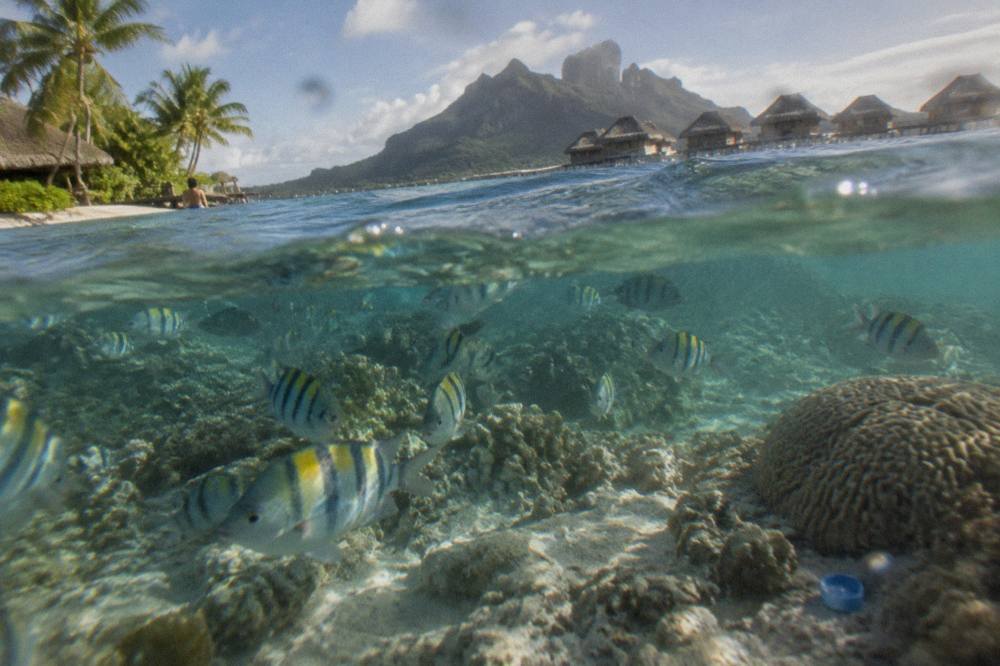
The tours themselves do not stop for weather unless conditions force it. The shared morning or afternoon snorkel run by H2O Bora Bora, 3 hours 30 minutes from $130 per person with a 5.0 rating across 774 reviews, gives you both departure options, and the operator lists free cancellation. Wet-season travelers should read the cancellation terms before booking, since operators rebook or refund when weather cancels a departure.
For readers deciding between the water windows, the deeper comparison lives in Bora Bora water temperature and visibility, which tracks the monthly sea-temperature series in full. The short version for trip timing: if glassy water and postcard clarity are the priority, aim for June through September and book morning slots.
What Months To Avoid Bora Bora?
January, February and December are the months most travelers avoid in Bora Bora, with 245, 211.5 and 250.7 mm of rain respectively and 15 to 17 rain days each month. These are the wettest windows of the November to April wet season. The lagoon stays swimmable and tours keep running, but showers are frequent, humidity is high and water clarity suffers after heavy rain.
Avoid is a strong word for an island where the sea never drops below about 26.7 C. What actually happens in the wet months is a shift in the rhythm of a day: short, heavy showers, often in the afternoon, between long bright spells. Travelers who book the Rohivai half-day lagoon safari, from $112 per person, 4 hours with pickup and a 4.9 rating from 259 reviews, in February still get their sharks, rays and coral garden stop; they simply accept a chance of getting rained on between stops.
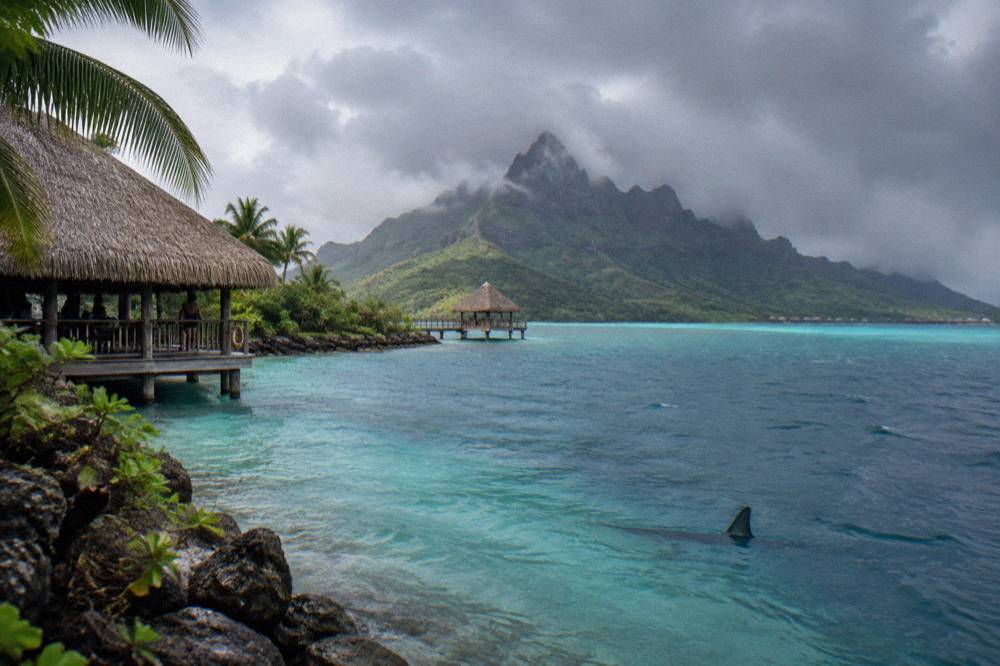
The compensation is real. Wet season means lower accommodation rates, fewer people on the boats and on Matira Beach, and the warmest water of the year, the secondary series puts March at 28.9 C, the annual high. Some travelers deliberately choose November or April, the shoulder months of the wet season, to trade a few showers for meaningfully cheaper weeks. December sits awkwardly with the holidays on top of the rain, and February combines peak rainfall with peak humidity, so those two draw the most "avoid" votes.
One timing note that is not weather: the southern reef off Matira now carries a full-protection zone, the 574-hectare Popora rahui established by decree in December 2025, closed to boats and all nautical activity. Tours do not enter it in any season; it does not change month choice, but readers scanning older trip reports should know why that stretch of reef has gone quiet.
How Do Bora Bora Prices Change Through The Year?
Accommodation and flights follow a high season from roughly June to early September, peak in July and August, and drop in the November to April wet season, but lagoon tour prices in this lineup hold steady year-round, from $105 to $224 per person for shared and small-group listings. A half day runs from $105 per person, a full day with lunch from $144, and private boats from $560 per group, with no published seasonal surcharge.
The honest split is this: your hotel bill bends with the calendar, your boat does not. The full-day lagoon safari with lunch on a motu from Rohivai Tours is from $170 per person whether you sail in July or February, and its 4.9 rating across 825 reviews reflects a full year of departures. What does change seasonally is availability, July and August departures fill first, especially morning slots, and cruise-heavy weeks in the dry season add demand around the Vaitape quay.
| Cost element | High season (Jul to Aug) | Shoulder (May, Jun, Sep, Oct) | Wet season (Nov to Apr) |
|---|---|---|---|
| Shared half-day lagoon tour | From $105 to $151 per person | Same listing prices | Same listing prices |
| Full-day tour with motu lunch | From $144 to $224 per person | Same listing prices | Same listing prices |
| Private boat snorkel tour | From $560 to $1,776 per group | Same listing prices | Same listing prices |
| Morning tour availability | Books out earliest | Good | Widest choice |
| Weather-cancellation odds | Lowest | Low | Higher, operators rebook or refund |
Budget planners should read the full breakdown in Bora Bora snorkeling cost, which prices out a complete snorkeling day by tour type. The general planning range for independent shared lagoon tours in current guides runs about $80 to $200 per person, and this lineup's listings sit inside that band. Nothing else in your Bora Bora budget moves as much with the month as the room rate, so if the tour is the point of the trip, pick the shoulder season and spend the savings on a full day with lunch rather than a bigger hotel.
What Is The Bora Bora Weather Like Month By Month?
Bora Bora's rainfall falls from 245 mm in January to 61.9 mm in July and back up to 250.7 mm by December, a clear dry-season trough from June to September. Rain days follow the same curve, from 17.2 in January down to 8.8 in August. Sea temperature, per a secondary series, stays between 26.7 and 28.9 C all year, so the water is never the reason to delay a trip.
The table below is the Meteo-France climate record for the airport station on Motu Mute, the driest corner of the island's weather pattern, paired with the secondary sea-temperature series. Read the rainfall as a monthly total, not a daily forecast: 108.7 mm spread over an October visit can still mean five clear days in a row.
| Month | Rainfall (mm) | Rain days (1 mm or more) | Sea temperature (C) | Season |
|---|---|---|---|---|
| January | 245.0 | 17.2 | 28.4 | Wet |
| February | 211.5 | 15.3 | 28.4 | Wet |
| March | 168.1 | 14.5 | 28.9 | Wet |
| April | 143.9 | 11.8 | 28.7 | Wet |
| May | 112.0 | 11.4 | 28.2 | Dry begins |
| June | 85.5 | 9.7 | 27.4 | Dry |
| July | 61.9 | 9.4 | 26.9 | Dry, peak crowds |
| August | 63.7 | 8.8 | 26.7 | Dry, peak crowds |
| September | 64.6 | 9.3 | 26.7 | Dry |
| October | 108.7 | 10.6 | 27.3 | Dry ends |
| November | 138.5 | 12.3 | 27.9 | Wet |
| December | 250.7 | 16.8 | 28.3 | Wet |
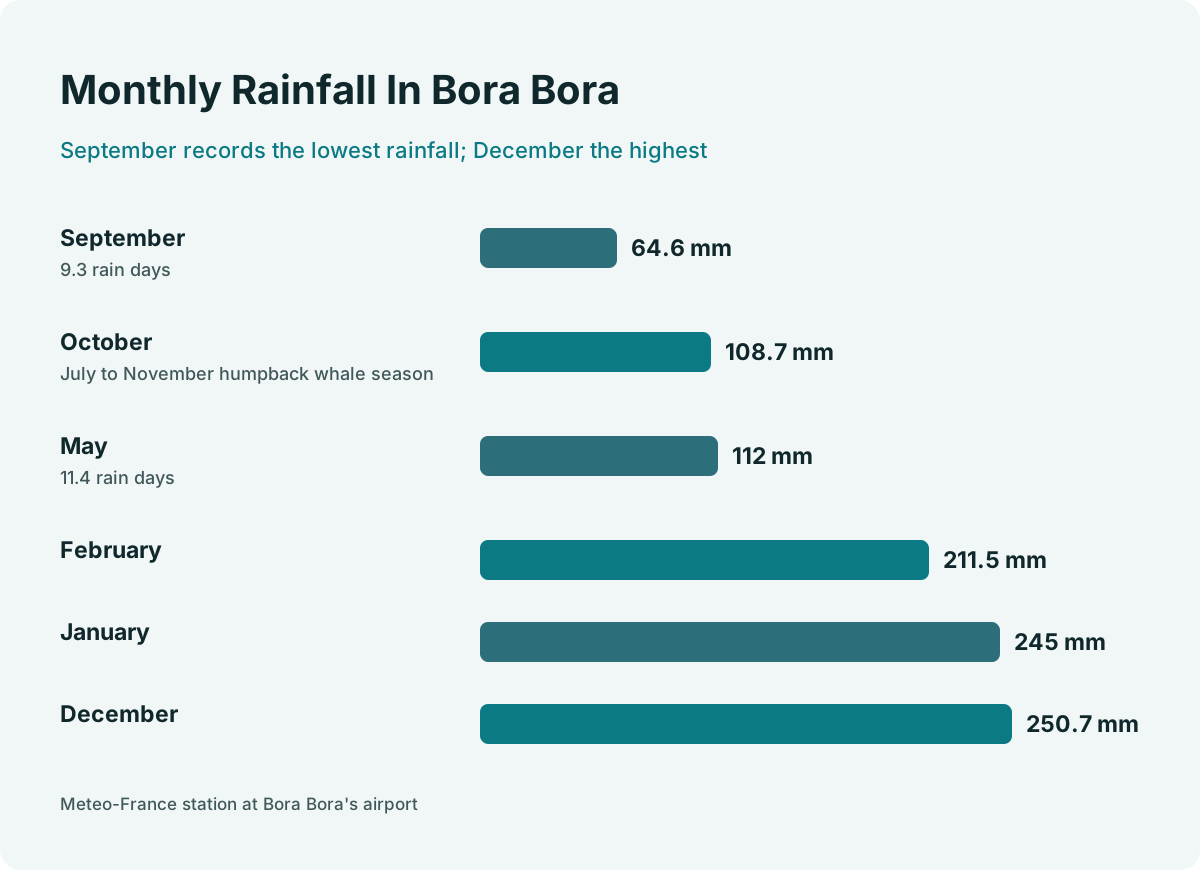
Two readings of this data matter for planning. First, the shoulder months of April, May, October and November sit in the middle of the curve, roughly 108.7 to 143.9 mm, which is roughly half of January's total, a better trade than the raw "wet season" label suggests. Second, the sea-temperature spread across the whole year is barely two degrees, so a wetsuit is never part of the packing question; the month choice is about rain and wind, not warmth. The seasonal overview at Off to Bora Bora reaches the same conclusion on the shoulder-month value case.
Can You Snorkel In Bora Bora In The Wet Season?
Yes, snorkeling in Bora Bora runs all year, including the November to April wet season, and every tour in this lineup operates through it. The trade-offs are warmer water at 27.9 to 28.9 C, fewer fellow guests, occasional heavy showers and reduced clarity after rain. Booking morning departures and choosing sheltered coral garden stops, as most half-day itineraries do, offsets most of the weather risk.
Wet-season snorkeling is a legitimate strategy, not a consolation prize. The eco snorkel cruise with sharks and stingrays from Moana Adventure Tours, from $112 per person for 2 hours 30 minutes with a 4.8 rating from 604 reviews, focuses on sheltered lagoon sites where wind chop matters less. The listing includes pickup and free cancellation, useful when a squall line passes through. The outrigger-canoe format of that tour is also a genuinely Polynesian way to spend a wet-season morning.
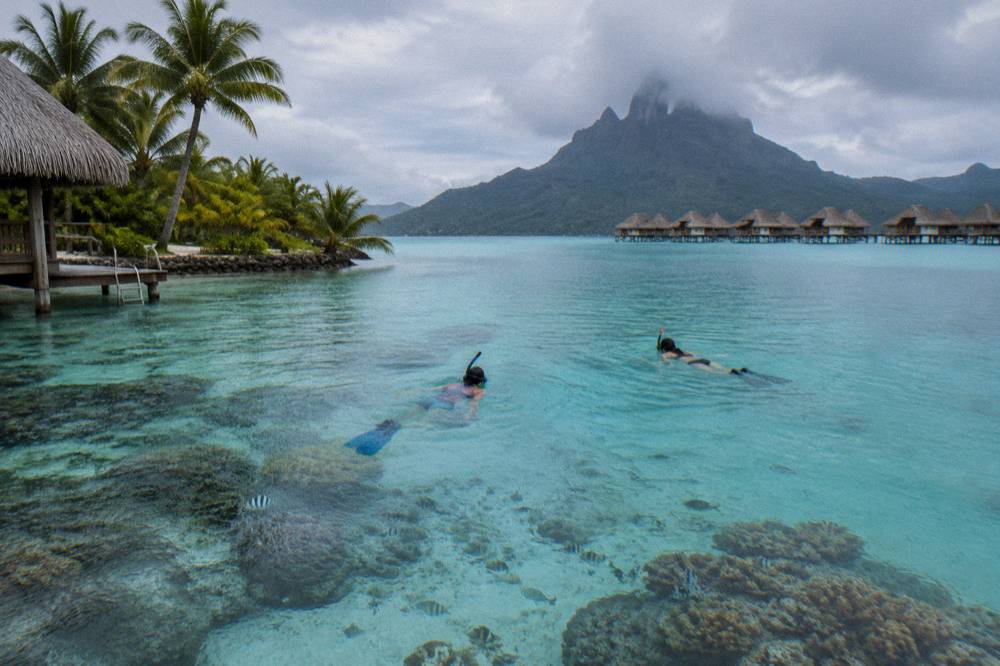
The one honest caution is clarity. After a heavy rain, the water near stream outlets and along the main island can carry sediment for a day or two, and operators reroute to the clearer motu-side sites when that happens. Guides make that call on the morning, which is a better system than any calendar. Travelers who want the highest odds of postcard water should still target June through September, as current snorkeling guides for the island consistently recommend, but November visitors are not wasting their airfare.
Is Whale Season A Reason To Time A Bora Bora Trip?
Humpback whales pass through French Polynesian waters from July to November, and Bora Bora boat days in those months occasionally include a distant sighting, but no tour in this lineup is a whale-watching product and none promises whales. Regulations keep approved providers 100 m from the animals, 300 m for private boaters, at 3 knots within 300 m, on a parallel course with no encircling. Treat whales as a bonus, never a booking reason.
The season overlaps the dry season almost exactly, which is convenient but also means it never has to drive the decision. A September or October lagoon tour gets you the best water of the year and a chance, from the deck, of seeing a humpback breaching outside the reef. Tahiti Tourisme's regulation page sets the approach rules, and the practical takeaway for a snorkeler is simple: if a crew slows and points seaward, enjoy it, then get back to the coral garden.
What About Crowds And Cruise Traffic In Vaitape?
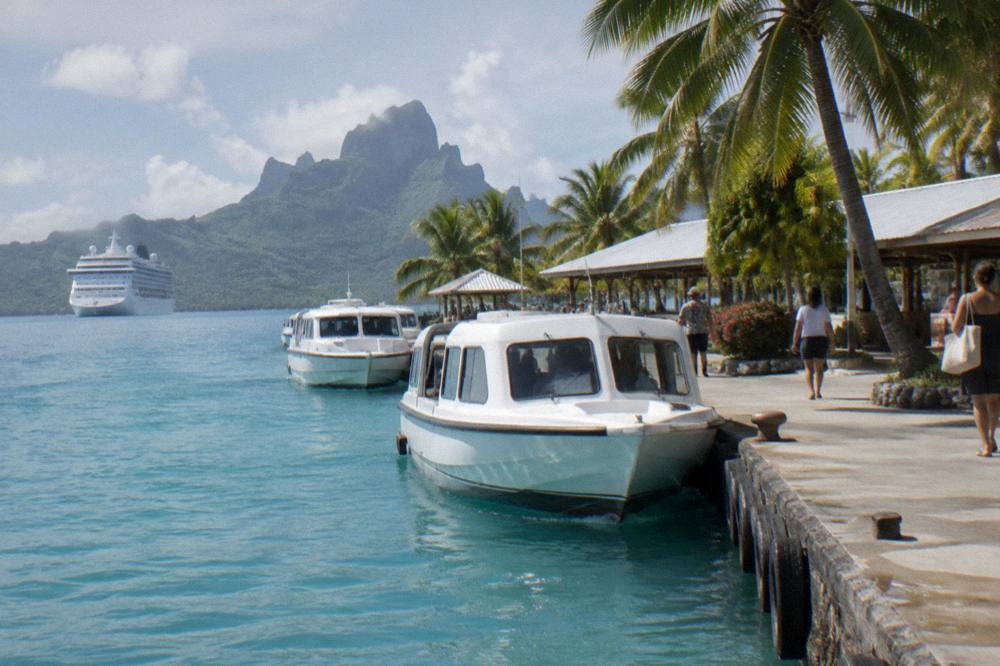
July and August bring Bora Bora's peak visitor numbers, and the dry season concentrates cruise calls around the Vaitape quay, where ships anchor in the lagoon and tender passengers ashore on a ride of roughly 15 to 20 minutes. Typical call windows run 9 to 12 hours. May, June, September and October keep the good weather with noticeably fewer people on the boats and at Matira Beach.
Cruise traffic deserves a place in the timing question because it stacks on top of the hotel season. Ships anchor in the lagoon, typically around Pofai Bay, and everyone comes ashore at the same public tender pier, the quay about 50 m on foot from Vaitape. Independent lagoon tours pick up at that quay, which is why cruise passengers comparing options end up reading the same listings as hotel guests; the trade-offs are laid out in Bora Bora cruise shore excursions.
For stay-based travelers, the crowd effect is felt at two places: Matira Beach, the island's one public beach, and the popular coral garden stops. A June morning at Matira and a July morning at Matira are different experiences. Operators spread their departures across the day, and the afternoon snorkel slots are often the quietest way to see the same sites, a point worth remembering when packing for a snorkeling day.
French Polynesia recorded a record of roughly 281,227 tourist arrivals in 2025, up 6.6 percent on the year before, and the territory's stated strategy favors managed, high-value growth over volume. Practically, that pressure lands on the peak weeks: book dry-season morning tours early, and know that this site's Bora Bora Snorkeling Tours comparison pages update as listings and prices change.
Which Tours Suit Each Season Best?
Full-day tours with a motu lunch suit the dry season's long, reliable days, from $144 to $224 per person in this lineup. Short 2.5 to 4 hour half days suit the wet season, where a morning slot fits neatly between showers, from $105 to $151. Private boats from $560 per group and the catamaran with its floating bar at from $309 per person reward the calm seas of June through September.
Matching format to season is the quiet optimization most travelers miss. A 7-hour day in February spends more of the afternoon in shower territory than a 3-hour morning outing; the Vavau 3-hour lagoon snorkel at from $118 per person is a well-shaped wet-season booking, 5.0 from 14 reviews with free cancellation listed. In September, the same logic argues for the long format: the full-day lagoon tour with lunch, from $173 per person, uses the whole calm day for coral gardens, rays and a meal on a motu.
| Season | Best tour format | Why | Example listing |
|---|---|---|---|
| Dry peak (Jul to Aug) | Half day, early slot | Beats the crowd wave at popular stops | Reef Discovery half day, from $134 per person |
| Dry shoulder (May, Jun, Sep, Oct) | Full day with motu lunch | Long calm days, thinner boats | Full-day lagoon group tour, from $173 per person |
| Wet season (Nov to Apr) | Short morning half day | Fits between showers, sheltered sites | Eco shark and ray cruise, from $112 per person |
| Any calm day | Catamaran with floating bar | Sailing rewards flat water | From $309 per person, 4.9 from 164 reviews |
| Special occasion | Private boat | Set your own hours and stops | From $560 per group |
| Ranked month | Rainfall (mm) | Crowd level | Verdict |
|---|---|---|---|
| September | 64.6 | Low after peak | Best overall balance |
| June | 85.5 | Moderate | Nearly as good, slightly warmer sea |
| May | 112.0 | Low | Dry-season value, quiet boats |
| October | 108.7 | Moderate | Dry end plus whale-season bonus |
| August | 63.7 | Highest | Great weather, peak crowds and rates |
| July | 61.9 | Highest | Driest month, most booked |
| April | 143.9 | Low | Wet-season shoulder, warm sea |
| November | 138.5 | Low | Quieter, showers increase |
| March | 168.1 | Low | Warmest sea of the year, wet |
| February | 211.5 | Low | Wettest-tier, lowest rates |
| January | 245.0 | Moderate | Peak wet, holiday tail |
| December | 250.7 | Moderate | Wet plus holidays |
Whatever month wins, the pattern holds: fix the dates around rain and crowds, then match the tour format to the day length and the sea state those dates deliver. The full spectrum of lagoon activities by interest is mapped in things to do in Bora Bora, and the month-by-month logic here applies to all of them.
Common Questions About The Best Time To Visit Bora Bora
What is the best month to visit Bora Bora?
September is the best single month, combining 64.6 mm of rain and 9.3 rain days with crowds that drop after the July and August peak. May, June and October are close behind, all inside the May to October dry season with lower rainfall and thinner boats. Lagoon tour prices hold steady across these months, from $105 per person for a shared half day.
What months to avoid Bora Bora?
January, February and December carry the most rain, 211.5 to 250.7 mm per month with 15 to 17 rain days. Tours still run and the water stays warm, but showers are frequent and clarity drops after heavy rain. If you must travel then, book short morning half days at sheltered sites.
What months not to go to Bora Bora?
The same answer from the price side: July and August if you want to avoid peak crowds and peak accommodation rates, and December through February if you want to avoid the wettest weather. There is no month with cold water or closed tours, only months where one factor peaks.
Is Bora Bora warm enough to snorkel in every month?
Yes. A secondary sea-temperature series puts the lagoon between 26.7 and 28.9 C in every month of the year, with the coolest water in August and September and the warmest in March. No month requires a wetsuit for a standard lagoon snorkel stop.
Do tour prices change with the season in Bora Bora?
On this lineup, no. Shared half days hold at from $105 to $151 per person, full days with lunch at from $144 to $224, and private boats at from $560 per group regardless of month. What changes is availability, with dry-season morning slots booking out first. Accommodation and flights, not tours, carry the seasonal pricing.
When is whale season in Bora Bora?
Humpback whales pass through French Polynesian waters from July to November. Boaters may occasionally spot them from a lagoon tour in those months, but no tour is a whale-watching product, regulations keep vessels 100 m away for approved providers, and no sighting is ever promised. Choose the month for the lagoon, not the whales.