What's Nicer, Fiji Or Bora Bora?
An honest comparison of Fiji and Bora Bora for snorkeling, cost, ease of travel and trip style, with real Bora Bora lagoon tour prices and seasonal data.
Which Island Suits Your Trip Better?
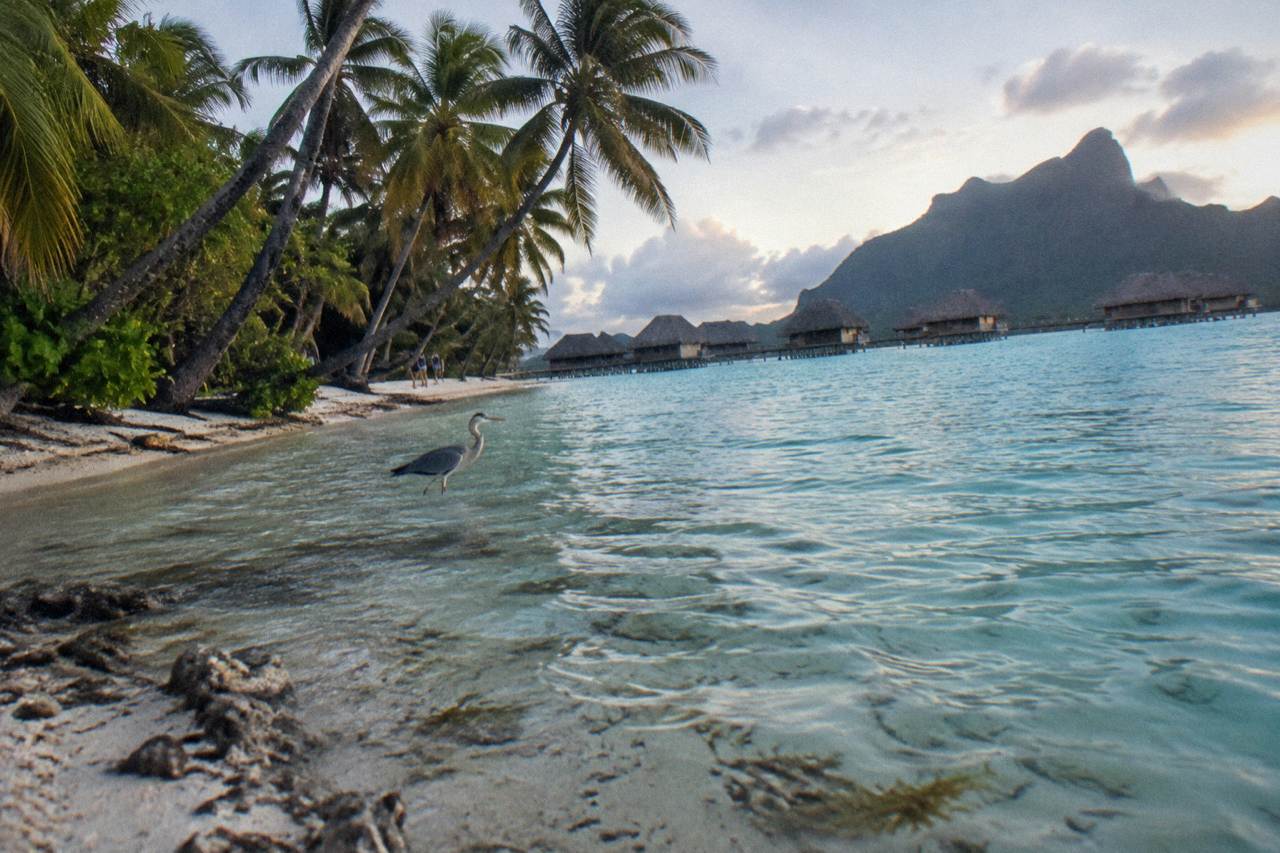
There is no single winner, and any article that crowns one is guessing at your priorities. Bora Bora delivers one world class lagoon concentrated around a single island, with snorkel tours from $105 per person and a full day including motu lunch from $173. Fiji spreads a larger, more varied snorkel offering across many islands, usually at lower resort prices but with more travel time between the best sites.
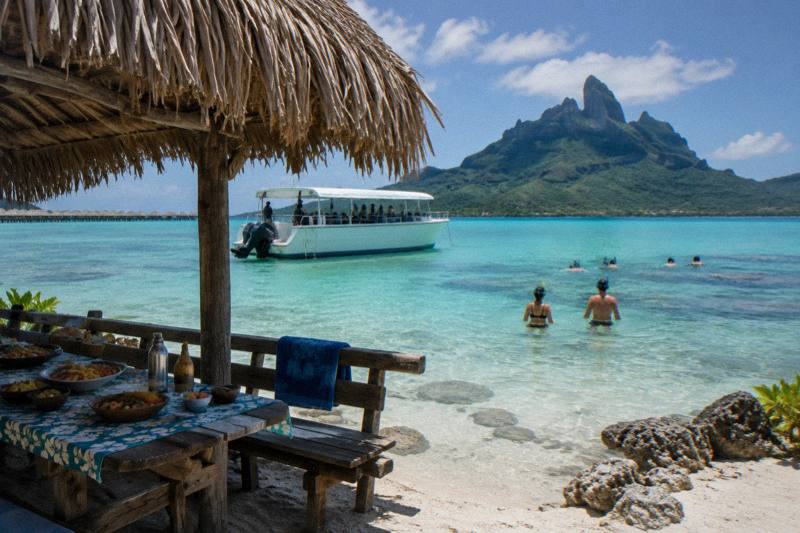
"Nicer" depends almost entirely on what you want the trip to feel like. Bora Bora is small, focused and expensive: one lagoon, one iconic mountain in Mount Otemanu at 727 m, and a ring road of about 32 km that you can drive in roughly 45 minutes non-stop. Everything worth snorkeling sits in that single lagoon, and a single well chosen boat day, such as the full-day lagoon group tour with lunch that holds a 5.0 rating from 1,715 reviews, covers the coral gardens, ray and shark stops and a motu picnic in six hours. Fiji works differently. It is a country of hundreds of islands rather than one volcanic peak ringed by water, and its snorkeling ranges from soft coral walls to shark dives and manta sites spread across island groups that can take hours, sometimes a full travel day, to move between.
The honest framing is concentration versus variety. If your dream is one impossibly blue lagoon where you unpack once, swim daily and never think about logistics, Bora Bora is the stronger version of that exact trip. If you want to hop between different reef types, dive destinations and landscapes over two weeks, and you would rather trade a little polish for a lower nightly rate, Fiji gives you more to work with. Neither is "nicer" in the abstract; one of them is nicer for the specific trip you are actually planning.
That distinction matters most for snorkelers, because the water is the reason most people choose either destination. A good way to think about the comparison is that Bora Bora sells a single, extraordinarily protected lagoon experience, while Fiji sells breadth. The rest of this article works through the lagoons, the costs, the travel logistics and the traveler types, and it names real Bora Bora listings with real prices throughout, because that is the side where this site can show you exact numbers rather than adjectives.
How Do The Two Lagoons Compare For Snorkeling?
Bora Bora's lagoon is a single, sheltered body of water where boat tours reach coral gardens, ray and blacktip shark sites and a manta cleaning station within minutes of departure, with shared half days from $105 to $151 per person. Fiji's snorkeling is spread across multiple island groups with famous soft coral and shark sites, which rewards longer trips but spreads the highlights out.
Start with what the water actually contains, because that is the part no marketing photo can fake. In Bora Bora the snorkeling happens inside a lagoon enclosed by a barrier reef, and the classic tour route hits a small set of named sites: the coral gardens on the southern side, the shallow sandbars where stingrays and blacktip reef sharks gather, and the Anau area on the east side where manta rays visit cleaning stations. Guides describe blacktip reef sharks, typically 0.5 to 1.5 m, as the common species on these tours, and French Polynesia has protected all shark and ray species in its waters since 2006 under its Environmental Code. Notably, that code prohibits attracting sharks or altering their behaviour, which is why some operators run explicitly eco, no-feeding tours while others take guests to natural congregation areas; the listing states which approach each tour takes. If watching sharks and rays from the surface leaves you wondering what lies deeper, the scuba diving versus snorkeling comparison for Bora Bora explains who actually benefits from a tank and what it involves.
Fiji's underwater reputation rests on different strengths. Travel coverage of Fiji regularly highlights its soft coral, in particular the famously colorful reef systems of its northern and central island groups, plus structured shark snorkel and dive encounters and manta sites in specific locales. Those are real and well documented strengths, but they are distributed: the soft coral sites, the shark encounters and the manta spots generally sit off different islands, and reaching several of them on one trip means domestic flights or multi-day boat transfers. A snorkeler with ten days in Fiji can see remarkable variety. A snorkeler with four days in Bora Bora can see essentially everything its lagoon offers, repeatedly, from different boats.
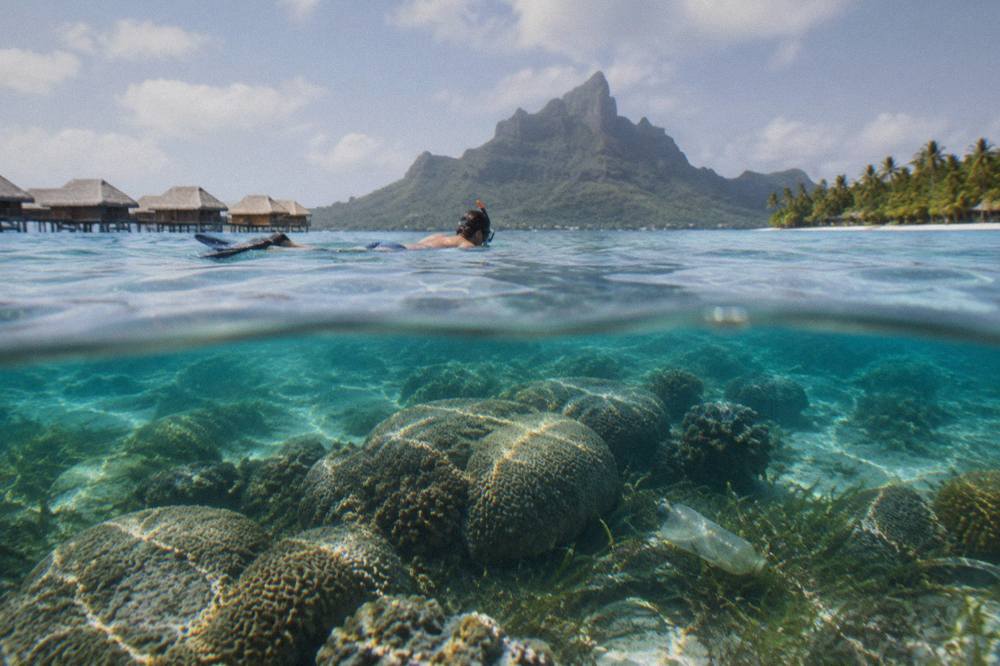
There is also a protection story worth knowing on the Bora Bora side. In December 2025 a 574 hectare no-take zone, the Popora rahui, was established by decree on the southern reef off Matira, closing that band to fishing, boating and nautical activity, the first full-protection lagoon zone of its kind in French Polynesia. Tours do not enter it, and the snorkel sites boats use sit outside its boundaries, but it signals the direction management is moving: the lagoon's value is being actively defended. For a comparison shopper, that matters, because the thing you are buying in Bora Bora, a dense concentration of marine life very close to shore, is the thing local policy is most aggressively protecting. If you're weighing how to actually spend your days on that water, the guide to things to do in Bora Bora beyond the resort ranks the lagoon tours, free shore options, and seasonal timing that shape the trip.
Seasonality shapes both destinations similarly, since both sit in the South Pacific's cyclone-adjacent belt. Bora Bora's dry season runs May to October and the wet season November to April, and the numbers from Meteo-France's Bora Bora station make the difference concrete: monthly rainfall falls from 245 mm in January to 61.9 mm in July, and rain days drop from 17.2 to 9.4 over the same span. A sea-temperature series puts the lagoon at 26.7 to 28.9 C across the year, so warmth is never the constraint; rain and wind are. Operators and guides describe clearer water and calmer conditions in the dry season, and mornings as calmer than afternoons. Fiji follows the same broad southern summer and winter rhythm, with its own regional variation, so neither destination wins a decisive seasonal advantage; both are at their best in the southern winter months.
| What you compare | Bora Bora | Fiji |
|---|---|---|
| Setting | One island, one enclosed lagoon, barrier reef | Hundreds of islands across several groups |
| Signature snorkel sites | Coral gardens, ray and shark sandbars, Anau manta area | Soft coral reefs, shark sites, manta locales |
| How you reach sites | Short boat rides, tours from resort docks or Vaitape quay | Boat rides plus domestic flights or transfers between islands |
| Marine protection | All sharks and rays protected since 2006; new 574 ha no-take zone from December 2025 | Shark sanctuaries and marine parks in specific regions |
| Best trip length for snorkeling | 4 to 7 days covers the lagoon fully | 10 to 14 days to combine distant reef regions |
For a one-week trip built around snorkeling, the concentration argument favors Bora Bora more than most visitors expect. You are never deciding between regions or burning a day in transit; you are deciding between a 3.5 hour morning snorkel and a 6 hour full day with lunch, and you can do both. That is also where the honest caveat sits: variety is the trade-off. After several days you will have snorkeled the same lagoon from different angles, which some travelers find meditative and others find repetitive.
What Does Each Trip Cost?
On the Bora Bora side the numbers are concrete: shared lagoon snorkel tours run from $105 to $151 per person for half days and from $144 to $224 for full days with motu lunch, while private boats start at $560 per group and reach $1,776 per group. Fiji generally offers lower nightly accommodation costs, but no comparable per-tour price list can be honestly quoted here, so compare full trip budgets rather than sticker prices. For a fuller picture of whether that level of spending actually pays off, our honest verdict on whether Bora Bora justifies its price tag weighs what the lagoon delivers against what the island takes from your wallet.
The most useful thing this site can do for the cost question is show the real Bora Bora numbers, because they are verified listing prices rather than estimates. Half day shared tours cluster tightly: the Fruits on Motu Fanfan excursion from Bora Bora Manu runs from $105 per person for 4 hours, the Rohivai shared lagoon safari from $112 for 4 hours, Moana Adventure Tours' eco shark and ray cruise from $107 for 2.5 hours, and Reef Discovery's half day group signature tour from $134 for 3.5 hours with a 5.0 rating from 1,051 reviews. Full days with lunch sit between $144 and $224: the featured full-day lagoon group tour from Lagoon Service is from $173 per person for 6 hours with pickup, lunch and gear listed as included, the Vavau Adventures 7 hour option is from $158 without a meal, and the English-only Blue Lagoon cruise from Teina Tuaiva is from $224. Private options reframe the math entirely, from $560 per group for Ocean Tour Bora Bora's flexible 3 to 6 hour motu lunch trip up to $1,776 per group for Reef Discovery's private full day with a water-served lunch.
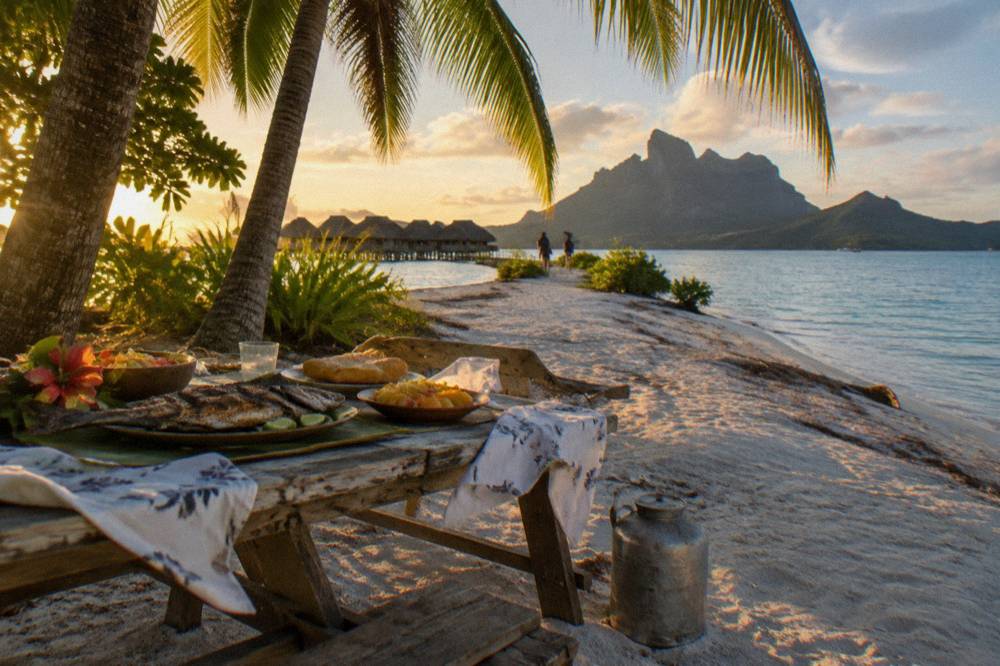
Against that, Fiji's cost advantage lives mainly in accommodation and length of stay. It is well established in travel planning circles that Fiji offers resort and island-stay price points below Bora Bora's famously high-end resort market, and that a two week Fiji trip can cost less per night than an equivalent Bora Bora stay. What this article will not do is print a Fiji tour price or nightly rate, because no verified figure is on file here, and an invented number would be worse than none. The defensible comparison is structural: Bora Bora concentrates your spending on lodging and tours in one small place, with tour prices that are transparent and bookable per person, while Fiji spreads spending across more mid-range options and more internal travel.
One Bora Bora cost that is often missed in comparisons is the local visitor tax, the taxe de séjour, currently 200 XPF per person per night for classified hotels and cruise ships and 50 XPF for other accommodations such as guesthouses, collected by providers. A reform taking effect in January 2027 will let communes set higher ceilings, so rates are changing in 2027 and the commune's own page is the place to check the current figure, per the official commune tax page at borabora.pf.
| Bora Bora tour type | Representative listing | Price (from) | Duration |
|---|---|---|---|
| Budget half day | Fruits on Motu Fanfan | $105 per person | 4 hours |
| Eco shark and ray half day | Moana Adventure Tours eco cruise | $107 per person | 2.5 hours |
| Shared half day, most reviewed half day | Reef Discovery signature tour | $134 per person | 3.5 hours |
| Full day with lunch, most reviewed overall | Lagoon Service full-day group tour | $173 per person | 6 hours |
| Small group sail | Luxury catamaran with floating bar | $309 per person | 4 hours |
| Private boat | Ocean Tour Bora Bora motu lunch | $560 per group | 3 to 6 hours |
The verdict on cost is therefore less lopsided than reputation suggests. Bora Bora's tours themselves are not extreme: a couple doing two shared tours, one half day and one full day with lunch, spends around $300 per person on the water, which is comparable to activity spending in many tropical destinations. The expensive part of Bora Bora is the bed you sleep in. Fiji flips that ratio: cheaper beds, cheaper nights, and a wider spread of activity costs depending on how far you chase the famous sites. Budget for the whole trip, not the brochure line item.
How Long Do You Need In Each Place?
Four to seven days is the sweet spot for Bora Bora, enough for two or three lagoon tours plus downtime, since the island is 30.55 km2 with a 32 km ring road. Fiji rewards ten days or more, because its headline snorkel regions sit on different islands and moving between them consumes real travel time.
Bora Bora's smallness is a scheduling feature. You arrive by air, a domestic flight of roughly 50 minutes from Papeete, and within an hour of landing you can be at a resort dock or the Vaitape quay. Nothing on the island is far: Vaitape to Matira is about 7 km, or 12 minutes, and Vaitape to Anau on the east side is about 12 km, or 20 minutes, per the local getting-around guidance. That geometry means a short trip wastes no days. A five night stay comfortably fits a full-day lagoon tour with motu lunch, a half day such as the Reef Discovery signature tour, a slower beach afternoon at Matira, and still leaves room to do nothing at all, which is a legitimate Bora Bora activity.
Fiji's geography demands the opposite planning style. Its international gateway is on the main island, and the famous reef regions sit elsewhere, reached by domestic flights, ferries or boat transfers that each eat half a day. Travelers consistently report that the country rewards a choose-two-or-three-regions itinerary rather than an everything sweep. If your total vacation window is a week or less, that transit overhead starts to dominate, and this is the single strongest factual argument for Bora Bora over Fiji: at short trip lengths, Bora Bora delivers a higher fraction of in-water hours per day. At two weeks, that argument dissolves and Fiji's variety takes over.
Cruise visitors face a special version of this question. Bora Bora is a tender port: ships anchor in the lagoon and ferry passengers to the public quay at Vaitape, a typical tender ride of 15 to 20 minutes, and call windows of 9 to 12 hours are common. That is enough time for a full-day lagoon tour and a walk through Vaitape, and the tender wharf sits about 50 m on foot from the town. Fiji calls, by contrast, are usually split across multiple ports on separate days. Neither is better, but the Bora Bora call concentrates one complete lagoon experience into a single day ashore, which is why shore excursion comparisons there are so common; independent tour pricing research repeatedly shows independent lagoon tours undercutting ship-sponsored equivalents for comparable itineraries.
Which Suits Honeymooners, Families And Nervous Snorkelers?
Honeymooners lean Bora Bora for the concentration of one iconic lagoon and overwater stays; families and mixed-confidence groups often get more from Fiji's range of calm, shallow and inexpensive options, though Bora Bora operators explicitly welcome non-swimmers and children with flotation and supervision.
The honeymoon case for Bora Bora is the obvious one and there is no point pretending otherwise: one lagoon, one mountain, overwater bungalows, and a private boat such as the La Plage private lagoon experience from $605 per group for 3.5 hours, or H2O Bora Bora's private snorkeling boat from $650 per group. Those private listings, both rated 5.0 and 4.9 respectively across their review pools, let a couple set their own pace with no shared group at all. Fiji competes here on seclusion rather than spectacle, with private island resorts that trade the single-world-famous-lagoon setting for remoteness, and both approaches have devoted fans. The honest difference is that Bora Bora's romance is dense and visual while Fiji's is spacious and slower.
Families should weigh a different set of facts. On the Bora Bora side, multiple lagoon operators provide life jackets and flotation and explicitly welcome non-swimmers, adapting to swimming levels with guided supervision, and children are welcome on most lagoon tours with adult supervision, though some deeper stops suit confident swimmers and certain listings carry age or medical restrictions (see Swimming Safety). The sheltered nature of a single enclosed lagoon means the water is typically calm inside the reef. Fiji counters with genuinely shallow, sandy swimming conditions across many island resorts and a bigger inventory of family-priced accommodation, which matters more than any single tour feature when the group is large. A family of five watching nightly rates will often find the arithmetic only works on the Fiji side.
Nervous or first-time snorkelers are actually well served by both, in different ways. In Bora Bora the tours are short, gear is listed as included on nearly every listing, and the swim stops happen in sheltered lagoon water near the boat. Operators' own FAQ pages state that non-swimmers are welcome and supervised, so the question to ask a listing is not whether you can swim but what the deepest stop looks like. In Fiji, the equivalent reassurance comes from the sheer number of gentle house reefs attached to resorts, where you can practice at your own pace without a tour at all. Readers deciding between the two on this point may find our earlier comparison of non-swimmer snorkeling in Bora Bora useful, since the mechanics apply anywhere.
So Which Should You Book?
Book Bora Bora if your trip is short, snorkeling is the point, and you want one flawless lagoon with transparent per-tour pricing from $105 per person. Book Fiji if you have two weeks, want variety across regions, and need nightly costs lower than Bora Bora's resort market. If you have already chosen Bora Bora, the decision left is which lagoon day to book, not whether.
By this point the comparison has done its work, and the practical residue is small. Travelers comparing the two are usually standing at a fork between a concentrated, premium, single-lagoon week and a longer, broader, more varied island trip. Both are good trips. The failure mode is choosing Bora Bora on a two week budget-stretching itinerary and resenting the prices, or choosing Fiji on a five day sprint and spending it in transit. Match the destination to the trip shape first and the snorkeling second, because the snorkeling is excellent in both once you are in the right frame of trip.
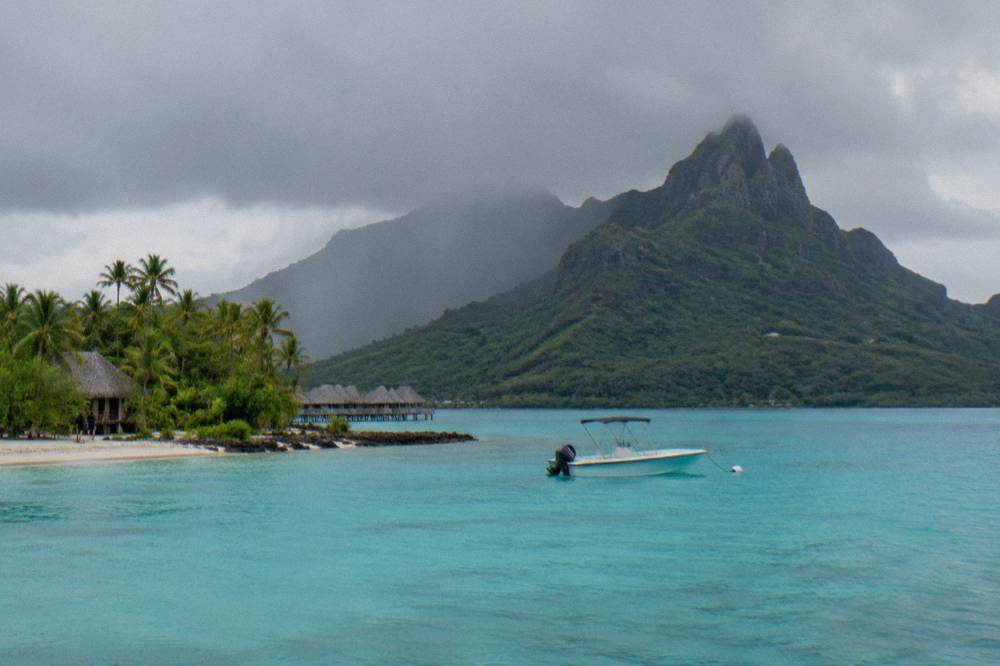
For readers landing on the Bora Bora side, the choice of tour matters more than the choice of destination did. The most reviewed listing in the lineup is the full-day lagoon group tour with lunch from Lagoon Service, 5.0 from 1,715 reviews, from $173 per person for 6 hours with pickup, meal and gear included, and it functions as the default full lagoon day: coral gardens, rays, sharks and a motu picnic in one booking. A shorter alternative is the Reef Discovery half day at 3.5 hours from $134, which keeps the morning free. And for a splurge that is still per-person priced rather than per-group, the luxury catamaran sail with floating bar, 4.9 from 164 reviews at from $309 per person, reframes the lagoon as a slow sailing day rather than a stop to stop circuit. Whichever shape fits, this site's Bora Bora Snorkeling Tours comparison pages break the full 34-listing lineup down by duration, group type and inclusions, so the choice can be made on listing facts rather than brochure adjectives. If your dates are still flexible, the seasonal analysis in Bora Bora's best snorkeling months is the last input worth checking before booking.
Common Questions About Fiji Or Bora Bora
How do I decide between Fiji and Bora Bora for my holiday?
Nicer depends on trip shape. Bora Bora concentrates one world class lagoon into a short, premium stay with shared tours from $105 per person. Fiji offers more variety across many islands over longer trips at generally lower nightly cost.
Is Bora Bora more expensive than Fiji?
Bora Bora's lodging market is famously high-end, but its lagoon tour prices are transparent and moderate: half days from $105 to $151 per person and full days with lunch from $144 to $224. Fiji typically wins on nightly rates and trip length value.
Which has better snorkeling, Fiji or Bora Bora?
Bora Bora offers a single sheltered lagoon with coral gardens, ray and shark sites and a manta cleaning station minutes from departure. Fiji offers diverse reef types across multiple island groups that reward longer itineraries.
Can you visit both Fiji and Bora Bora on one trip?
Yes, with planning. Bora Bora is reached via a domestic flight of about 50 minutes from Papeete in Tahiti, and international routings through Tahiti or other hubs can combine both destinations, though each adds transit time.
Is Bora Bora good for a short trip?
It is one of the best short-trip destinations in the Pacific. The island is 30.55 km2 with a 32 km ring road, and four to seven days covers two or three lagoon tours plus downtime with no regional transit.