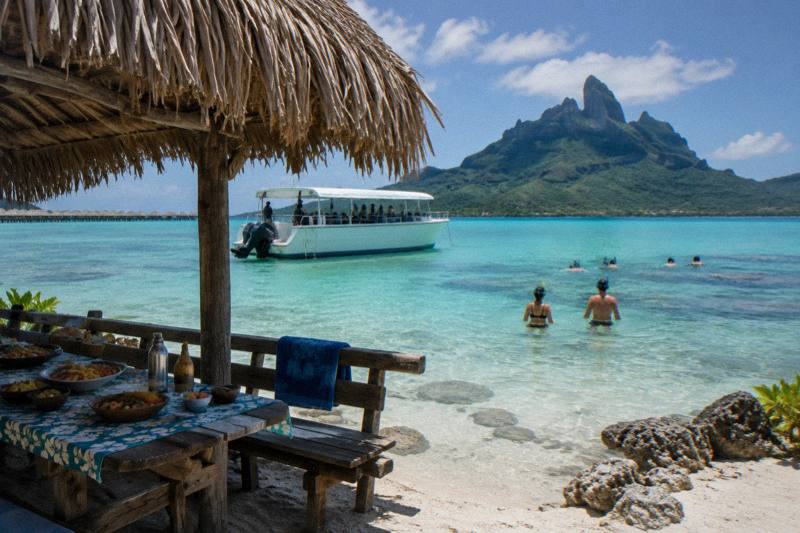
Is Snorkeling Better In Moorea Or Bora Bora?
A side-by-side comparison of snorkeling in Moorea and Bora Bora: lagoon character, marine life, tour formats and what each island does best for snorkelers.
Moorea Vs Bora Bora: What's Different Underwater?
There is no single winner, and the honest answer depends on what you want from a snorkel day. Moorea is widely described as the more rugged, activity-focused island, with stingray and shark interactions in shallow sandbar water that are famously approachable. Bora Bora offers a larger, more sheltered lagoon built around boat tours, manta ray sites and full-day motu picnics, with bookable tours from $105 per person in the lineup we track.
The comparison comes up constantly because most travelers to French Polynesia visit one island and wonder whether they picked the right one. Both islands sit in the same archipelago, share the same warm water, the same reef fish and the same protected status for sharks and rays under French Polynesia's Environmental Code, which has covered every shark and ray species in the territory's waters since 2006. What differs is the shape of the experience: how you get to the water, what a tour costs, and how the day is structured around you.
On this site we track the Bora Bora side of the comparison listing by listing, so that half of the answer comes with hard numbers. Moorea gets a fair, qualitative treatment drawn from the same research pass, but there is no Moorea product in our lineup, so no Moorea price is printed here. Where a Moorea figure is not on file, we say so instead of guessing.
If you are deciding between the two islands for a trip built around snorkeling, three practical questions settle most of it. Do you want a big-lagoon boat day with a motu lunch, or short, shallow wildlife encounters? Is your budget per person closer to a half-day fare or a full-day-with-lunch fare? And are you combining the island with Tahiti, which favors Moorea, or flying straight in, which suits either? The sections below take each of those in turn, and the featured tours at the end show what the Bora Bora side actually costs to book. If you're also weighing whether to go below the surface with a tank, our guide to scuba diving versus snorkeling in Bora Bora explains who certification actually matters for and what each option really costs.
How Do The Two Lagoons Compare?
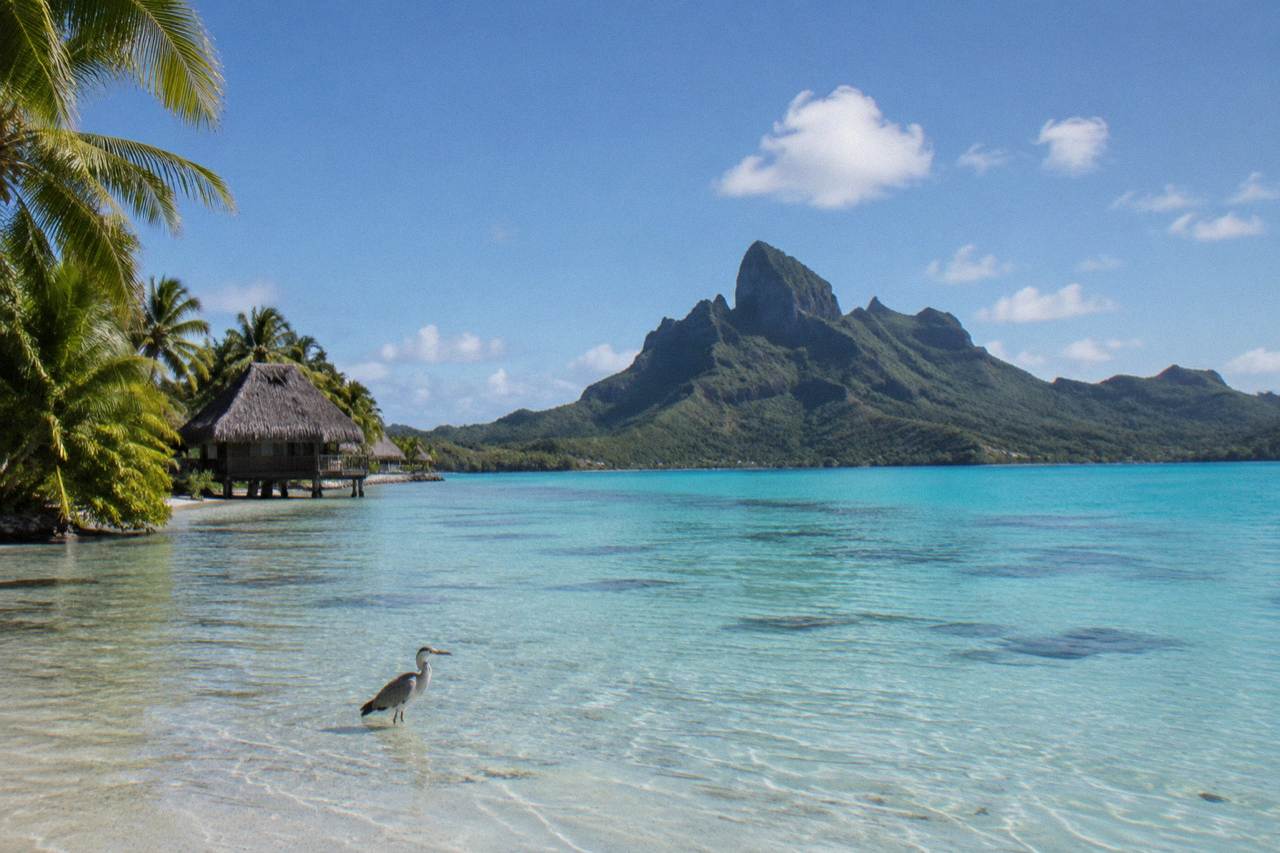
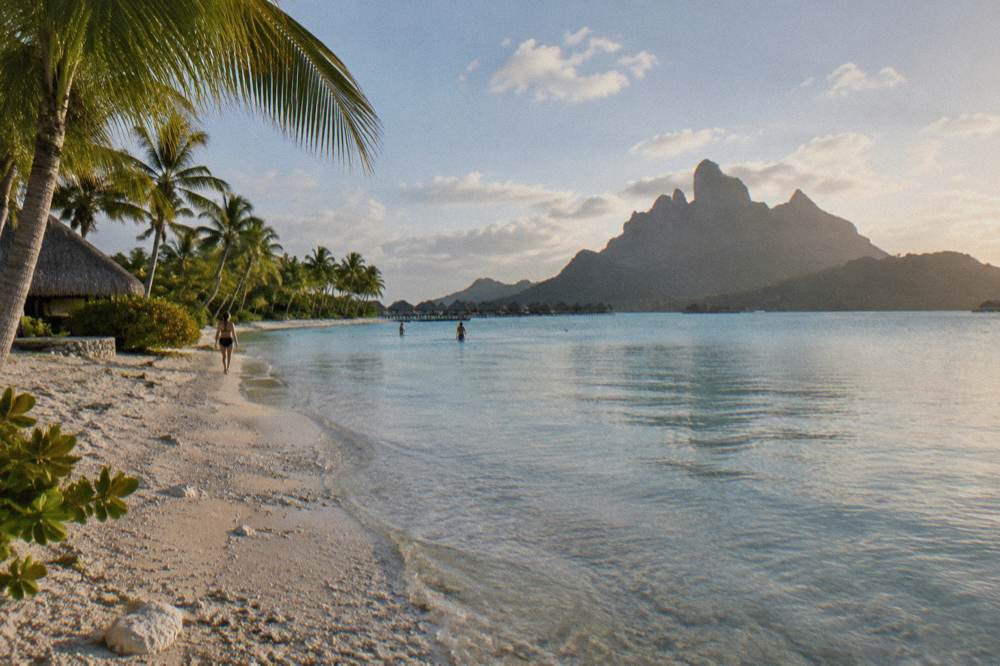
Bora Bora's lagoon is the larger and more enclosed of the two, a ring of water inside the barrier reef beneath Mount Otemanu at 727 m, with most snorkeling reached by boat. Moorea's lagoon is smaller and more open, fringed by two broad bays on its north side; in practice, Bora Bora is a boat-tour island while Moorea mixes short boat rides with more DIY shore access.
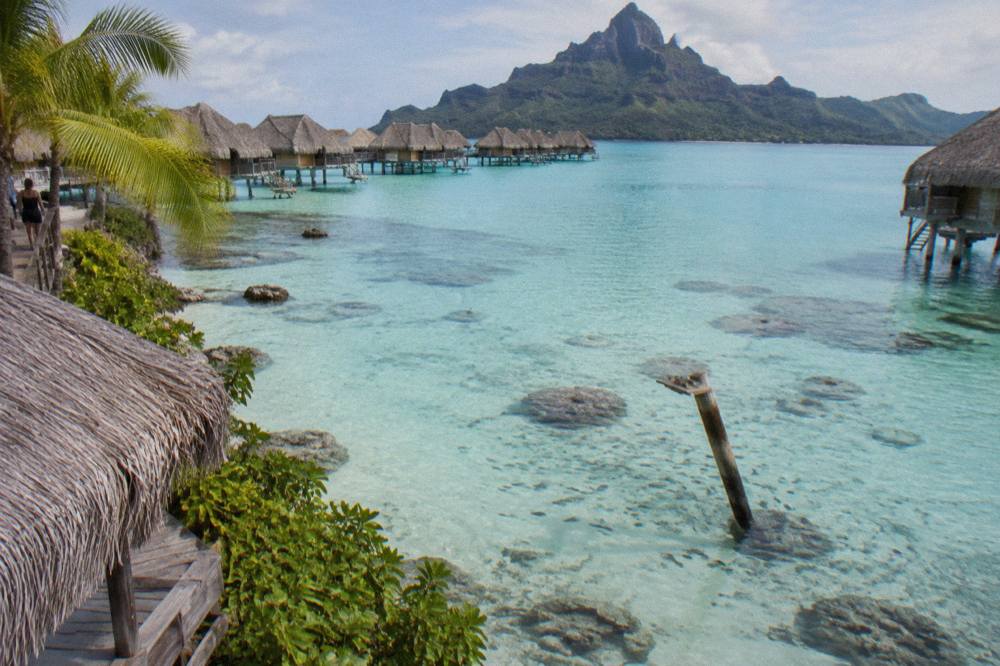
That structural difference shapes everything else. On Bora Bora, the classic day is a circle-lagoon itinerary: a boat picks you up at your resort dock or the Vaitape quay, stops at a coral garden, then a ray and blacktip shark spot, then a motu beach for fruit or a barbecue lunch. The full-day lagoon group tour with lunch, from $173 per person for 6 hours with pickup, gear and a meal listed, is the template, and it carries 5.0 from 1,715 reviews, the most reviewed listing we track. Shorter versions exist at every price point down to the eco shark and ray cruise from $112 per person.
Moorea's product set leans differently. The island is known for shallow sandbar interactions with stingrays and blacktip reef sharks inside the lagoon, plus garden eel sites and a couple of reef passes on the outer slope. The interactions happen in water shallow enough to stand in, which is why Moorea has a reputation as the easier island for nervous first-timers and families with small children. Bora Bora's equivalent encounters happen from boats anchored over deeper sand, with flotation and guides in the water.
Neither island should be sold as an aquarium. Operators and guides on both describe clearer water in the dry season, and both are subject to the same weather variability. Guides on Moorea's sandbars and Bora Bora's ray stops brief guests on the same rules: no touching, no chasing, no blocking an animal's path.
What Marine Life Can You Expect On Each Island?
Both islands share the same cast: blacktip reef sharks, typically 0.5 to 1.5 m, stingrays, schools of butterflyfish, parrotfish and damselfish. Bora Bora adds the Anau manta ray cleaning station on its east side, reachable only by boat tour, where reef mantas are the headline species. Moorea is better known for its dependable stingray and shark sandbar encounters and for spinner dolphins and humpback whales in season offshore.
The shark and ray story is genuinely close between the islands. Blacktip reef sharks are the common species on both, and on both islands the interactions are managed under the same national protections. The difference is the setting: Moorea's encounters happen on shallow sandbars where the water is often waist deep, while Bora Bora's happen at boat stops in the lagoon's deeper channels and sand flats, which is also where its manta sites sit. The Anau cleaning station on Bora Bora's east side is described by operators and guides as the island's signature manta location, accessible only by boat, with etiquette rules about staying at the surface and letting the animals come to you.
Whales deserve a careful note. Humpback season in French Polynesia runs July to November, and Moorea is the island with the stronger swim-with-whales product reputation. No listing on our Bora Bora lineup is a whale-watching product, so nothing booked through this site includes whales. Tahiti Tourisme's regulations require approved providers to keep 100 m from whales, travel no faster than 3 knots within 300 m, hold a parallel course and never encircle the animals, so if whales are part of your Moorea plan, check that the operator is approved by the Department of the Environment.
For fish and coral, both islands offer sheltered lagoon gardens suited to beginners. Bora Bora's coral gardens, including sites near Motu Piti Uu Uta and Motu Tane, are boat-access stops with abundant reef fish, and guest reviews of the Reef Discovery half day, 5.0 from 1,051 reviews, from $134 per person, single out the fish density. Matira Beach is Bora Bora's one recommended shore option, a free public beach with shallow water over sand. Moorea likewise has public-access shore snorkeling, which gives it a slight edge for travelers who want to snorkel without a boat every day.
| Marine life | Bora Bora | Moorea |
|---|---|---|
| Blacktip reef sharks | Common at boat stops, typically 0.5 to 1.5 m | Common at shallow sandbar encounters |
| Stingrays | Common at lagoon boat stops | The island's signature encounter |
| Reef mantas | Anau cleaning station, boat access only, conditions permitting | Present but less of a headline site |
| Reef fish gardens | Several boat-access coral gardens, plus Matira shore entry | Lagoon gardens with shore options |
| Humpback whales (July to November) | No whale product on the Bora Bora lineup | Known for whale swim tours with approved operators |
How Much Do Snorkel Tours Cost On Each Island?
On the Bora Bora lineup we track, bookable snorkel tours run from $105 per person for a half day to from $1,776 per group for a private full-day charter, with typical shared half days clustering between $112 and $151 and full days with lunch between $144 and $194 per person. Moorea tour pricing is not in our lineup, so we print no Moorea figure here.
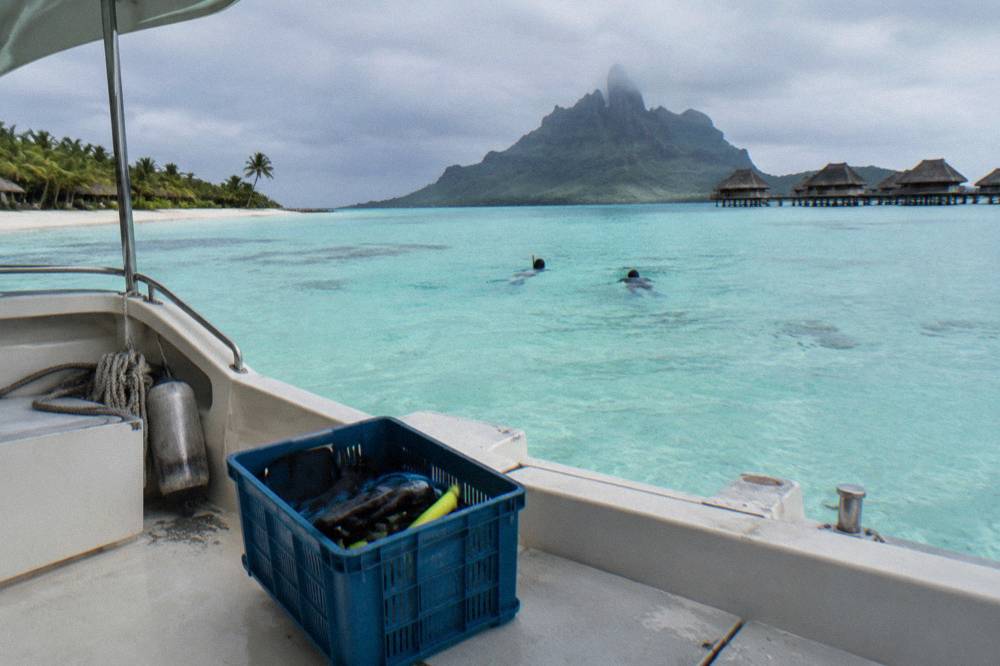
Because every number below comes from a verified listing, the Bora Bora side of the cost argument can be made precisely. The cheapest listing is the half-day Bora Bora Experience with fruits on Motu Fanfan at from $105 per person for 4 hours, 4.9 from 47 reviews. At the other end of the scale sit the private boats: H2O Bora Bora's private snorkeling tour from $650 per group for 3 hours 30 minutes, 5.0 from 126 reviews, and the Reef Discovery private full day with a water-served lunch from $1,776 per group. Between those poles, the shared and small-group market is deep and competitive.
| Bora Bora listing | Format | Duration | Price | Rating |
|---|---|---|---|---|
| Fruits on Motu Fanfan | Shared half day | 4 hours | From $105 per person | 4.9 from 47 reviews |
| Eco shark and ray cruise, Moana Adventure Tours | Small group half day | 2 hours 30 minutes | From $112 per person | 4.8 from 604 reviews |
| Rohivai shared lagoon safari | Shared half day | 4 hours | From $112 per person | 4.9 from 259 reviews |
| Reef Discovery half day signature tour | Shared half day | 3 hours 30 minutes | From $134 per person | 5.0 from 1,051 reviews |
| Full-day lagoon tour with lunch, Lagoon Service | Small group full day | 6 hours | From $173 per person | 5.0 from 1,715 reviews |
| Private full day with water lunch, Reef Discovery | Private full day | 5 hours 30 minutes | From $1,776 per group | 5.0 from 33 reviews |
What the table hides is how much of the price difference is format rather than island. A jet ski and snorkel combo on Bora Bora runs from $303 per person with lunch, and the 4WD and lagoon cruise combo from $158 per person for a full 8-hour day, both from the same lineup. Cruise passengers comparing ship excursions with independent bookings generally find the independent listing cheaper for a comparable itinerary, which holds on Bora Bora where the independent market is large.
The value question between islands is therefore less about tour price and more about what surrounds the tour. Bora Bora is the more expensive island to sleep on, dominated by resorts, and its tour market is built to serve resort guests with included pickup. Moorea has a broader spread of guesthouses and self-catering, and its shore-accessible sites mean a traveler can snorkel several times without booking anything. For a snorkel-heavy budget trip, that difference adds up faster than a modest gap in tour prices.
For readers who want the numbers behind the timing decision as well, our guide on the best months to snorkel in Bora Bora breaks down the rainfall and sea-temperature data month by month, and the same dry-season logic applies to Moorea.
Which Island Suits Your Trip Style?
Choose Moorea if your trip is active, budget-mixed and shore-heavy: you want shallow ray encounters, the option to snorkel from a beach, and lower-cost lodging around a wilder island. Choose Bora Bora if the lagoon day is the centerpiece of the trip and you want the polished, pickup-included boat experience: circle-lagoon itineraries, manta sites and long motu lunches. Travelers who want both usually split a trip between them.
The resort-versus-guesthouse contrast is the honest dividing line. Bora Bora's accommodations skew to the international resort end, with overwater bungalows and resort docks that tours pick up from directly; the market rewards the full-day, everything-included format, and the lineup reflects that with ten full-day lagoon and motu lunch listings against a deep bench of half days. Moorea's accommodation mix runs broader, from family pensions to resorts, and the island's road network makes self-driving between a snorkel site and a viewpoint a normal day.
None of that makes Bora Bora the wrong choice for a careful budget. The half-day market starts at from $105 per person, several listings include a meal, and free cancellation is listed on almost every tour, which matters when plans shift with weather. The Bora Bora Snorkeling Tours comparison pages exist precisely because the island's tour market is deep enough that the choice between listings matters as much as the choice between islands.
Families with young children or non-swimmers should read the two islands slightly differently. On Bora Bora, several operators state plainly that they welcome non-swimmers and supply flotation, and guides supervise every stop; our write-up on non-swimmers and Bora Bora snorkeling covers what the listings actually promise. Moorea's standing-depth sandbars are often described as the gentlest possible introduction to rays and sharks. Both work; the Bora Bora version simply comes with a boat ride and a bigger day around it.
Moorea Or Bora Bora With Limited Days?
With three days or fewer on one island, pick the island whose core experience you most want, because neither rewards splitting: Bora Bora needs a full-day lagoon tour to deliver its best snorkeling, and Moorea's sandbar encounters plus a lagoon day fill its shorter list quickly. With five or more days, splitting the trip, usually Moorea plus Bora Bora around a Tahiti connection, is the common and satisfying answer. Since that routing usually treats Tahiti as just a layover, our comparison of Tahiti versus Bora Bora for snorkelers weighs whether the hub island deserves days of its own.
Logistics favor Moorea as the easy add-on. It is the close neighbor of Tahiti, connected by frequent short crossings, so a trip built around the international gateway at Papeete can include Moorea with minimal extra flying. Bora Bora is a further domestic flight onward, roughly an hour in the air from Tahiti, and its airport sits on its own motu with boat transfers to the main island (see Tahiti or Bora Bora). Travelers connecting through Papeete often weigh exactly this: Moorea is the low-friction island, Bora Bora the deliberate one.
Once you are on Bora Bora, the constraint is not distance but tour format. The flagship experience, the full-day circle of the lagoon with lunch on a motu, is a 6 to 7 hour commitment, and the shorter half days of 2.5 to 4 hours cover the coral garden and the ray stop but not the leisurely motu afternoon. Two well-chosen tours, one full day and one short eco cruise, cover nearly everything the lagoon offers. On Moorea, half-day excursions are the norm, and a single morning at the ray sandbar plus an afternoon on a public beach can feel complete.
Weather should not drive the choice between the islands, because both sit in the same climate pattern: dry season from May to October, wet from November to April, with July and August the busiest months on both. Current planning guides note that shoulder months such as May, June, September and October deliver similar conditions with thinner crowds, and that applies equally on both sides of the comparison, as detailed in independent Bora Bora snorkeling research and confirmed by the climate data on file.
Whale season is the one timing factor that tilts. From July to November, humpbacks pass through Society Islands waters, and Moorea is the island with the dedicated approved swim-with-whales products. A September traveler whose heart is set on whales in the water has a clearer path from Moorea; a September traveler centered on mantas and a big lagoon day has a clearer path from Bora Bora.
With either choice, book the boat day early. Bora Bora's most-reviewed listings, notably the full-day lagoon group tour at 5.0 from 1,715 reviews, fill first in the July and August peak, and free-cancellation terms mean an early booking carries little risk. Sea temperatures published by the secondary sea-temperature series for Bora Bora hold in a narrow warm band all year, so the calendar question is really about rain, crowds and whales, not cold water.
Common Questions About Moorea Vs Bora Bora Snorkeling
How do Moorea and Bora Bora compare for snorkeling?
Neither island is objectively better. Moorea excels at shallow sandbar encounters with stingrays and blacktip reef sharks, shore-accessible sites and a more budget-flexible island experience. Bora Bora excels at big-lagoon boat days, the Anau manta site and polished full-day tours with motu lunches, from $105 per person in the lineup we track. Pick based on trip style, not on a ranking.
Is Moorea just as nice as Bora Bora?
Nice is the wrong measuring stick, because the two islands are different rather than ranked. Moorea is greener, wilder and generally cheaper to stay on, with a relaxed, do-it-yourself feel. Bora Bora has the more famous lagoon and the more resort-driven experience. Many travelers find Moorea just as memorable, simply for different reasons.
Can You Snorkel From The Beach On Both Islands?
On Moorea, yes, several sites work from shore. On Bora Bora, Matira Beach is the one recommended shore-accessible spot in current guides: a free public beach with shallow water over sand, and you bring your own gear. The rest of Bora Bora's best snorkeling, the coral gardens and the manta cleaning station, is boat access only.
Are Sharks And Rays Protected On Both Islands?
Yes. French Polynesia has protected all shark and ray species in its waters since 2006, and the Environmental Code prohibits attracting sharks or altering their behavior. Encounters on both islands happen at natural congregation areas, and guides brief guests on no-touch, no-chase rules.
Which Island Is Better For Whales?
Moorea. Humpback season runs July to November, and Moorea has the dedicated swim-with-whales products run by approved providers, who must keep 100 m from the animals and follow set approach rules. No listing on the Bora Bora lineup is a whale-watching product.
Is One Island Cheaper For Snorkel Tours?
Moorea tour prices are not in our lineup, so we print no Moorea figure. On Bora Bora, shared half days run from $105 to $151 per person and full days with lunch from $144 to $194 per person, with private boats from $560 to $1,776 per group. The bigger cost difference between the islands is accommodation, not tour tickets.